


/arc-anglerfish-tgam-prod-tgam.s3.amazonaws.com/public/E4ZI5LHJORHFJLCLUFVMFR3B3U.JPG)
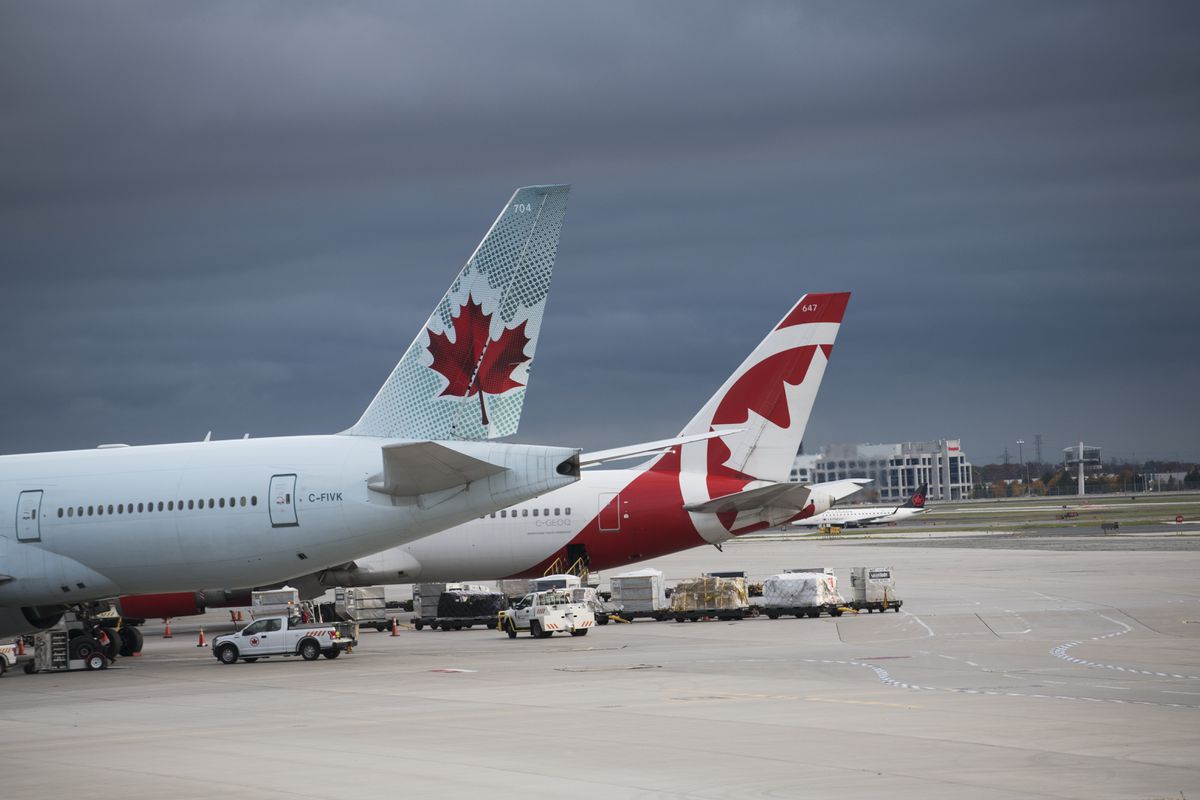
The tails of two Air Canada aircraft sitting by gates at Toronto Pearson International Aiport, on Oct. 27, 2019. The airline’s share price has tumbled 33 per cent from its recent high on Jan. 13.
Fred Lum/The Globe and Mail
Among the stock market wreckage of the past week, Air Canada has been downright steamrolled. But the beaten-up stock may hold special appeal as a rebound candidate.
The airline’s share price has tumbled 33 per cent from its recent high on Jan. 13. Most of the damage has occurred over the past week, though, as concerns over the global spread of the new coronavirus (also known as COVID-19) and its impact on global economic activity grip investors.
The S&P/TSX Composite Index has fallen about 5 per cent since Feb. 19, but Air Canada has slumped 23 per cent. That makes it one of the worst-performing stocks in the index during the current sell-off. It has also fallen harder than its U.S. peers in the S&P 500 Airline Index during this period.
The prospect of unsold seats and cancelled flights amid the spread of COVID-19 is clearly one of the key reasons for the airline sector’s sharp decline.
It’s a real fear. Late last month, Air Canada announced that it was suspending select flights to China – the hardest hit country by far – for the month of February. It extended the cancellations to April 10 in an announcement on Tuesday. COVID-19 breakouts in Italy and South Korea, both major economies, are no doubt raising concerns about additional suspensions and declining airline traffic.
To make matters worse, Air Canada had been a particularly hot stock within the airline sector before the downturn because of its rising profit margins and strong balance sheet. That made it vulnerable to a selloff.
The share price surged about 280 per cent from the start of 2017 to its high in January, even as regulators grounded its fleet of Boeing 737 Max planes over safety concerns, driving the stock’s valuation to a premium relative to other airlines.
Analysts have been overwhelmingly bullish on Air Canada, with 14 buy recommendations, just two holds and no sell recommendations, according to Bloomberg, leaving little room for error – or a pandemic. Swirling uncertainly over air traffic is now hitting sentiment toward Air Canada particularly hard.
But the stock is loaded with rebound potential.
CIBC analyst Kevin Chiang put some numbers on Air Canada’s worst-case exposure to COVID-19 by comparing the airline with Cathay Pacific during the 2003 SARS outbreak. China was the epicenter of that outbreak, which hit the Hong Kong-based airline particularly hard: Capacity fell 6 per cent, year over year, and passenger revenue fell nearly 17 per cent.
If Air Canada’s fate is similar, Mr. Chiang estimates its 2020 revenue will fall to $16.5-billion from $19.1-billion in 2019. EBITDA (or earnings before interest, taxes, depreciation and amortization) would fall to $2.6-billion, which is $1-billion below the analyst’s current 2020 estimate.
It sounds grim. But here’s the opportunity: Mr. Chiang believes that the downside scenario is already reflected in Air Canada’s share price, which leaves a lot of upside opportunity if the crisis abates and sentiment improves. He expects that the stock can rise to $57 within 12 months.
The analyst pegs the downside at about $35 a share, slightly above Wednesday’s closing price of $34.92, after the stock fell another 6.6 per cent. That marks the lowest price since May, 2019, and down from a high of $52.09 on Jan. 13.
There are risks, of course, that the downside scenario gets worse. Apart from the volatile stock market, declining yields on U.S. government bonds are telegraphing slower economic growth, as factories close and trade networks grind to a halt in reaction to the COVID-19 outbreak.
What’s more, the inverted yield curve – three-month U.S. Treasury bills are yielding more than 10-year U.S. Treasury bonds – may signal an oncoming recession. That could weigh further on the stock market, and especially economically sensitive stocks such as airlines.
But if you’re looking for opportunities amid the stock market selloff and you believe that the COVID-19 outbreak will pass without long-lasting economic damage, Air Canada looks like a compelling bet.