


OTTAWA — Leader Pierre Poilievre has been shaping the Conservative Party of Canada as his own since he took the helm nearly a year ago. He’s brought in close friends and collaborators from the Stephen Harper years, as well as fresh talent destined to become rising stars in the party. He is known to keep a tight circle of advisers, among them Jenni Byrne, one of Ottawa’s top powerbrokers.
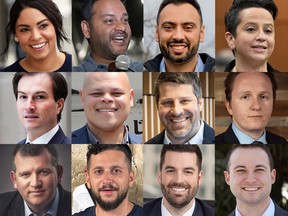
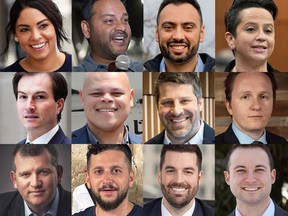
Here is our hot take on 12 rising conservatives and why they matter to Canadians.
Anaida Poilievre: Pierre’s secret weapon
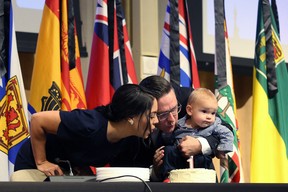
Anaida Poilievre may have made her official debut when she delivered a passionate speech to introduce her husband after he won the leadership of the Conservative party last year but she is no stranger to politics. Ana, as she prefers to be called, worked on Parliament Hill for years before she and Pierre first bumped into each other in Centre Block. Anaida is a very involved political spouse, at Pierre’s side at public events and providing feedback on strategy in private. “She understands the (political) game in a way that almost nobody does, and almost no political spouse in history has ever, because she actually worked in active politics,” one insider close to the Poilievres said. “She’s an adviser in her own right on any number of things — communications, media relations, she’s done almost all of it.”
As a former political staffer and trilingual immigrant woman, she has proven to be a political asset for her husband, softening his rough edges. Anaida is featured in an advertising campaign launched in August by the party, and Canadians can expect to see more of her as a federal election approaches.
The MPs
Shuvaloy ‘Shuv’ Majumdar: Foreign intelligence authority

The new Conservative MP for Calgary-Heritage after winning a by-election in July, Shuvaloy Majumdar is expected to play a role in the party caucus on foreign affairs given his extensive background on the file. Early on in his career, Majumdar was an operative of the International Republican Institute in Afghanistan and Iraq, a Washington organization focused on freedom and democracy formerly chaired by the late U.S. senator John McCain. Between 2011 and 2015, Majumdar served as senior policy director to former foreign affairs minister John Baird. After 2015, he joined the Macdonald-Laurier Institute to lead its foreign policy and national security program while also working for Harper & Associates.
More importantly, insiders say Majumdar embodies the type of MP the party needs more of — someone with hands-on experience who could be valuable in a future Conservative cabinet.
Arpan Khanna: Cultural connector

A former party staffer who worked at the federal and provincial levels, Arpan Khanna was tapped by Poilievre to be one of his co-chairs in Ontario in the leadership campaign and later as his national outreach chair. Elected MP in the Oxford, Ontario riding after a by-election battle in June, Khanna is expected to play an important role in connecting Poilievre with multicultural voters. “Arpan is a real political organizer, specifically with ethnic communities. He understands how to motivate voters,” said Melanie Paradis, president of Texture Communications, and Erin O’Toole’s former director of strategic communications. Khanna is also described by insiders as a hard worker and well-liked — he managed to fill a room with supporters for his swearing-in ceremony in mid-August.
Melissa Lantsman: Coalition architect
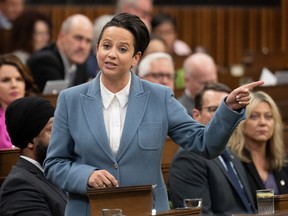
Melissa Lantsman has been active on all fronts since she became deputy leader of the party nearly a year ago. Whether she is leading the charge at the House of Commons, flying across the country to partake in conversations about the future of the Conservatives or courting cultural communities in the Toronto area, Lantsman — an openly gay and Jewish woman — has been instrumental in broadening the party’s appeal. “Outside of Ottawa, her hustle and drive are leading the formation of a new voter coalition for the Conservative party that is responsive to the economic hardship Canadians are facing today,” said Jamie Ellerton, founding partner at Conaptus PR and longtime Conservative strategist.
She has an active role on the party’s leadership team. “She is a constant voice at the table to keep the party focused on solutions that will help the greatest number of Canadians so the party is both culturally relevant and speaks with voters in a way that has not been done effectively since 2011,” said Ellerton.
Adam Chambers: Fiscal firepower
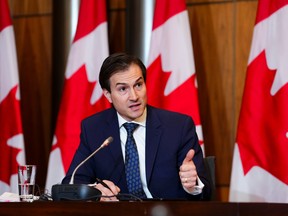
He has been flying under the radar for some time but sources say Adam Chambers has been busy in the background working on the Conservative campaign platform for the next election. First elected in 2021 as MP for Simcoe North, Ontario, Chambers brings previous experience in government as well as the private sector. He worked as an executive assistant for then finance minister Jim Flaherty during the 2008 global recession, continued his studies, then returned to Ottawa as Flaherty’s director of policy for his last budget in 2014. Chambers then went on to join Canada Life, one of the country’s largest life insurance companies, as director of strategy, then assistant vice president, before returning to politics. Now a member of the House of Commons finance committee, Chambers has proven to be a relentless opponent against Liberal fiscal policies and Finance Minister Chrystia Freeland.
The Thinkers
Jamil Jivani: The provocateur
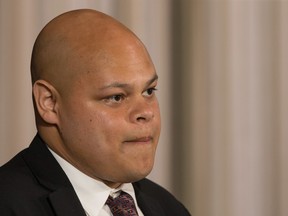
Already known among National Post readers, Jamil Jivani is taking on a new challenge in attempting to succeed Erin O’Toole as the next MP for Durham, Ontario. He won the nomination in late August and is awaiting the by-election, which hasn’t been called. Jivani is seen as someone who could shake up the party and spark debate on issues it has steered away from, such as immigration and identity. “There’s a new faction brewing in the conservative movement that he is representative of, that is a little bit more nationalist and less focused on lower taxes, free market and lower regulation,” said one insider close to the party.
Jivani has a compelling life story that he’s widely shared. Raised by a single mom in the suburbs of Toronto, he was labelled illiterate by the public school system at age 16. With the help of mentors, he went on to graduate from Yale Law School. Last year, he launched a lawsuit against Bell Media, claiming he was unjustly fired as a radio host for not fitting the stereotype of a Black man (Bell Media denies this claim). More recently, he was president of the Canada Strong and Free Network, a think tank formerly known as the Manning Centre that was founded in 2005 by Preston Manning to promote conservative principles.
His columns in the Post were critical of Liberal “woke” politics. “He’s unafraid to weigh in on the more controversial issues, and if you’re going to do that you need to be able to do it in an eloquent fashion and, frankly, from a position of compassion and understanding,” said Michael Solberg, partner at New West Public Affairs, and a former political strategist at the federal and provincial levels in Ontario, Quebec and Alberta.
Sean Speer: The trendspotter

As The Hub’s editor at large (and a former National Post columnist), Sean Speer has played a significant role in creating a place for smart discussions on the conservative movement outside the party. Speer is usually one of the first to identify emerging trends and strategies. He zeroed in on the generational gap between Pierre Poilievre (millennials) and Jean Charest (Boomers) in last year’s leadership race. A year and a half later, younger voters, especially young males, are flocking to Poilievre’s Conservative party, according to opinion polls.
Insiders said that Speer, a former senior adviser to Stephen Harper, is more likely to continue to influence the conservative movement from the sidelines through his analysis, podcasts and interviews for The Hub. “I think Sean is one of the better analysts from the outside who is sympathetic and gets it, but is not so biased that it’s easily written off,” said Ginny Roth, partner at Crestview Strategy, former organizer for the PC Party of Ontario, and long-time conservative strategist. “He has his own venture and he’s committed to that, so he’s unlikely to suddenly drop it and go onto a campaign or into government.”
Speer is also well-connected to U.S. conservative commentators such as David Frum, whom he speaks to for his bi-weekly video series on The Hub. And he recently spoke with Mathieu Bock-Côté, one of Quebec’s most influential and controversial columnists, about the province’s nationalism. For staying on top of emerging conservative trends and debates, Canadians can keep an eye on Speer.
Ben Woodfinden: Policy brewmaster
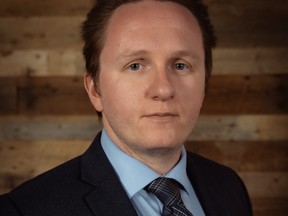
A doctoral student and political theorist at Montreal’s McGill University, Ben Woodfinden has taken a leave from his studies to take on the job of director of communications for Poilievre. He is seen as someone with a big brain who thinks about big ideas, but can then translate them into key messages and slogans. “I think he perfectly aligns with Pierre in terms of the way that Pierre thinks about things, and the very deep thought that they both put into what seems like very simple communications, and the way Pierre relates to the everyday person,” said one insider close to the party.
Poilievre had just launched his leadership campaign and Woodfinden was already predicting that his messaging on elite “gatekeepers” would be a winning strategy. Later, Woodfinden was mulling the state of Canadian conservatism in a post-Harper era and rejected the overused labels of “Red Tories” and “Blue Tories.” He is on board with the “Canada is broken” message and the Liberals being “out of touch.”
The Strategists
Steve Outhouse: Campaign closer

Alberta Premier Danielle Smith can thank a pastor from the Ottawa area for helping her win a majority government in May. Steve Outhouse, a former Baptist preacher and seasoned political operative, is not a front man but is known across the Canadian conservative spectrum for uniting people behind the cause. He ran both of Leslyn Lewis’ campaigns for Conservative party leadership before he was tapped by the United Conservative Party (UCP) to become their campaign manager in the provincial election last May.
“As an outsider, he came into Alberta in a party that required repair, required stabilization, where there were a lot of big personalities involved, and a situation where the stakes were very high,” said Solberg at New West Public Affairs. Outhouse, he said, managed to get people to focus on the ground game, knocking on doors, identifying their support and, most importantly, getting out the vote. “I think he had an uncanny ability to rise above the noise and avoid the distraction, and just make sure that he was doing what matters at the end of the day, which is getting people out to the polls,” said Solberg. That ultimately made the difference in a very close race in Alberta.
Anthony Koch: The outside voice

The former spokesman for Poilievre during the leadership race, Anthony Koch sometimes gets into trouble for speaking his mind on X (formerly Twitter). Political insiders wouldn’t have it any other way: “Anthony is Anthony, right? I think he brings a lot of hot takes that we need a little more of.” One of those infamous “hot takes” is when Koch tweeted that “the average MP is a moron with the political instincts of a goat,” in commenting on greater MP independence around the time three Conservative MPs met with populist German politician Christine Anderson, known for her anti-Islam views. Koch’s tweet was subsequently deleted, and Poilievre condemned Anderson’s views as “vile,” while insisting his MPs were unaware of her politics.
After the leadership run Koch decided to stay with the conservative movement, but not the party, as a public affairs consultant and political analyst in Montreal. But expect him to play a key role in an upcoming federal campaign. Koch remains a trusted voice in Poilievre’s inner circle, and continues to shape the media narrative. He is a reliable source for journalists and commentators to find out what Poilievre is really thinking and is considered one of the few conservatives who really understands the complicated political dynamics between Quebec and the rest of Canada — and can explain that coherently in English and in French. Canadians can now catch his hot takes on CBC’s Power and Politics.
Carl Vallée: Quebec whisperer

There was a certain buzz in Quebec a few months back when Poilievre met with Quebec Premier Francois Legault for the first time. Carl Vallée, managing director at strategy advisers Teneo, was the link in arranging that meeting, according to sources. “Whenever a leader of the opposition wants to meet the premier there are official channels, but in terms of the massaging and telling Mr. Legault this might be a good idea, Carl was instrumental,” said a political insider with knowledge of the situation.
There are few people who Poilievre turns to for advice on Quebec issues and one of the most influential is Vallée. Both men know each other from their days in Stephen Harper’s government. When Vallée was Harper’s spokesperson, Poilievre was serving as parliamentary secretary to the prime minister. After leaving politics, Vallée went on to a career in public relations in Montreal and briefly joined Legault’s transition team as a senior adviser after his victory in 2018. A proud Quebec nationalist, he’s seen as both a CAQ supporter and Conservative party loyalist with Harperite credentials.
“Carl is very unique in that both camps claim him completely,” said the insider. With the polls saying the Conservative party is gaining ground in Quebec, expect Poilievre to have Vallée’s number on speed dial as he courts the nationalist vote.
Paul Taillon: Digital mastermind
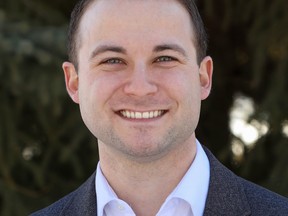
Part the curtains behind Poilievre’s attention-grabbing ads and social media content and you will find Paul Taillon, chief strategy officer at Mash Strategy. Used to keeping a low profile, Taillon is “the glue behind 90 per cent of the (party’s) digital content,” according to one insider. “He’s thoughtful. He’s very calm under pressure. And one of the things that I think is his strongest suit is that he’s very intuitively aware of where the public is and what the public is thinking,” said a former close collaborator.
Taillon has over a decade of experience in digital communications, having worked for Saskatchewan premiers Brad Wall and Scott Moe, and more recently as former Alberta premier Jason Kenney’s director of digital strategy. Insiders say Taillon, and to a lesser extent his boss Derek Robinson, CEO of Mash Strategy, are a great match for Poilievre, who is known for coming up with his own ideas, but needs talented people to execute them. “Just the fact that Paul did it for the leadership and learned it, it’s like, ‘OK, now you can’t leave,’” said the source close to Taillon.
A few more conservatives worth watching
Michael Wilson: Ontario organizer
A partner at Bay Street law firm Goodmans, veteran political organizer and close ally of Jenni Byrne, Michael Wilson is already influential as the lawyer for the Conservative Party of Canada. But expect party stewards to tap his vast political talents and connections to get Ontario to vote Conservative in the next federal campaign.
Raquel Dancho: Security watchdog
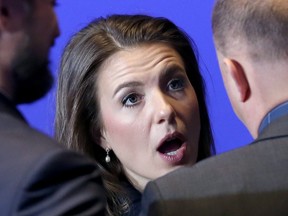
Canadians may already know Raquel Dancho, the Conservative MP for Kildonan–St. Paul, Manitoba, as someone who regularly butted heads with former public safety minister Marco Mendicino and other Liberals in the House of Commons. An effective performer in caucus, Dancho successfully zeroed in on public safety as one of the Liberals’ weaknesses. Now people can watch her stake her ground against Dominic LeBlanc, the new minister of public safety.
Brooke Pigott: Data detective
A former director of public opinion research for Stephen Harper, Brooke Pigott is now the lead researcher for pollster Yorkville Strategies in Vancouver. Pigott will no doubt be working overtime in the backrooms come the next election, as she is often tapped by good friend Byrne to unpack the trends behind the numbers.