



“The silence coming from our non-Jewish friends is speaking volumes right now,” read an Instagram post being widely shared Monday. “This isn’t about politics so whatever excuse you’re using to justify your silence is weak. Your Jewish friends will remember your silence.”
That viral Instagram post and other social media posts expressing the same sentiment confused me.
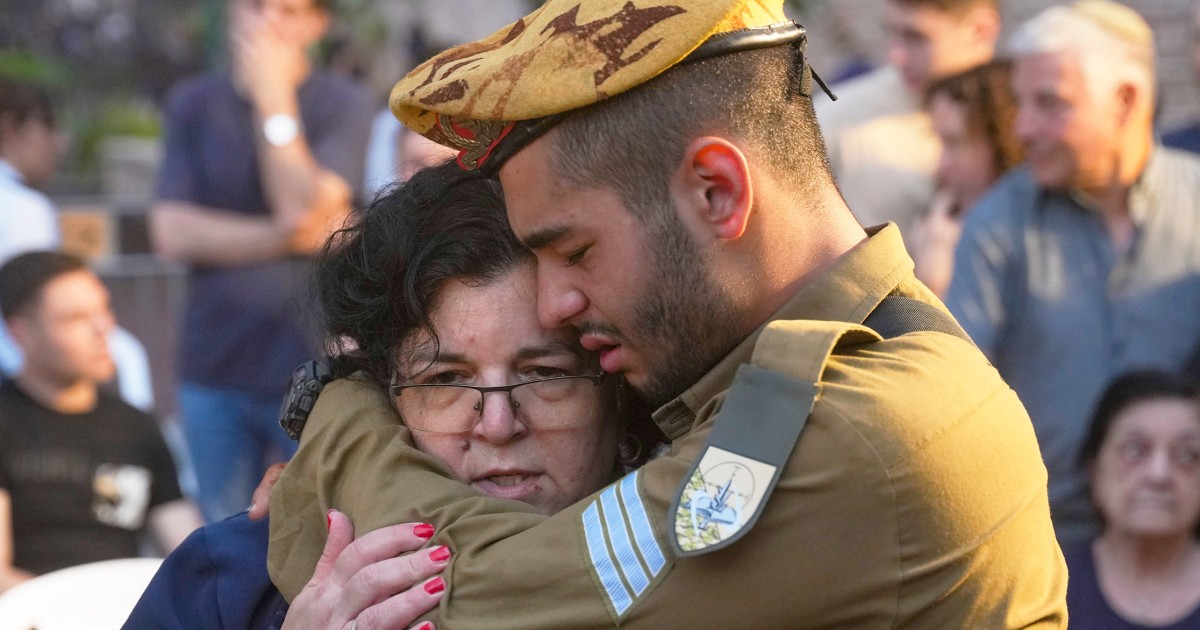
“This,” of course, refers to the surprise attack Hamas launched Saturday on Israel. News reports and social media accounts spread harrowing tales of what was happening there: the cries of mothers seeking their lost sons; videos of women being dragged by their hair; stories of rape and slaughter.
To be clear, there is an immense privilege in staying silent, one that those whose loved ones are missing or were harmed or killed don’t have.
Still, that viral Instagram post and other social media posts expressing the same sentiment confused me. I read them as a Jewish person who hadn’t yet made any comment on Instagram, and had no expectation that any of my friends, Jewish or not, would make a comment.
Social media pressures us to make statements of support, condemnation or sympathy in moments of social and political turmoil. The kind of statements in question were historically reserved for those with social or political power, like politicians and world leaders. Then celebrities, athletes and even influencers began making such statements.
But as that viral Instagram post illustrates, in recent years, the expectation to say something has somehow been extended to all of us. And the pressure includes getting it exactly right.
In one of many tweets that criticized people for speaking up for Israelis but not for Palestinians, the actress Lisa Ann Walter was accused of “hurting a lot of young people that look up to you” because, according to the person who posted it, her “silence on what Palestine has historically had to endure is deafening.”
There is now a value-based currency in our social media landscape that did not appear to exist when Instagram launched in 2010. We’re now asking ourselves: Did I share the right thing? Did I share enough? We’re treating our social media profiles as communications channels for the general public.
But we are afraid, because we all live in a new kind of public now, whether we like it or not. Even though we’ve always known that what we post online shapes how the world sees us, we now fear a specific type of judgment: that we won’t be thought of as good people.
And, of course, our opinions of those we follow will shape what we believe.
Many people are processing, learning, thinking and grieving in private. As we are dealing with those thoughts and emotions, we are faced with a shocking amount of violent footage and imagery. Some of the content may pose a danger to our mental health. Posts condemning people for their silence don’t respect any of that.
To be sure, widespread posting about certain issues has helped raise awareness and shift understanding.
After Minneapolis police murdered George Floyd in May 2020, social media was an integral force for shifting American perceptions around racism and police brutality. The Pew Research Center found in a survey conducted that summer that nearly a quarter of U.S. adult social media users had cited social media content as the reason they changed their views on a political or social issue.
It’s hard for many people to know exactly what to say on social media or how to say it.
But as the conversation grew, so did the pressure to say something. June 2 of that year, for example, was promoted as “Blackout Tuesday,” a day that social media users were encouraged to post nothing but a black square for the entire day, in a show of support and solidarity for Black Americans. In a piece at the time that called on “wannabe allies to confront the ways in which our allyship can be misguided and, frankly, lazy,” Noor Noman wrote for NBC News that posting a black square “doesn’t inherently make you a bad ally — but it doesn’t inherently make you a good one, either.”
As Kate Lindsay wrote in the newsletter Embedded in February 2022, following Russia’s invasion of Ukraine, social media users now understand implicitly that “if we don’t say something, we’re part of the problem — and if we post about anything else, we’re being callous.” This applies, Lindsay noted, whether your audience is 300 people or 300,000 people.
With Hamas launching a terrorist attack against Israel and the Israeli government retaliating in ways that will hurt Palestinian people, it’s hard for many people to know exactly what to say on social media or how to say it. A recent University of Pennsylvania study found that a key to virality in social-justice messaging is content that relates to ourselves and our community, suggesting that people may look for the angle in a post that will most resonate with their followers.
Some might argue that this is an issue of awareness, that without individual users posting on social media about what’s going on in Israel, the news would go unnoticed.
But who’s not aware? People are talking about it. From The New York Times Daily podcast, to the comedian Amy Schumer and the actress Jamie Lee Curtis, people are talking about it.
Why is there the expectation that everybody demonstrate the exact right support for large-scale human tragedies?
We are all battling our own demons daily, and we don’t necessarily expect our peers to post on social media to show us personal support. And when we do choose to post publicly about personal tragedy, we almost never expect others to participate. Why, then, is there the expectation that everybody demonstrate the exact right support for large-scale human tragedies?
In reality, there are no points to be accrued by Instagram Stories. There are no winnings for those who post the most widely approved infographics, no penalties for those who choose not to post.
Given all the horrible events that are happening in the world at any given moment, if there were such penalties, then each of us would lose — every single day.

