



Clouds have long been a subject of debate among scientists when it comes to their role in climate change. Some argue that clouds contribute to warmer temperatures, while others believe they have a cooling effect. The reason for this divergence is that clouds possess the unique ability to both reflect sunlight and trap heat. Due to this complexity, accurately simulating the behavior of clouds in the real world has proven challenging for scientists.
However, recent research has shed light on the significant influence that clouds have on the climate. Different cloud shapes, such as cirrus and stratocumulus clouds, play distinct roles in moderating the Earth’s climate. Cirrus clouds, which are high and wispy, absorb and trap more radiation, leading to warming. On the other hand, stratocumulus clouds, plump and fluffy, reflect more sunlight, resulting in cooling.
Unfortunately, most climate models fail to adequately account for the impact of clouds on climate change. This is particularly evident in the warming temperatures observed in the Arctic, which are occurring at a rate three to four times faster than the global average. Experts attribute this accelerated warming to polar-stratospheric clouds, also known as mother-of-pearl clouds. Like greenhouse gases, these clouds absorb and re-emit infrared radiation emittedthe Earth’s surface, contributing to the faster warming experienced in the region during winter.
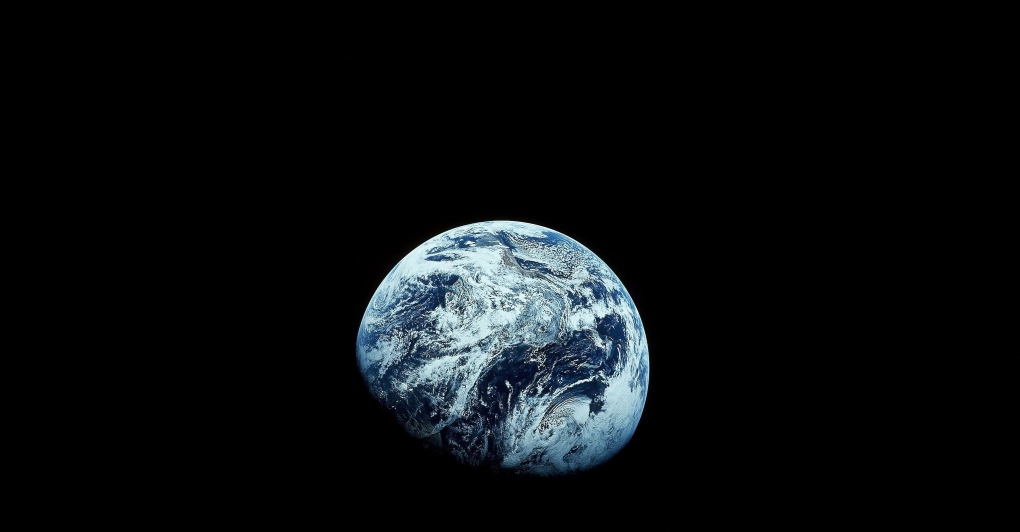
The influence of clouds on climate change is not limited to their direct effects. Cloud formation itself is impactedclimate change, creating a feedback loop. As the Earth warms, clouds become scarcer, resulting in fewer white surfaces reflecting sunlight back into space. This lack of reflection leads to further warming, causing a vicious cycle. In particular, the disappearance of stratocumulus clouds could hinder the Earth’s ability to reflect sunlight and cool itself, potentially pushing the climate into an uncertain and precarious state.
Despite the complexities surrounding clouds and climate change, scientists emphasize their significant influence on future temperature change. Even slight alterations in cloud behavior can have profound effects on the climate’s trajectory. Therefore, understanding and incorporating cloud dynamics into climate models are critical for accurately predicting and mitigating the impacts of climate change.
FAQ:
Q: How do different cloud shapes affect the climate?
A: Cirrus clouds warm the Earthabsorbing and trapping more radiation, while stratocumulus clouds cool the Earthreflecting more sunlight.
Q: How do clouds impact the Arctic’s warming?
A: Polar-stratospheric clouds, also called mother-of-pearl clouds, contribute to the faster warming observed in the Arcticabsorbing and re-emitting infrared radiation.
Q: What is the feedback loop between clouds and climate change?
A: As the Earth warms, clouds become scarcer, resulting in less reflection of sunlight. This contributes to further warming, creating a cycle of increasing temperatures.
Q: Why is it essential to include clouds in climate models?
A: Clouds have a substantial impact on future temperature change, and even slight changes in their behavior can greatly affect the climate’s trajectory.