

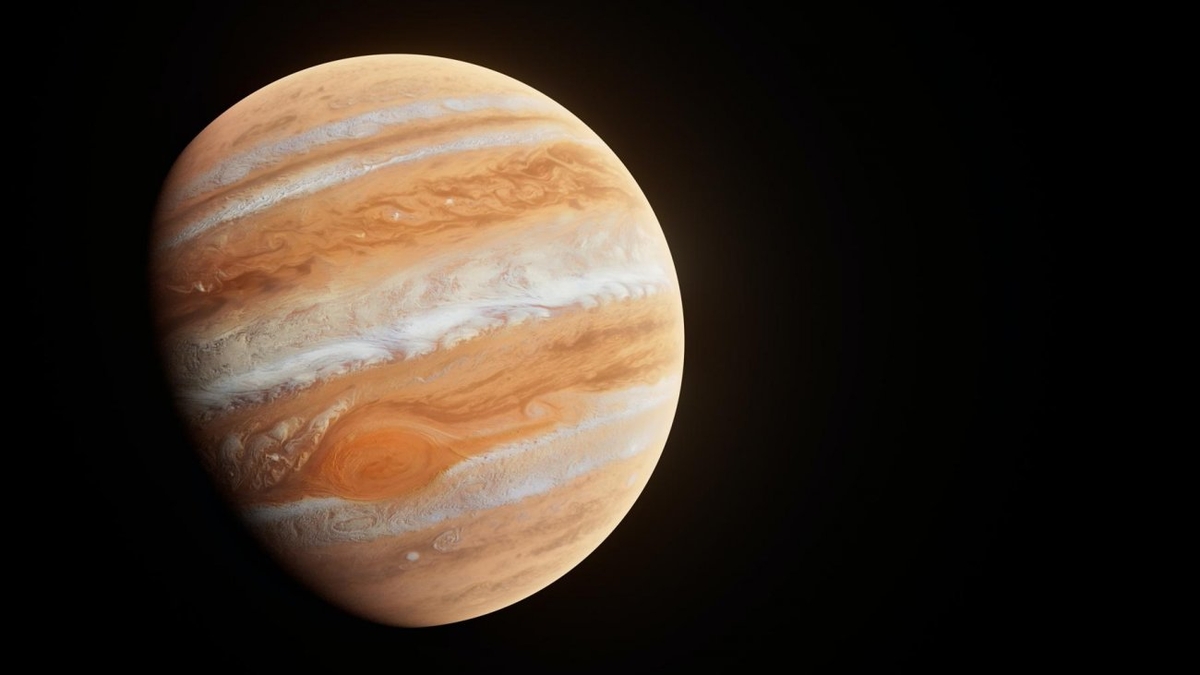
TOI-1736 c: A Colossal Exoplanet in a Habitable Zone

TOI-1736 c, a colossal exoplanet nestled within a system hosting a sun-like star, emerges as a gas giant almost 100 times larger than Earth, and with a mass that’s 2800 times more substantial. Its classification as a gas giant positions it nine times larger than Jupiter, all while residing within a habitable zone – theoretically enabling the existence of liquid water.
Unraveling the Specifics of TOI-1736 c
One year on TOI-1736 c equates to 570 Earth days, positioning the planet a third farther from its star than Earth is from the Sun. However, TOI-1736 c is unsuitable for human habitation due to its lack of solid surface. Nevertheless, potential moons could harbor conditions conducive for life.
The exoplanet is situated approximately 290 light-years away from Earth, marking a relatively close distance on a cosmic scale. Moreover, the system’s star, TOI-1736, ages over our Sun at 4.9 billion years and is 15% larger.
Spotlight on the Second Planet: TOI-1736 b
The system also houses a second planet, TOI-1736 b, classified as a mini-Neptune and located close to its star. Embodying a year that lasts seven Earth days, TOI-1736 b experiences temperatures around 800 degrees Celsius. This planet, which is approximately 2.5 times larger than Earth, orbits its star at a significantly closer distance.
Implications and Future Explorations
The discovery of TOI-1736 c and TOI-1736 b offers astrophysicists new avenues for exploration and understanding of the universe. It also propels the search for extraterrestrial life, given the potential for water in the habitable zone of TOI-1736 c and the possible life-supporting conditions on its moons. The proximity of this system to Earth, in cosmic terms, makes it a promising candidate for more detailed future studies.