

Canadians have little trust in the media these days, and it’s purely the fault of the journalists and editors working in the field.
A poll commissioned by the federal government found that just 32.5% trust the media in this country “to make decisions in the best interests of the public.”
As traditional media outlets continue to lose audience share, it might be worth asking why people are tuning us out or losing trust. Far too often, it’s that people think we have an agenda and increasingly, people who think that would be correct.
Look at the furor over Alberta Premier Danielle Smith’s gender policy.
Most media coverage would have you thinking this was incredibly controversial, that it was only supported by a small fraction of the public. Instead, the opposite is true, and we’ve known that for months now.
Yet in July, an Angus Reid poll conducted in the middle of the controversy found that 78% agreed with the policy and just 14% opposed it.
Still, most media outlets ignored that poll while portraying the issue as if it were the opposite, that those on side with what premiers in Alberta, Saskatchewan and New Brunswick have done are the small group of radicals.
No, it’s not. It’s decidedly mainstream, with the majority in every demographic group and those supporting every party backing it.
Sometimes it feels like the 14% opposed to this policy are all in the media or working for Justin Trudeau.
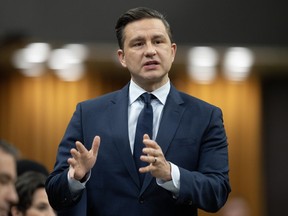
On Wednesday morning, Conservative Leader Pierre Poilievre was asked repeatedly if he agreed with Smith’s plan to ban puberty blockers for kids under 15. They were not just questions, though, they were accusations with the full implication that it was wrong to ban strong hormone therapy from being administered to young children.
“For minors?” Poilievre asked. “Irreversible?”
While it’s a totally rational position to most of the country, in the rarefied air of Parliament Hill, amongst our media, this is the wrong position, and they will tell you that.
And not just the columnists and opinion writers like me, the people who are the straight-up news writers will do the same. As TVO’s Steve Paikin recently said in a podcast episode with The Hub, objectivity is too often something that is absent in journalism now, especially with younger journalists.
Harrison Lowman wrote a long piece for The Hub on how much journalism is changing, especially with reporters seeking to put forward their own social justice agenda in every story.
Much of the coverage of the COVID-19 pandemic suffered from the same problem, lecturing not informing, creating a culture of fear rather than presenting all data and facts available.
If traditional outlets such as print, TV and radio want to regain trust — and with that, perhaps regain their audiences — looking at how they cover the news might be a good place to start.