



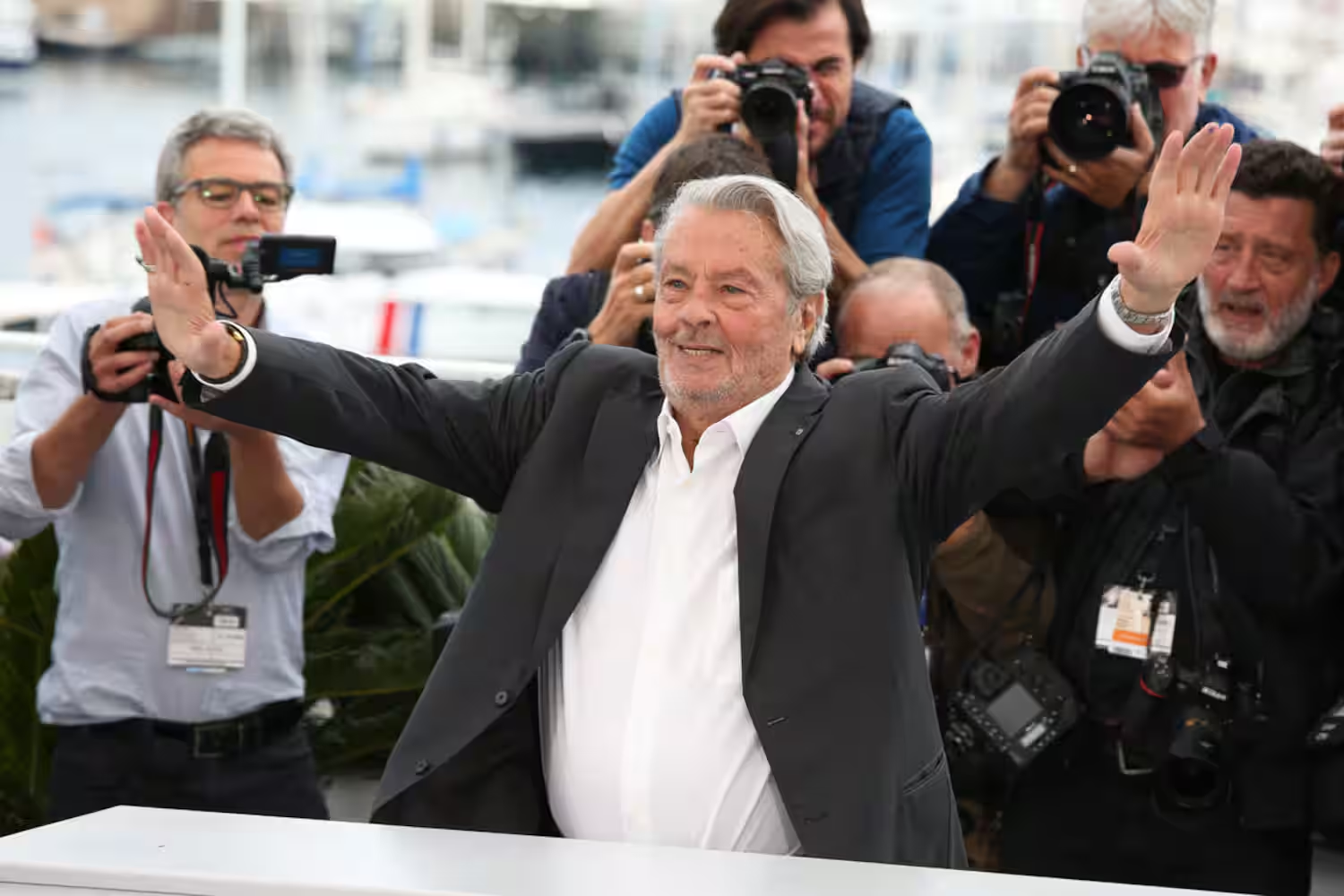
Since the passing of French cinema legend Alain Delon, nearly every article has focused on the duality of his personality—often described as both “light and dark.” It’s as if this complexity implies some grave moral wrongdoing. This perception is reinforced by what some call the “thought police,” a societal tendency to judge individuals even after their passing.
Alain Delon was not merely a talented actor but an iconic figure whose magnetic presence left an indelible mark on the film industry. In films like Monsieur Klein, Delon played deeply introspective roles that challenged preconceived notions. This 1976 film, which he produced and starred in, is a powerful critique of antisemitism in Nazi-occupied France. Despite his significant contribution to art, some critics continue to reduce his legacy to his political views or controversial statements.
Delon’s political beliefs have long been a topic of public debate. Some accused him of having ties to far-right movements and espousing conservative views, particularly regarding same-sex adoption and gender roles. However, can we truly distill such a multifaceted life and career into a handful of controversial opinions?
In today’s society, where opinions are sharply divided, it becomes increasingly challenging to separate the artist from the individual. Yes, Delon made statements that some may find offensive, but he was also a product of his time, embodying both the values and contradictions of an era in which he was not just a sex symbol but also a highly public figure. Like many, he later expressed regret for some of his actions and words, yet this does not seem enough for those who prefer to condemn rather than understand.
Despite the controversies surrounding his life, Delon’s contribution to cinema is undeniable. His powerful performances in films such as Plein Soleil and Le Samouraï have cemented his status as a cinematic legend. His nostalgia for a bygone era—one with clearly defined identities and values—reflects a worldview shared by many, both in France and abroad.
While some may view his opinions as outdated or conservative, many still recognize his right to express them, even if they clash with modern values. In the end, Delon’s work transcends these debates, continuing to inspire and captivate film lovers worldwide.
Alain Delon was a complex figure, both celebrated and criticized. However, perhaps it is time to accept that his complexity is an integral part of his legacy. To reduce Delon to his political views or personal missteps would be a disservice to the man and his career. Like any artist, his work deserves to be evaluated separately from his personal beliefs. Delon’s legacy should be honored for what it is—a remarkable contribution to cinema, and a life lived with undeniable impact.
Follow Canada News Media
Get the day's top Canadian stories and our two daily 60-second news videos wherever you scroll.
X Threads Facebook Instagram LinkedIn TikTok YouTube Pinterest Reddit Substack Flipboard Newsletter RSS