




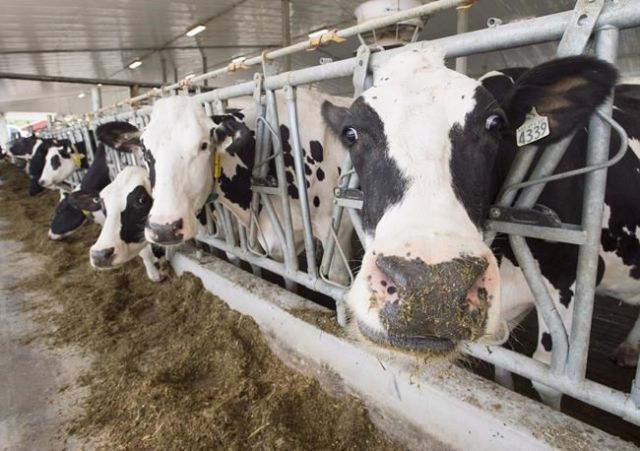

Some Canadian dairy farmers started dumping milk last week to rid the system of surplus production as demand from restaurants plummeted amid the COVID-19 pandemic that forced eateries across the country to close their doors.
“We first started seeing milk being discarded last week,” said David Wiens, vice president of the Dairy Farmers of Canada, a national organization for dairy producers. Though, it’s a bit early to know exactly how much milk farmers dumped at this point.
Dairy farms in British Columbia started disposing of raw milk on April 3, according to a statement on the BC Dairy Association website. The group did not respond to a request for comment
The Dairy Farmers of Ontario, which represents about 3,400 farms, informed producers “these measures would be necessary on a select and rotating basis” last week, said Cheryl Smith, chief executive, in an emailed statement.
It’s “very, very disheartening for farmers,” Wiens said. “It goes against every grain in their body.”
Dairy production in the country is controlled under a system known as supply management. It’s a controversial system that has seen its share of opposition. U.S. President Donald Trump called on Canada to end the practice for dairy.
Canada adopted this model for dairy in the early 1970s to overcome production surpluses in the two decades prior, according to the Dairy Farmers of Canada website. Egg and poultry farmers started to operate under the system in later years.
The Canadian Dairy Commission administers supply management for dairy producers, with the Canadian Milk Supply Management Committee assessing national demand for milk products and setting targets for production annually. Dairy farmers own what’s known as quotas, which allow them to produce a set amount of milk that depends on the anticipated demand. The production amount for their quota can be moved up or down as needed.
Dairy farmers sell their product at a fixed price that accounts for production costs and other factors. Grocers set retail prices.
The supply management system attempts to ensure farmers produce the right amount of milk to feed Canadians’ desire for dairy products.
The outbreak of COVID-19, however, resulted in unforeseen fluctuations, said Wiens.
“A few weeks ago, nobody would have predicted that it would have this impact on the marketplace,” he said.
On the retail front, demand soared as people descended on grocery stores and stocked up on essentials. Some grocery stores placed limits on the amount of butter and other dairy products customers could buy as their just-in-time distribution system couldn’t handle the new milk volumes and keep shelves stocked fast enough, he said.
Farmers have a “a huge surplus of milk now, which had nowhere to go,” said Wiens.
But demand plummeted from food service clients, like restaurants. Eateries across the country shut their doors — some on provincial government orders and others in an effort to help stop the spread of the coronavirus. Nearly all dine-in services across Canada remain shuttered, with some restaurants continuing to operate serving only food to go.
Meanwhile, as demand fluctuates, cows keep producing milk daily.
“There’s no tap that you can just slow down, and, you know, turn on and off as we wish,” said Wiens, who operates a dairy farm near a small town about 70 kilometres south of Winnipeg. “It doesn’t work that way.”