


Valentine’s Day, with its widely commercialized expressions of love—heart-shaped chocolates, greeting cards, flowers, and grand romantic gestures—has long been associated with Western culture. However, Indigenous communities in Canada hold a unique relationship with this day, rooted in their own rich traditions, teachings, and understanding of love. For many, the holiday offers an opportunity to explore how Indigenous values of love, kinship, and community intersect with a holiday that has evolved over centuries in Western society.
As more Indigenous people engage with or critique Valentine’s Day, it is essential to understand how love has always been a central tenet in Indigenous cultures, not just in romantic relationships but in kinship, community, and nature. This article delves into the views of Indigenous leaders, elders, and youth across Canada, reflecting on their beliefs, challenges, and ways of reclaiming the meaning of love in contemporary times.
A Complex Relationship with Valentine’s Day
For many Indigenous people, Valentine’s Day carries a mixed message. While the holiday itself is celebrated widely, it often raises questions about colonial influence and cultural appropriation. Some Indigenous communities have adopted the day to honor their own love traditions, while others remain critical of its capitalist and colonial roots.
Elder Margaret George, a knowledge keeper from the Mi’kmaq Nation, shares her thoughts: “When I was younger, we didn’t have Valentine’s Day the way it’s celebrated now. Love in our communities was not something you expressed with cards or roses. It was something you showed every day—through respect, through helping your family and your community, and through the stories we passed on to our children.”
Elder George goes on to explain how love was understood as a communal practice in Mi’kmaq tradition: “Love was about more than just romance. It was about responsibility to others and the land. The way we cared for each other was through action—harvesting together, sharing food, looking after the elders, and teaching the younger ones. That was our expression of love.”
The introduction of Valentine’s Day into Indigenous communities through European settlers brought both curiosity and skepticism. Some people embraced the holiday as a way to celebrate romantic love, while others were more critical of its commercialization and detachment from traditional values.
David Mosquito, a young Cree activist from Alberta, takes a more critical view: “Valentine’s Day, like many other Western holidays, is a symbol of colonialism. It’s marketed in a way that doesn’t reflect who we are as Indigenous people. The idea that love can be boiled down to buying things, giving flowers and chocolates—that’s not our way. It erases the deeper connections we have with each other and with our lands.”
Traditional Teachings on Love in Indigenous Cultures
Across different Indigenous nations, love holds a spiritual and deeply relational place within the community. These beliefs often contrast with the more individualistic and romanticized notions of love seen in Western culture, particularly on Valentine’s Day.
In many Indigenous traditions, love is understood as interconnected with family, community, and land. Love extends beyond individual relationships and becomes a broader concept rooted in reciprocity and respect. In some cultures, the act of love is seen as part of a sacred responsibility to maintain balance and harmony with the world around us.
Sandra Goodchild, a cultural educator from the Anishinaabe Nation, shares how love manifests in her community’s traditional teachings: “In Anishinaabe teachings, love is one of the Seven Grandfather Teachings, which are core principles we live by. Love is seen as something you show not just to your partner but to your entire community. You demonstrate love by being kind, compassionate, and helping those in need. It’s about living in a good way, in harmony with others and the land.”
Goodchild emphasizes that love is not merely about emotions or physical attraction but is deeply intertwined with respect: “We don’t just ‘fall in love’ like you see in movies. In our culture, love is something you cultivate over time through trust, mutual care, and shared responsibilities. It’s a spiritual bond as much as an emotional one.”
Reclaiming Valentine’s Day: Indigenous Perspectives on Love
Despite the complexities surrounding Valentine’s Day, some Indigenous people have found ways to reclaim and reframe the holiday to reflect their cultural beliefs about love and relationships.
In recent years, there has been a growing movement among Indigenous youth to blend traditional teachings of love with modern expressions of Valentine’s Day, creating a celebration that is more in tune with their values. Social media campaigns, cultural workshops, and community events centered around the day have started to highlight Indigenous interpretations of love, honor, and connection.
Sophie Running Deer, an Ojibwe artist from Manitoba, has been actively involved in this movement. She runs an annual Valentine’s Day event in her community that focuses on honoring all forms of love, including self-love, platonic love, and community love. “We wanted to reclaim Valentine’s Day in a way that made sense for us as Indigenous people,” she explains. “It’s not just about romantic love. We celebrate the love we have for ourselves, our friends, our elders, and Mother Earth. We include everyone in our circle, and that’s what makes it special.”
Running Deer has also created artwork that reflects Indigenous concepts of love, often incorporating symbols from her culture, such as the sacred circle, the eagle, and traditional beadwork designs. “I think art is a powerful way to communicate our values, especially to younger generations who might feel conflicted about Western holidays. By sharing our own stories and teachings through art, we remind people that love is sacred and that it goes beyond what we see in mainstream culture.”
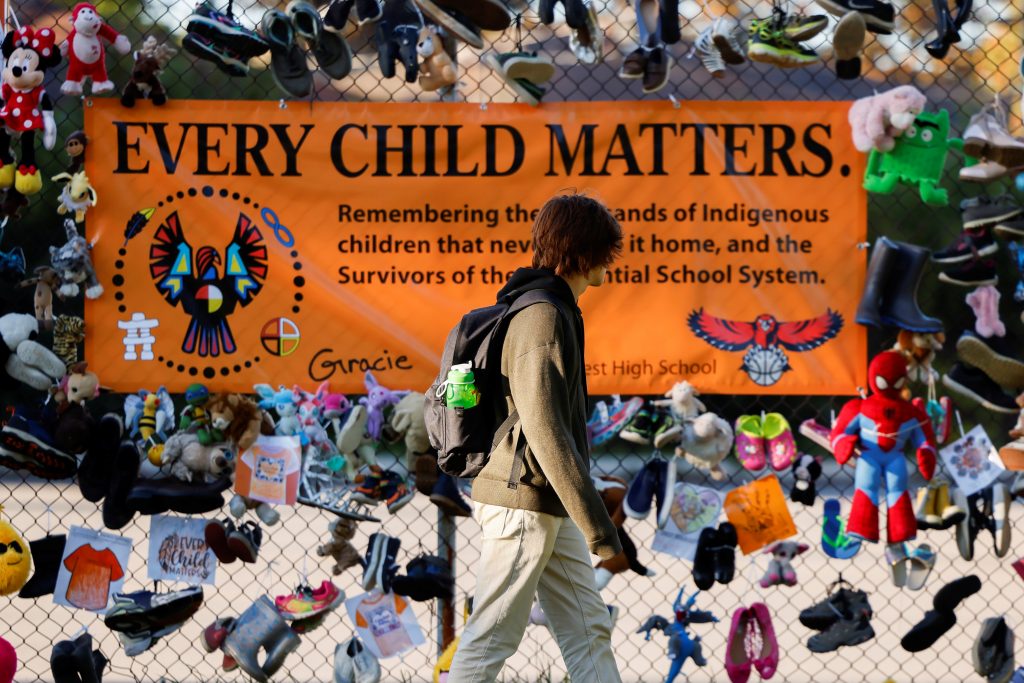
Another important aspect of reclaiming Valentine’s Day for Indigenous communities is addressing the impact of colonization and how it has affected Indigenous concepts of relationships and love. The forced removal of children through the residential school system and the ongoing issues of missing and murdered Indigenous women and girls have deeply impacted Indigenous families and communities, creating a legacy of trauma that continues to affect relationships today.
Chief Lisa Savage of the Squamish Nation reflects on this impact: “Colonization has done a lot of damage to the way we see ourselves and our relationships. Many of our people have been disconnected from their traditional teachings about love, family, and community. But we’re also resilient, and we’re finding ways to heal and reconnect. Celebrating our own forms of love on days like Valentine’s is part of that healing process.”
Valentine’s Day as a Time for Healing and Reconciliation
For some Indigenous people, Valentine’s Day has become a time to not only celebrate love but also to promote healing and reconciliation. Many communities are using the day to honor their ancestors, raise awareness about social issues, and reclaim their cultural identities.
In the past few years, some Indigenous groups have organized events on Valentine’s Day to draw attention to the issue of missing and murdered Indigenous women and girls (MMIWG). The Annual Women’s Memorial March, which takes place in several cities across Canada, often coincides with Valentine’s Day, serving as a reminder of the love and care that Indigenous communities hold for their missing sisters.
Brenda Walker, a grandmother from the Nisga’a Nation, has attended the march for the past decade. “For us, Valentine’s Day is about honoring our lost women,” she says. “It’s a day to show love for those who have been taken from us and to remind the world that their lives mattered. It’s not about chocolates and roses—it’s about remembering and fighting for justice.”
Walker also speaks about how this day helps her community heal: “When we come together and march, we are showing our love for each other and for those we have lost. It’s a powerful form of healing, and it reminds us that love is not just about joy—it’s also about standing up for what’s right.”
Looking to the Future: Blending Tradition and Modernity
As Indigenous people continue to navigate the complexities of Valentine’s Day, many are finding ways to blend traditional beliefs about love with modern expressions of the holiday. For some, this means rejecting the commercialization of the day entirely, while others are choosing to infuse it with their own cultural meanings and practices.
What remains clear is that Indigenous people are redefining what love means in their communities, whether through traditional teachings or contemporary expressions. As more Indigenous voices reclaim Valentine’s Day as a time for honoring all forms of love, it is becoming a reflection of the resilience, strength, and adaptability of Indigenous cultures.
As Elder Margaret George so beautifully put it: “Love is the foundation of our teachings. Whether it’s for our family, our community, or the land, it’s something that we show every day. And no matter what happens in the world around us, that will never change.”
Follow Canada News Media
Get the day's top Canadian stories and our two daily 60-second news videos wherever you scroll.
X Threads Facebook Instagram LinkedIn TikTok YouTube Pinterest Reddit Substack Flipboard Newsletter RSS