



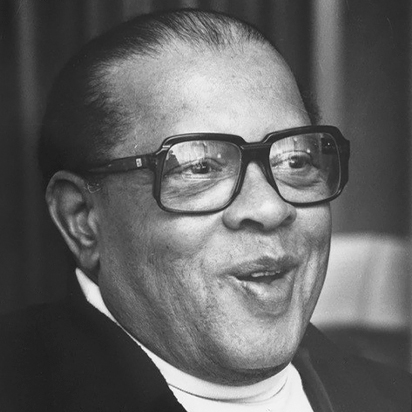
As Black History Month in 2025 unfolds across Canada, we are reminded of the countless Black Canadians who have shaped this nation. One such individual is Dr. Daniel Grafton Hill III, a tireless advocate for human rights and racial equality. Dr. Hill’s work in shaping race relations policy in Canada and championing the rights of marginalized communities continues to resonate today. His contributions, often overlooked, make him a pivotal figure in the fight for justice. As we celebrate his legacy, we not only honor his contributions but also reflect on the ongoing challenges Black Canadians face in achieving equity and inclusion.
Born in the United States in 1923, Dr. Daniel Hill moved to Canada in 1950 after attending Howard University. He pursued a master’s degree at the University of Toronto, where he completed a thesis on Black history in Canada. It was during his studies that he became deeply involved in civil rights activism, recognizing the parallels between the racial injustices in the United States and those experienced by Black Canadians.
Reflecting on Hill’s early years in Canada, Dr. Beverly Salmon, the first Black woman elected to Toronto City Council and a close friend of the Hill family, recalls, “Daniel came to Canada with a purpose. He had this incredible sense of duty to not just highlight, but actively work to change the racial inequalities that existed in our communities.”
In the 1950s and 1960s, racial discrimination was rampant in Canada. Dr. Hill’s academic work, combined with his activism, led him to play a key role in the development of the Ontario Human Rights Commission (OHRC). In 1962, Hill became the first director of the OHRC, an organization designed to combat systemic racism and promote equality.
His work at the OHRC laid the groundwork for stronger policies and procedures to tackle issues such as racial profiling, employment discrimination, and housing inequality. Many of these systemic barriers disproportionately affected Black Canadians and other racialized groups. Dr. Hill’s contributions to shaping anti-discrimination legislation during this period were monumental.
In an interview with the Toronto Star, Dr. Barbara Perry, a professor who has researched anti-Black racism in Canada, said, “Hill’s work with the Ontario Human Rights Commission was groundbreaking. He didn’t just fight for legal changes; he worked to shift societal attitudes. His legacy is felt in every human rights case that’s won today.”
In 1971, Dr. Hill was appointed the first director of the Ontario Human Rights Commission, marking a significant step forward in the fight against racism. However, his influence extended beyond Ontario’s borders. Dr. Hill’s work was instrumental in the formation of national conversations about racial equality. His advocacy helped shape federal policies, including the landmark Canadian Multiculturalism Act of 1988, which enshrined the government’s commitment to fostering a diverse, inclusive society.
Dr. Hill’s commitment to advocating for the rights of Black Canadians was evident in his work. In his book, The Freedom Seekers: Blacks in Early Canada, published in 1981, he delved into the history of Black Canadians, highlighting their struggles and contributions. This work became a cornerstone for understanding the historical context of Black experience in Canada, from slavery to the present day.
In a panel discussion celebrating Dr. Hill’s contributions, Desmond Cole, author of The Skin We’re In, remarked, “Daniel Hill was ahead of his time in recognizing the interconnectedness of race, politics, and society. He didn’t just want to document history; he wanted to use it as a tool for advocacy and change.”
Dr. Hill’s legacy extends to his children, notably his son, Lawrence Hill, the award-winning author of The Book of Negroes. Lawrence Hill has frequently spoken about the impact his father’s activism had on his life and his own understanding of race and identity in Canada. In a 2020 interview with CBC, Lawrence Hill shared, “My father had this unwavering commitment to equality and justice. He saw the worst of humanity, but he always believed that change was possible through education, policy, and persistent activism.”
Dr. Hill’s wife, Donna Hill, was also a formidable figure in her own right, actively engaging in anti-racist work alongside her husband. Together, they created the Ontario Black History Society, an organization committed to preserving and promoting Black history in the province. Their work in raising awareness about Black contributions to Canadian society set the stage for the recognition of Black History Month in Canada, which was officially recognized in 1995.
Despite the incredible strides made by pioneers like Dr. Hill, the fight for racial justice in Canada is far from over. Black Canadians continue to face significant systemic barriers, including racial profiling, disparities in education and healthcare, and economic inequality. These ongoing challenges are a stark reminder of the need for sustained advocacy and policy reform.
Dr. Akua Benjamin, a professor at Toronto Metropolitan University and long-time social justice activist, reflects on Dr. Hill’s legacy in the current context: “We’re seeing some of the same issues Daniel Hill fought against in the 60s still play out today. The difference is that we have a framework now, thanks to people like him, to hold institutions accountable. But there’s still so much work to be done.”
As we celebrate Black History Month in 2025, Dr. Daniel Grafton Hill III’s legacy reminds us of the power of activism and the importance of systemic change. His work laid the foundation for the ongoing struggle against racism and discrimination in Canada. Today, his contributions continue to inspire a new generation of activists, scholars, and policymakers committed to fighting for a more just and equitable society.
As Dr. Hill himself once said, “The struggle for human rights is not about a few big victories; it’s about the everyday fight for dignity, equality, and justice.” His words continue to resonate as we reflect on his life and legacy during this year’s Black History Month celebrations.
Dr. Hill’s story is one of resilience, leadership, and hope. His contributions to Canadian society cannot be understated, and his legacy continues to inspire new generations of advocates for racial justice. While progress has been made, the fight for equality is ongoing. In celebrating Dr. Hill, we also reaffirm our commitment to confronting racism in all its forms and building a society that values diversity, inclusion, and justice.
As Dr. Hill’s daughter Karen Hill, a historian and educator, said during a 2024 interview with the National Post, “My father believed that change was possible, but he also knew it would take a long time. We honor him by continuing his work, by ensuring that the values of justice and equality he fought for remain at the forefront of our national consciousness.”
In 2025, as we honor the life and legacy of Dr. Daniel Grafton Hill III, we also remember that the work for justice continues, and it’s up to all of us to carry the torch forward.
Follow Canada News Media
Get the day's top Canadian stories and our two daily 60-second news videos wherever you scroll.
X Threads Facebook Instagram LinkedIn TikTok YouTube Pinterest Reddit Substack Flipboard Newsletter RSS