


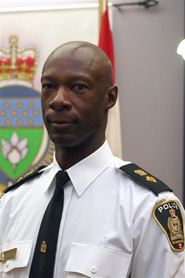
A Trailblazer in Canadian Law Enforcement
As Black History Month 2025 unfolds, the legacy of Devon Clunis, Canada’s first Black Chief of Police, takes center stage as a beacon of progress and representation in the country’s law enforcement sector. A visionary leader and dedicated public servant, Clunis’ journey from immigrant to police chief is one of resilience, reform, and community-oriented policing.
Born in Jamaica, Clunis moved to Winnipeg, Manitoba at the age of 12, facing the cultural and social challenges that many Black immigrants encounter in Canada. In 1987, he joined the Winnipeg Police Service (WPS), determined to make a difference in the lives of those who, like him, sought justice and equality.
“Representation matters, and Devon Clunis has proven that through dedication and service, change is possible,” says Dr. Akwasi Owusu-Bempah, a criminologist at the University of Toronto. “His tenure as Canada’s first Black police chief was a historic moment in our legal and social systems.”
Rising Through the Ranks: Clunis’ Career in Policing
Over his 25-year career with the WPS, Clunis held numerous positions, from patrol officer to detective, working in traffic, investigations, and community relations. These diverse roles helped shape his vision for a policing model that prioritizes community engagement over mere enforcement.
“I saw firsthand how the community’s relationship with law enforcement impacts crime and safety,” Clunis said in a 2013 Black History Month speech. “If we want true justice, we must build trust and work together.”
His colleagues admired his leadership. Retired Superintendent David Thorne, a long-time friend and fellow officer, recalls: “Devon never lost sight of the people behind the badge or the people in the neighborhoods we served. He always asked, ‘How can we do better?’”
Breaking Barriers: Becoming Canada’s First Black Police Chief
On November 2, 2012, Clunis made history when he was sworn in as Chief of Police of the Winnipeg Police Service, becoming the first Black police chief in Canada.
“It was a moment that changed policing in Canada forever,” said Mark Saunders, former Chief of the Toronto Police Service. “For young Black Canadians considering careers in law enforcement, it showed that leadership roles were not out of reach.”
At a time when issues of racial discrimination, police reform, and systemic bias were widely debated, Clunis sought to foster relationships between law enforcement and marginalized communities.
“We need to see one another as partners,” Clunis emphasized in his 2013 speech. “Law enforcement cannot exist without public trust. If we build connections, we create safer neighborhoods for everyone.”
A Vision for Community-Based Policing
One of Clunis’ defining contributions to policing in Canada was his commitment to community policing—a model that emphasizes engagement, education, and crime prevention over punitive enforcement.
“Devon Clunis didn’t just talk about change—he made it happen,” says Leslie Spillett, an Indigenous activist and community organizer in Winnipeg. “He understood that real safety comes from addressing root causes, not just from arrests.”
Under his leadership, initiatives like youth mentorship programs, anti-gang initiatives, and outreach to Black and Indigenous communities were prioritized. He advocated for greater mental health training for officers and increased support for victims of crime.
“Policing is not just about responding to crime—it’s about preventing it,” Clunis said. “By working with schools, families, and local leaders, we create long-term solutions.”
Challenges and Controversies
Despite his progress, Clunis faced criticism from those who believed that systemic change in policing was not happening fast enough.
“There were still issues of racial profiling and over-policing of Black and Indigenous people,” says Robyn Maynard, author of Policing Black Lives: State Violence in Canada. “While Clunis made important strides, structural racism in law enforcement requires deeper institutional reform.”
Clunis acknowledged the difficulties, stating: “Change does not happen overnight, but leadership means taking responsibility, listening, and constantly striving for better.”
Retirement and Continued Advocacy
Clunis retired in 2016, leaving behind a legacy of innovation and inclusivity in policing. However, his commitment to public service did not end with retirement. He went on to co-author the book The Little Boy from Jamaica: A Canadian History Story, sharing his journey and inspiring young people to pursue leadership roles.
“He may no longer wear the uniform, but his voice is still powerful,” says Sergeant Nadia Thompson, a Winnipeg officer and mentee of Clunis. “His work continues to inspire the next generation of Black leaders in law enforcement.”
Honoring Clunis’ Legacy in Black History 2025
As Canada reflects on its Black history in 2025, Clunis’ story serves as a reminder of the power of representation, leadership, and perseverance. His career opened doors for Black Canadians in law enforcement, paving the way for a more inclusive and community-focused approach to policing.
“We still have a long way to go,” says Desmond Cole, journalist and activist. “But Devon Clunis’ appointment was a milestone that should be recognized, celebrated, and built upon.”
As Black History Month progresses, his words from his 2013 Black History Month speech remain ever-relevant:
“Never let anyone tell you that you do not belong. You are part of this country’s story. You have the power to lead, to change, and to make a difference.”
References
- Clunis, Devon. The Little Boy from Jamaica: A Canadian History Story.
- CBC News, “Devon Clunis on Community Policing and the Future of Law Enforcement.”
- Black History Month 2013 Launch Reception Speech, Devon Clunis.
- Interviews with Dr. Akwasi Owusu-Bempah, David Thorne, Mark Saunders, Leslie Spillett, Robyn Maynard, and Desmond Cole.
Follow Canada News Media
Get the day's top Canadian stories and our two daily 60-second news videos wherever you scroll.