


The unprecedented COVID-19 crisis has transformed federal politics in profound ways, has reset established views of Canadians on major policy issues like deficits or the role of government in the lives of Canadians, and it will reshape political dynamics in the future, say pundits and MPs.
“Why don’t we use the deficit as an example? The general, established point of view among all the parties is that large deficits are things that are generally to be avoided,” said Nik Nanos, founder and chief data scientist for Nanos Research, in an interview with The Hill Times.
“They are necessary in certain circumstances, but obviously, in the ideal world governments would not run large deficits. And that conventional, traditional wisdom now is being smashed into little bits as Canadians look to the government to help them pay the rent, pay their mortgage, and put food on the table. Canadians will [now] be looking for help from the government; big government will not necessarily be a bad thing when it comes to supporting Canadians and direct financial transfers to them,” said Mr. Nanos.
By deadline on Friday, April 15, there were a total of 72,536 confirmed COVID-19 cases in Canada, and 5,337 had died of the disease, according to the Public Health Agency of Canada.
Pollster Nik Nanos told The Hill Times that the coronavirus will change the political dynamics and reset established views of Canadians about policy issues, such as the economy and the role of government in people’s lives. The Hill Times file photograph
Since the start of the pandemic, Prime Minister Justin Trudeau’s (Papineau, Que.) government has been focused singularly on responding to the pandemic as it has affected the lives of all Canadians. All other policy issues, including those the Trudeau Liberals promised to address when they won their second mandate, have gone on the back burner. To help Canadians cope with the economic and health effects of COVID-19, the government has been regularly announcing billions of dollars worth of economic programs. More than seven million Canadians have applied for emergency relief funding from the federal government.
Once the crisis is over, the government is expected to announce measures to help Canadians and businesses as the economy recovers. The Trudeau government has not said so far publicly how much money it is planning on spending in its fight against the coronavirus. But Parliamentary Budget Officer Yves Giroux told the House Finance Committee last week that the deficit could go well beyond $252-billion this year, and the national debt could hit $1-trillion.
The COVID-19 crisis has fundamentally changed the way federal politicians have traditionally interacted with Canadians. The need for social distancing between people to avoid spreading the virus is a key reason for this change. Before the pandemic started, it was a routine for MPs to go door knocking in their constituencies, attend community events and large gatherings, and meet with people face to face in ridings, constituency and Hill offices. Fundraising was also a part and parcel of every MP’s political work. But, since the start of the crisis, all federal politicians have retooled their political operations by ceasing any physical contact with constituents, and conducting almost all of their work virtually. Most of the MPs and their staff are working remotely and are relying heavily on technology to undertake their work.
Much of the parliamentary work including Question Period, committee meetings, and caucus meetings has been conducted online. No one knows yet how long will this go on. It’s anyone’s guess when a vaccine will become available, or whether there will be a second or third wave of COVID-19.
Mr. Nanos said that we’re going to see an even more accelerated use of technology in the coming weeks and months, to the point that in the not-too-distant future politicians’ door-knocking, or in-person fundraising could become a thing of the past.
“We’re probably going to see retail politics take a page out of the book of delivery services, [like] UPS and Amazon: it’s knock and drop,” said Mr. Nanos.
“They don’t wait to say, ‘Hello.’ Basically, what they do is knock on the door, buzz the doorbell, they leave their package or their pamphlet and away they go. So we may see similar types of strategies for campaigns, where there’s no expectation or wish even to interact face to face. But they want to make sure that that prospective voter knows that something has been left on their doorstep for them to pick up that’s important for the election.”
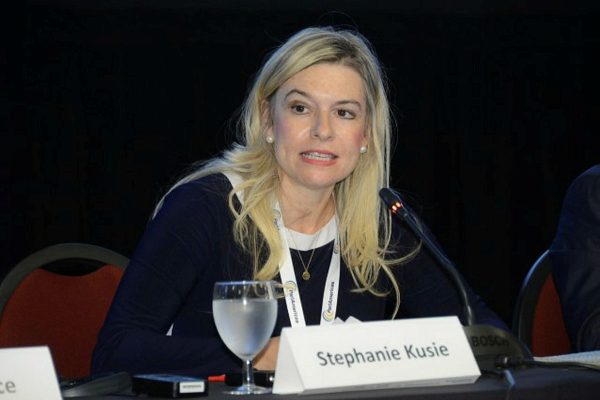
Conservative MP Stephanie Kusie says that new MPs are frustrated that they’re working remotely and not able to do their parliamentary duties in Ottawa. The Hill Times file photograph
But Clive Veroni, a Toronto-based author and expert on marketing and brand positioning, predicted that the changes to political work due to the outbreak will be a short-lived phenomenon. He said once the outbreak is over, political activities will gradually and slowly return back to the way that they have been conducted over the past decades.
“In the short term, certainly there’s going to be a change,” said Mr. Veroni. “But eventually we will revert back to our natural human behaviours. We’ve been through pandemics before; we’ve been through plagues of significant death rates. And what happened afterwards, people eventually went back to being human beings. We eventually went back to gathering with each other and shaking each other’s hands and being in large groups together. It’s a natural human instinct to gather, to be close to one another, to be physically close with one another to be interacting. But I don’t know how long that will take, that might take a couple of years.”
Mr. Veroni said that, from a political perspective, the social distancing phenomenon has worked out well for the Liberals. He pointed to Prime Minister Trudeau’s daily press conferences, where he makes funding announcements to help out Canadians dealing with job losses.
“In times of crisis, politics is about taking action that people feel is addressing their most basic needs,” said Mr. Veroni. “And that’s actually more important than being seen, being heard, pressing the flesh, if you will.”
Pollster Greg Lyle, president of Innovative Research, said politics is all about human interactions and communicating with the masses and not being able to meet people in-person is posing a key challenge for political parties and politicians, he said.
NDP MP Charlie Angus says COVID-19 has provided an opportunity to MPs to further strengthen their relationship and trust with constituents. The Hill Times photograph by Andrew Meade
“The ability to sit down with someone and hash out your differences; it’s not the same thing when you do it over Zoom,” said Mr. Lyle.
“That’s a challenge. It’s as much an organizational challenge for parties in the government, as it is a communications challenge, and how they deal with their stakeholders. So a lot of cues that we get in-person get missed when we’re not in-person.”
Seasoned Conservative political strategist Tim Powers, vice-chair of Summa Strategies, said the pandemic has changed the tone of political relationships even amongst archrivals. He cited the examples of Ontario Premier Doug Ford and Alberta Premier Jason Kenney, who were both highly critical of the federal government prior to the outbreak, but now have a smooth working relationship in the war against coronavirus.
He said the coordination between both levels of government has showed a “greater spirit of cooperation.”
Mr. Powers said that because of social distancing, politicians have not been able to interact with their constituents, but once things get better, these interactions will get back to normal.
“Politics is a human business,” said Mr. Powers. “So I think it will take a little bit of time, but I don’t see people not wanting to engage with others in the settings where they used to engage [before].”
Mr. Powers said that a key part of the parliamentary experience is the interaction amongst MPs from the same and different caucuses, during official duties and after-hours get-togethers. The new MPs who were first elected last October have not had an adequate amount of time to mingle with their colleagues, he said, because Parliament sat only for about six weeks between October and the suspension of in-person House sittings in mid-March.
“You had a whole new class of MPs that were elected in November, who really have not had that opportunity to live the full parliamentary experience and build the relationships that are so vital as you try and have a career in Ottawa,” said Mr. Powers.
Conservative MP Stephanie Kusie (Calgary Midnapore, Alta.), who was first elected in a byelection in 2017 and was re-elected in October, said new MPs are frustrated because they have not been able to have the parliamentary experience that they hoped to get. She said they are frustrated that they’re not able to sit in the House Chamber, attend in-person committee and caucus meetings, or interact with their colleagues in-person.
“They are not having the experience that they thought they would get when they won, and not having the capacities to represent in the ways that they had hoped,” said Ms. Kusie.
“It’s just frustrating: they worked so hard to get elected to do this job. And here they are, you know, tethered in their homes essentially, to do this. Being in the Chamber is such an honour, it really is, and having the opportunity to have access to just the most fascinating people in every field,” Ms. Kusie said.
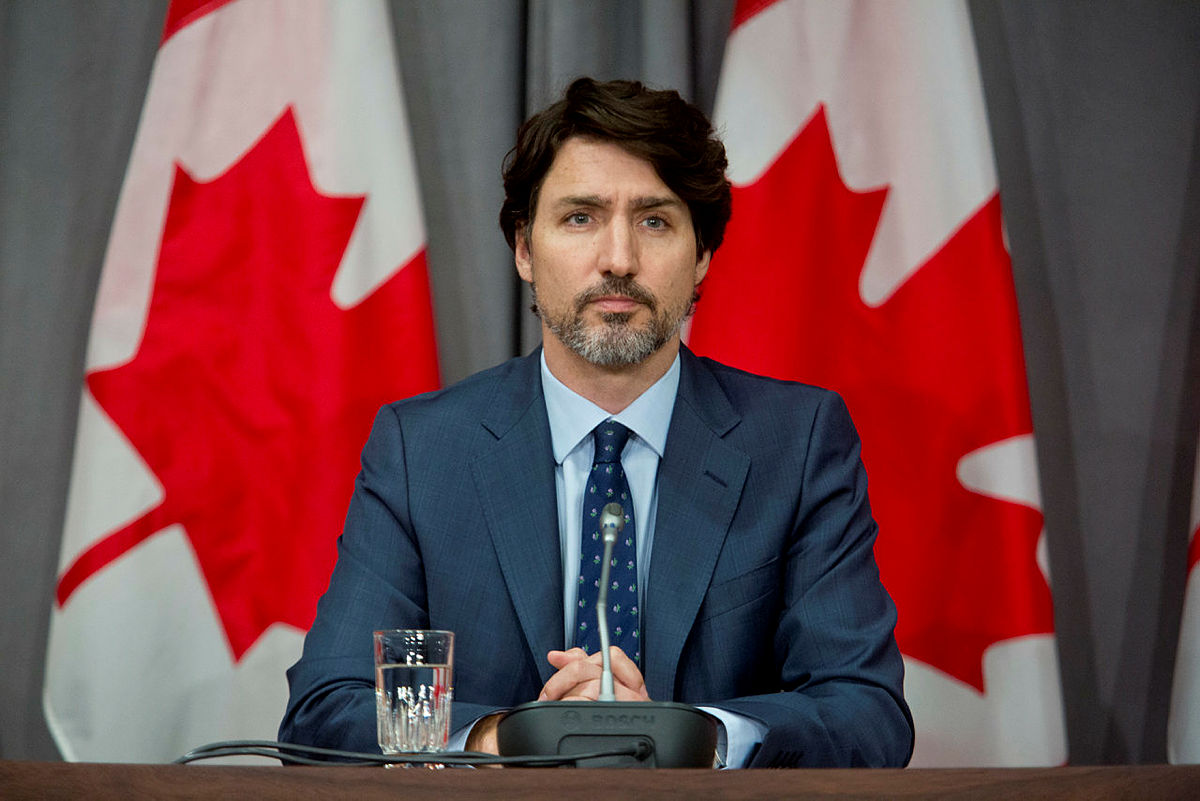
Since the start of the pandemic, Prime Minister Justin Trudeau has been announcing billions of dollars in new programs to help Canadians cope with the negative economic and health impacts of COVID-19. The Parliamentary Budget Officer said last week that the national debt could hit $1-trillion this fiscal year. The Hill Times photograph by Andrew Meade
Ms. Kusie also said that these days she’s relying mostly on social media and the phone to reach out to her constituents.
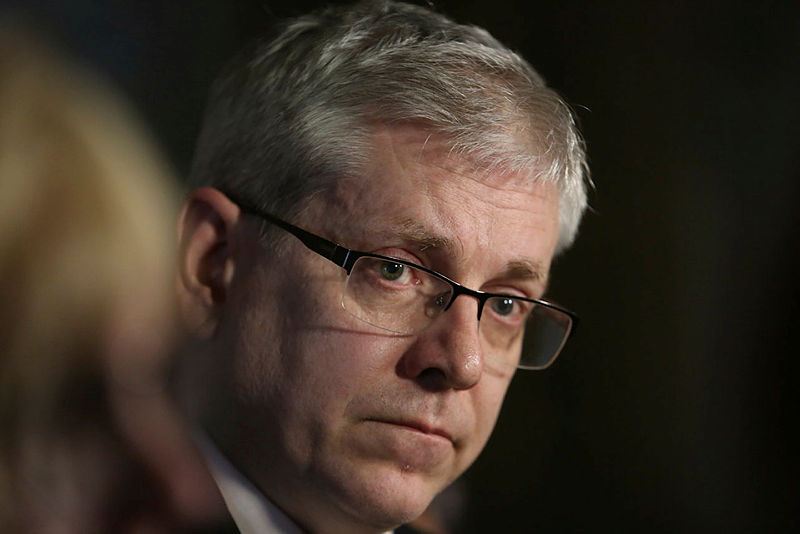
NDP MP Charlie Angus says the pandemic has shown Canadians how important the government’s role is in their everyday lives and he says all politicians should figure out how to work together in the post-COVID-19 era for the sake of the country. The Hill Times photograph by Andrew Meade
Six-term NDP MP Charlie Angus (Timmins-James Bay, Ont.) told The Hill Times that he’s focusing only on helping and reassuring his constituents in these uncertain times. He said this is an opportunity for MPs to further strengthen their relationship with constituents by providing them with what they need in their everyday lives.
“COVID presents challenges, but it also presents opportunities,” said Mr. Angus, who was first elected in 2004. “COVID is an opportunity to remind people their local MP is the person that’s there for them and is able to open doors to the government to talk to ministers to try and find solutions.”
Mr. Angus also said that this crisis has proven to Canadians how important the government’s role is in their everyday lives. The key question, he said, that all politicians must pay attention to going forward is how they can all work together to further improve Canada in the post-COVID-19 era.
“COVID has made very, very clear that the government has enormous capacity, enormous power to influence lives for the better and people are looking to government right now,” said Mr. Angus. “This has been a revolutionary moment. …The question that we really need to grapple with is, what will the new Canada look like after COVID, and what would be the role of politicians to help us get there to where we need to be?”
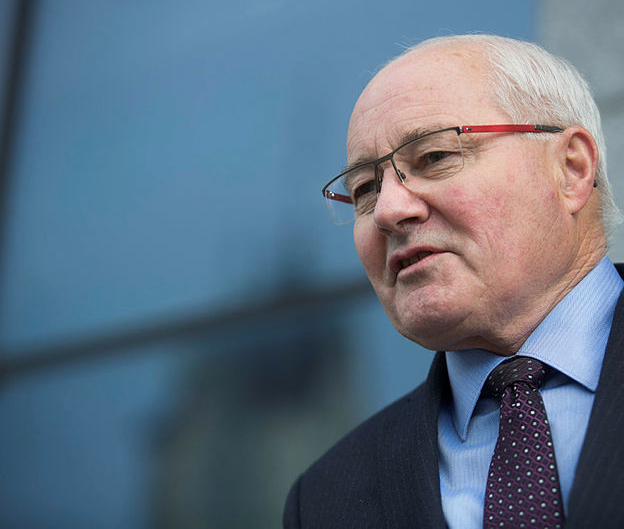
Eight-term Liberal MP Wayne Easter, who represents Malpeque, P.E.I., told The Hill Times he has never had as much interaction with his constituents as he has in the last two months. The Hill Times photograph by Andrew Meade
Eight-term Liberal MP Wayne Easter (Malpeque, P.E.I.) told The Hill Times he has never had as much interaction with his constituents as he has in the last two months. He said he prefers to meet people in-person, but because of the social distancing requirements, is talking to his constituents over the phone. Mr. Easter also said he cannot remember any time in the past when the government consulted all MPs as much as they have since the pandemic hit Canada.
“I don’t think you’ve ever seen as much input into policy-making from Members of all parties as you’ve seen in the last two months,” said Mr. Easter.
The Hill Times
Follow Canada News Media
Get the day's top Canadian stories and our two daily 60-second news videos wherever you scroll.
X Threads Facebook Instagram LinkedIn TikTok YouTube Pinterest Reddit Substack Flipboard Newsletter RSS