

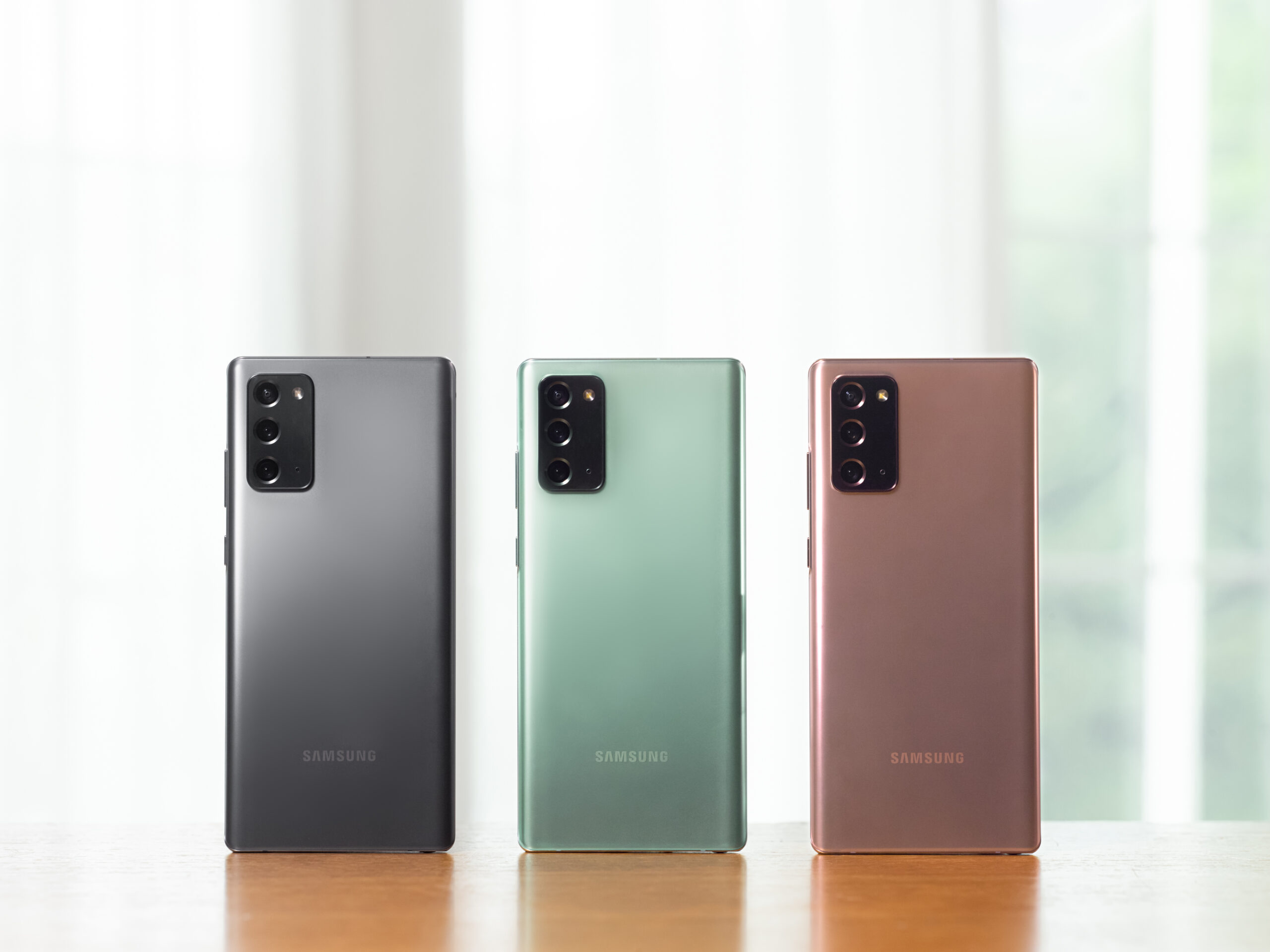
Following weeks of rumours, Samsung has officially revealed the Galaxy Note 20 Ultra and Galaxy Note 20.
In terms of look, both smartphones are very similar and take their visual cues from Samsung’s still somewhat recently released S20 series, but with a slightly more boxy design.
Regarding technical specifications, both the Note 20 and Note 20 Ultra feature Qualcomm’s 5G-capable Snapdragon 865+ processor and start at 128GB of storage, though the Ultra also has a configuration that features 512GB of storage.
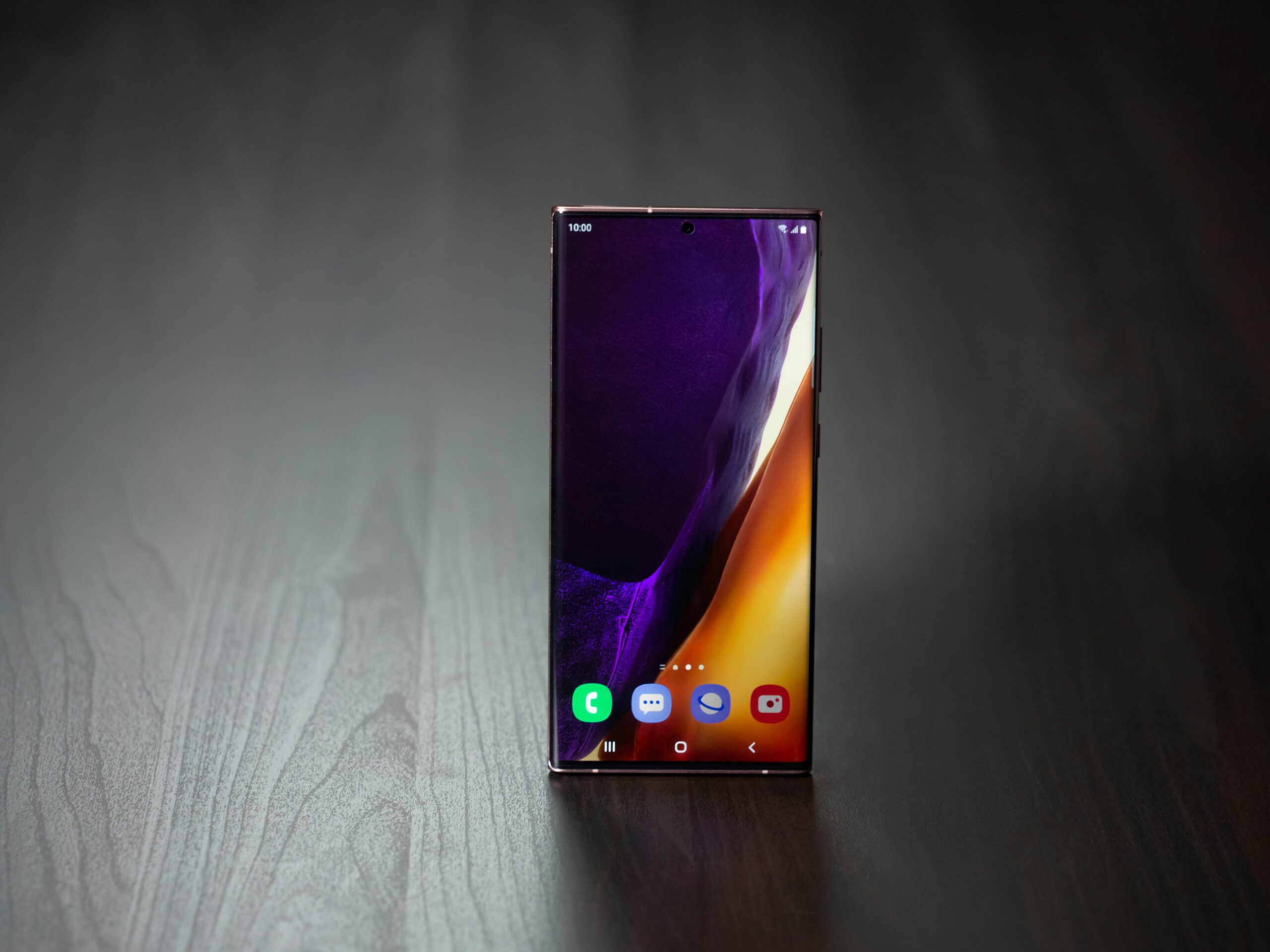
The Note 20 Ultra’s 6.9-inch curved Dynamic AMOLED screen measures in at 3,088 x 1440 pixels with a 21:9 aspect ratio and a 120Hz refresh rate. It’s important to note that, according to Samsung, the Note 20 Ultra’s screen can’t run at 120Hz when it’s set to 3,088 x 1,440 pixel resolution, just like the S20 Ultra. Other Note 20 Ultra specs include a 4,500mAh battery, an in-display fingerprint sensor, 12GB of RAM and Android 10.
On the other hand, the Note 20 features a 6.7-inch Super AMOLED 2,400 x 1,800 pixel display with a 20:9 aspect ratio and a 60Hz refresh rate. Other Note 20 specs include a 4,300mAh battery, an in-display fingerprint sensor, 8GB of RAM and Android 10.
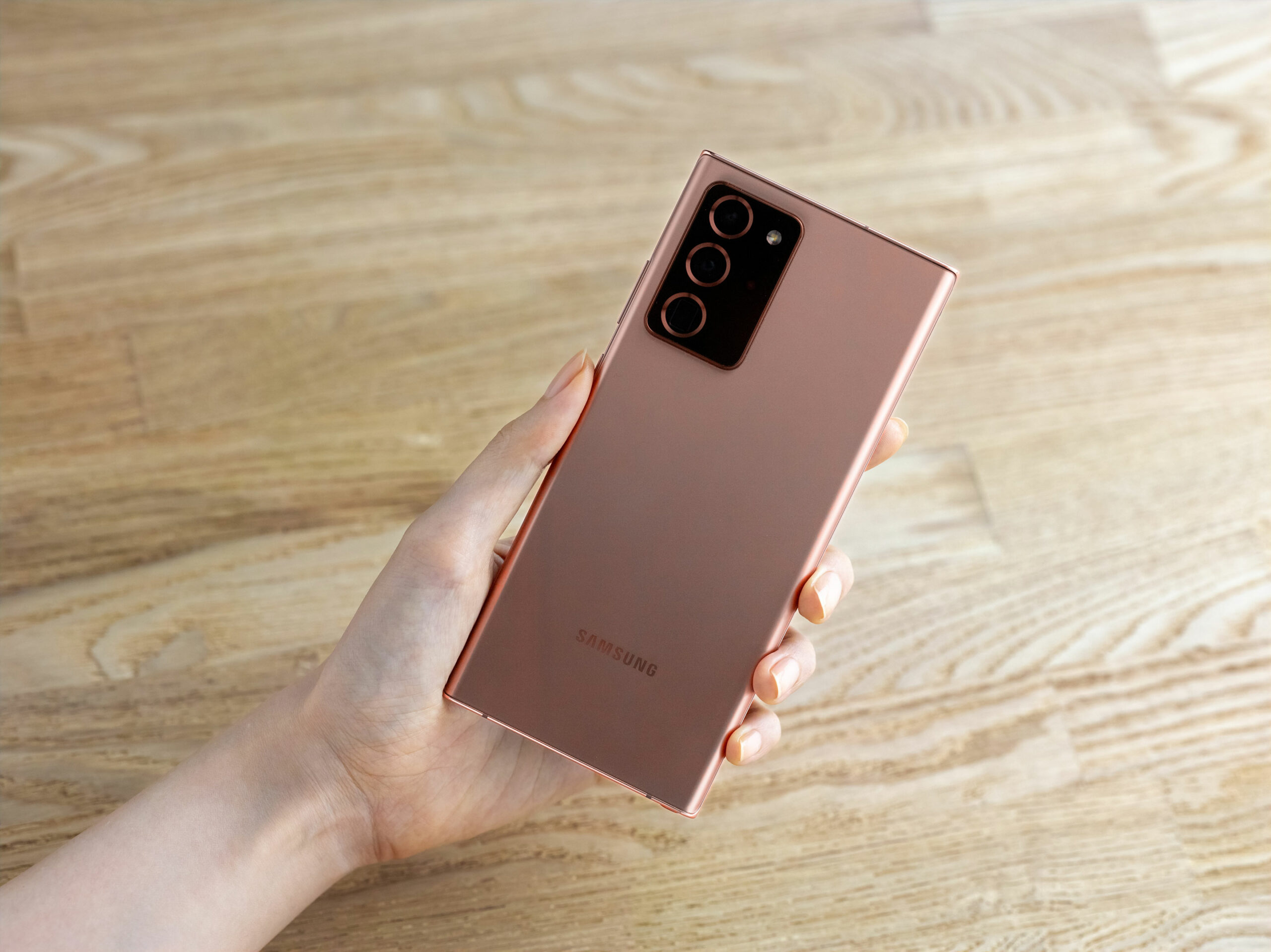
In terms of cameras, the Note 20 Ultra features a 108-megapixel, 48-megapixel and 12-megapixel camera, on its rear. The front-facing camera comes in at 10-megapixels.
The Note 20 features a 12-megapixel, 64-megapixel and 12-megapixel rear camera array, coupled with a 10-megapixel front-facing camera.
In terms of new features, Samsung says the S Pen now features a 40 percent improvement in latency across the Note 20 and Note 20 Ultra, coming in at just 9 milliseconds. The stylus is also getting new S Pen gestures, including ‘move forward,’ ‘home’ ‘recent app,’ ‘smart select’ and ‘screen capture.’
Samsung’s Notes app has also been expanded with timestamps when you’re making a voice recording and taking notes, as well as PDF editing. Further, the Notes app now syncs with Microsoft’s Outlook and OneNote apps.
Other information worth noting is that Samsung says that smartphone features “optimized latency with powerful 5G connectivity” and “Wi-Fi optimization technology” in relation to Microsoft’s project xCloud video game streaming service. It’s unclear precisely what this means, but the experience with xCloud should be improved when the platform is running on the Note 20 and Note 20 Ultra.
Dex, Samsung’s desktop platform, is also going wireless with the Note 20 and Note 20 Ultra, allowing users to view media on any TV that supports screen mirroring. Finally, the Note 20 Ultra features Gorilla Glass Victus, a new form of glass that is capable of surviving a two-metre drop and that is twice as scratch resistant as Gorilla Glass 6.
Samsung is offering the first 15,000 Canadians that pre-order or buy the Note 20 an ‘e-voucher’ available through the Samsung Members app that gives purchasers the option of 3-months free of Game Pass Ultimate, an Xbox controller and a wireless charger, or free Galaxy Buds+. With Note 20 Ultra pre-orders, you’ll be able to select between the same free gaming bundle, or Samsung’s new Galaxy Buds Live earbuds.
In the box, the Note 20/Note 20 Ultra include an S Pen, 25w charger, a USB C-to-C data cable, a screen protector, but no headphones. Despite rumours that Apple would be the first smartphone manufacturer to stop including wired headphones in the box, Samsung made the controversial move first.
It’s also worth noting that while the Note 20 Ultra still features a microSD card slot that works with up to a 1TB card, the Note 20 doesn’t. Further, the Note 20 features a flat display, while the Note 20 Ultra’s screen is more curved like last year’s Note 10+.
The 128GB Note 20, which is available in new ‘Mystic Bronze’ and ‘Mystic Green’ colours is also available in ‘Mystic Black,’ and costs $1,399 CAD. The 128GB Note 20 Ultra costs $1,818, and the 512GB configuration costs $2,029. Ultra colours include ‘Mystic Bronze’ and ‘Mystic Black.’
Pre-orders for the Note 20 and Note 20 Ultra launch on August 5th with the smartphone being available on August 21st.
Image credit: Samsung