


Article content continued
White occurs in several works in the exhibition. Although often justified as the best colour against which to show work because of its supposed neutrality, too often white functions as one of the exclusionary mechanisms of contemporary art. Indirectly, it also refers to the sociological whiteness of art and its creation and continued domination primarily by people of European descent. White presents itself as trans-historical, as one writer has said, even though it’s rooted in a history of Western chromophobia.
Linklater, who lives in North Bay, Ontario, is from Moose Cree First Nation on James Bay. His work reframes not only colour but also the history of western art from an Indigenous perspective. He’s also reframing the traditional story of colonialism.
The white of the teepee poles connects to the white walls of the gallery and the white of the washing machine framed by another set of totem poles in anteclovis. ‘Clovis culture’ is part of a colonial theory from the 1950s based on limited archaeological evidence that claimed humans have been in North and South America for about 12,000 years. Many recent discoveries have pushed that back to 33,000 years and earlier. The title describes the theory as anthropological ante in a giant poker game. But with the washing machine on its side in a functionally useless position, it suggests this work is one of the ways the rules are being changed.

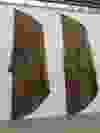
Hanging on the gallery wall are hand-dyed brown linens with black gestural and digital marks. At the top, they’re so well connected to the wall with nails that they’re not going to let go easily. But they’re not contained by the wall’s whiteness either: most of the material hangs loosely like it’s resisting the prison of containment. The work is called winter in america_nodoor_âkamenimok. In Cree, if ahkameynimok is a variant spelling, it means persevere and don’t give up. If the past 500+ years of colonialism have been a winter in America for Indigenous people, then spring may be around the corner. This is no time, the work suggests, not to keep going.

Follow Canada News Media
Get the day's top Canadian stories and our two daily 60-second news videos wherever you scroll.
X Threads Facebook Instagram LinkedIn TikTok YouTube Pinterest Reddit Substack Flipboard Newsletter RSS