

Perth, Western Australia, Australia–Scientists from the International Centre for Radio Astronomy Research
(ICRAR) and the University of Western Australia
(UWA) teamed up with researchers from the French National Centre for Space Studies
(CNES) and the French metrology lab Systèmes de Référence Temps-Espace
(SYRTE) at Paris Observatory; by combining the Aussies’ phase stabilization technology with advanced self-guiding optical terminals, it allowed laser signals to be sent from one point to another without interference from the atmosphere, thus setting the new world record for the Most stable Laser transmission of a laser signal through the atmosphere.
The team set the world record for the most stable laser transmission by combining the Aussies’ phase stabilization technology with advanced self-guiding optical terminals. Together, these technologies allowed laser signals to be sent from one point to another without interference from the atmosphere.
Lead author Benjamin Dix-Matthews, a Ph.D. student at ICRAR and UWA, said the technique effectively eliminates atmospheric turbulence. “We can correct for atmospheric turbulence in 3-D, that is, left-right, up-down and, critically, along the line of flight,” he said. “It’s as if the moving atmosphere has been removed and doesn’t exist. It allows us to send highly stable laser signals through the atmosphere while retaining the quality of the original signal.”
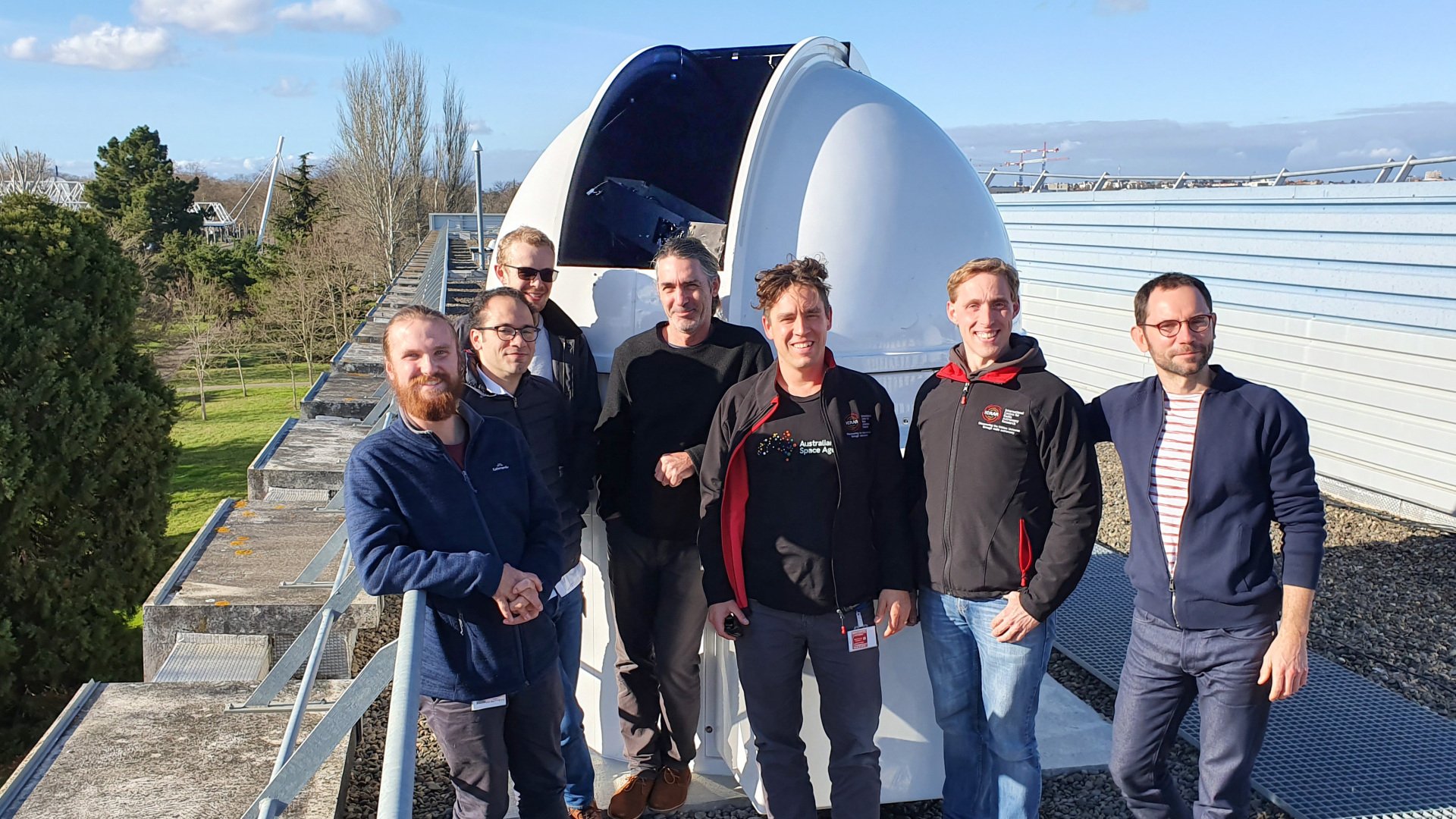
Photo 1: UWA’s rooftop observatory. Credit: ICRAR.
The result is the world’s most precise method for comparing the flow of time between two separate locations using a laser system transmitted through the atmosphere, The
Phys.org reports.
ICRAR-UWA senior researcher
Dr. Sascha Schediwy said the research has exciting applications. “If you have one of these optical terminals on the ground and another on a satellite in space, then you can start to explore fundamental physics,” he said. “Everything from testing Einstein’s theory of general relativity more precisely than ever before, to discovering if fundamental physical constants change over time.”
The technology’s precise measurements also have practical uses in earth science and geophysics. “For instance, this technology could improve satellite-based studies of how the water table changes over time, or to look for ore deposits underground,” Dr. Schediwy said.
There are further potential benefits for optical communications, an emerging field that uses light to carry information. Optical communications can securely transmit data between satellites and Earth with much higher data rates than current radio communications.
[embedded content]
[embedded content]