


Christine Caron wants more research into post-sepsis syndrome and more help for those who suffer from it. She also wants more information made available to people so they can recognize when sepsis has taken hold.
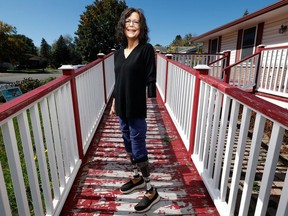
Nine years after losing three of her limbs to a life-threatening bout of sepsis, Ottawa’s Christine Caron is devoted to helping others cope with the often painful aftermath of the same condition.
Sepsis can be a life changing medical event and many survivors deal with post-traumatic stress, chronic pain, fatigue and reduced organ function.
“There are many people suffering with brain fog and pain from vascular damage after surviving sepsis,” said Caron, 58, a mother of four and a new grandmother.
“It’s strange to say, but I’m one of the lucky ones: I don’t have the same joint and vascular pain that a lot of these people have.”
Sepsis is a life-threatening condition resulting from the body’s runaway response to a serious infection. It can be triggered by a bacterial, fungal or viral infection, including COVID-19, and, if not identified and treated promptly, can led to septic shock, organ failure and death.
The bacteria commonly found in dog and cat saliva, Capnocytophaga, can infect people. In rare cases, it can lead to serious illness, including sepsis.
“It wasn’t a deep bite, just a break of the skin,” Caron remembered. “There was no redness around it, no pain.”
She washed and disinfected the wound, but some of her other dogs also licked her hand.
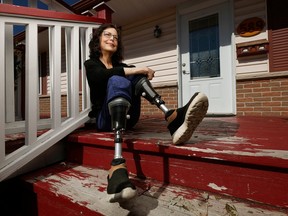
It was a Saturday. She was a single-parent of four children who worked full-time while also looking after four dogs. “I was used to going 100 miles an hour all the time,” she said. “My feet hit the ground in the morning and I just started going.”
On Tuesday, during her daily half-hour run, she didn’t make it more than a block. She went to work, but felt so ill that she returned home and slept. Later that evening, she asked a friend to take her to an after-hours clinic in Orléans, but they arrived to find the clinic closed, so Caron decided to go to hospital in the morning.
She spent most of the night in the bathroom with nausea. She thought she had a terrible flu or pneumonia.
“I should have called an ambulance, but my brain wasn’t working properly,” she said.
Caron made it to the Montfort Hospital the next morning and passed out in the waiting room.
It was only then, she said, that she learned for the first time about sepsis.
She went through rehabilitation to learn to walk and live with prosthetic limbs, but it was another five years before she fully recovered from post-sepsis brain fog and speech problems.
“That’s one of the other reasons I started these support groups: because you go from having all of this support to being left on your own,” she said. “There’s no support for survivors.”
Caron wants more research into post-sepsis syndrome and more help for those who suffer from it. She also wants more information made available to people so they can recognize when sepsis has taken hold.
One reason sepsis kills so many people — more than 9,000 each year in Canada — is that it’s often hard to recognize as a medical emergency.
Most sepsis cases start at home, and a campaign has been launched by the Sepsis Alliance, a U.S.-based charity, to help people recognize its symptoms. Warning signs include chills or fever, a high heart rate and shortness of breath. People with sepsis can also have extreme pain or discomfort, clammy or sweaty skin and can exhibit signs of confusion or disorientation.
The Sepsis Alliance recommends: “Watch for a combination of these symptoms. If you suspect sepsis, call 911 or go to a hospital with an advocate and ask, ‘Could it be sepsis?’”