



“I Heard the N-Word More in the RCMP Than in Public”
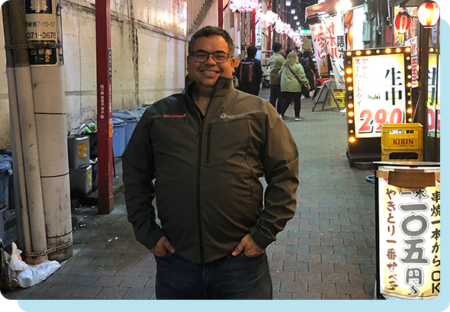
Alain Babineau, a retired RCMP officer with 27 years of service, recalls his time in Canada’s national police force with a mix of pride and pain. “There were a lot of African countries visiting Quebec City [during the 2008 Francophonie Summit], and a group of RCMP members were talking about their VIPs from Africa using the N-word and making jokes,” he says. When he confronted them, the response was dismissive: “They said, ‘We’re just joking around.’ But their jokes aren’t funny” 1.
Babineau’s experience is not unique. Multiple Black RCMP officers, speaking anonymously, describe a workplace where racial slurs like “black bastard” and “uneducated black man” were routine. One officer lamented, “I had so much pride for the RCMP. Now, if someone asks me what I do, I say I work for the government” 1. These accounts, corroborated by internal documents and witnesses, reveal a culture where racism is normalized and accountability is scarce.
The Weight of Systemic Racism
The RCMP’s own admissions of systemic racism—acknowledged in a 2020 Public Safety Canada report—paint a damning picture. While the force claims to prioritize “dignity and respect,” Black Canadians continue to face disproportionate scrutiny. Statistics Canada data underscores this: Black people are twice as likely as non-Indigenous, non-visible minorities to have little or no confidence in police (21% vs. 11%) and are more critical of police fairness and approachability 11.
For Craig Smith, an RCMP sergeant in Nova Scotia, the path to change lies in storytelling. His African Canadian Experience Workshop uses personal narratives to confront systemic bias. “Without sharing these stories, there isn’t healing,” Smith explains. “The organization is standing up and listening, but we’re still counting ‘firsts’ for racialized groups. That tells you how far we have to go” 2.
“Reasonable Suspicion” or Racial Profiling?
The Supreme Court of Canada’s 2019 R v Le decision exposed how racial profiling underpins policing practices. In the case, five young men of color—four Black, one Asian—were illegally detained in a Toronto backyard while police conducted a “carding” operation. The Court ruled the detention arbitrary, emphasizing that race must inform how interactions with police are judged 7.
Retired Senator Murray Sinclair’s definition of systemic racism—”when the system itself is based on racist beliefs”—resonates here. Babineau, now a social justice advocate, admits he once practiced racial profiling as an officer. “I thought it was justified because of crime statistics. But you can make statistics say anything,” he reflects. “The system trains you to see Black bodies as threats” 3.
From Street Checks to Solitary Confinement
The consequences are life-altering. Black Canadians are overrepresented in federal prisons (8.6% of inmates vs. 3.5% of the population) and face harsher treatment, including solitary confinement 13. A 2015 Correctional Investigator report found Black admissions to segregation surged by 100% over a decade, compared to 31% for Indigenous inmates 13.
Community advocates point to carding and street checks as gateways to criminalization. In Montreal, a 2019 report confirmed racial profiling thrives, with Black men like Jermaine (name changed) recounting being slammed to the ground during a milk run due to “mistaken identity” 3. Another man, targeted repeatedly while driving a Mercedes, installed cameras to “police the police” 3.
The RCMP’s Contradictions
While the RCMP pledges reform—modernizing recruitment, collecting race-based data, and launching diversity workshops—progress is glacial. Visible minorities make up just 11% of the RCMP workforce (vs. 22% of Canada’s population), and none hold the three highest ranks 15.
Public Safety Canada’s 2020 report highlights efforts like Gender-Based Analysis Plus (GBA+) and Inuit recruitment pilots, but critics argue these are Band-Aid solutions. “Systemic racism isn’t solved by workshops,” says Smith. “It requires dismantling structures that equate Blackness with guilt” 25.
“We Need a System That Does Us Justice”
Prime Minister Justin Trudeau’s 2018 recognition of the UN’s International Decade for People of African Descent was a symbolic start, but advocates demand action. The UN Working Group on People of African Descent, after visiting Canada in 2016, urged reforms to end “systemic anti-Black racism in criminal justice” 13.
For Babineau, the answer lies in community-led oversight. “The RCMP can’t police itself. We need civilians—especially Black Canadians—holding them accountable,” he insists 13.
A Reckoning Long Overdue
The RCMP’s motto, Maintiens le droit (“Uphold the right”), rings hollow for many Black Canadians. As Statistics Canada notes, 58% of Canadian-born Black people rate police performance poorly, a stark contrast to 15% of Black immigrants 11. This disparity reflects a system that criminalizes Blackness from birth.
Until the RCMP confronts its ingrained biases—and until Canada reckons with its legacy of colonialism and slavery—Black Canadians will remain “automatically guilty” in the eyes of those sworn to protect them.
“To save the soul of policing,” Babineau says, “there should be nothing about us without us” 3.
Follow Canada News Media
Get the day's top Canadian stories and our two daily 60-second news videos wherever you scroll.
X Threads Facebook Instagram LinkedIn TikTok YouTube Pinterest Reddit Substack Flipboard Newsletter RSS