

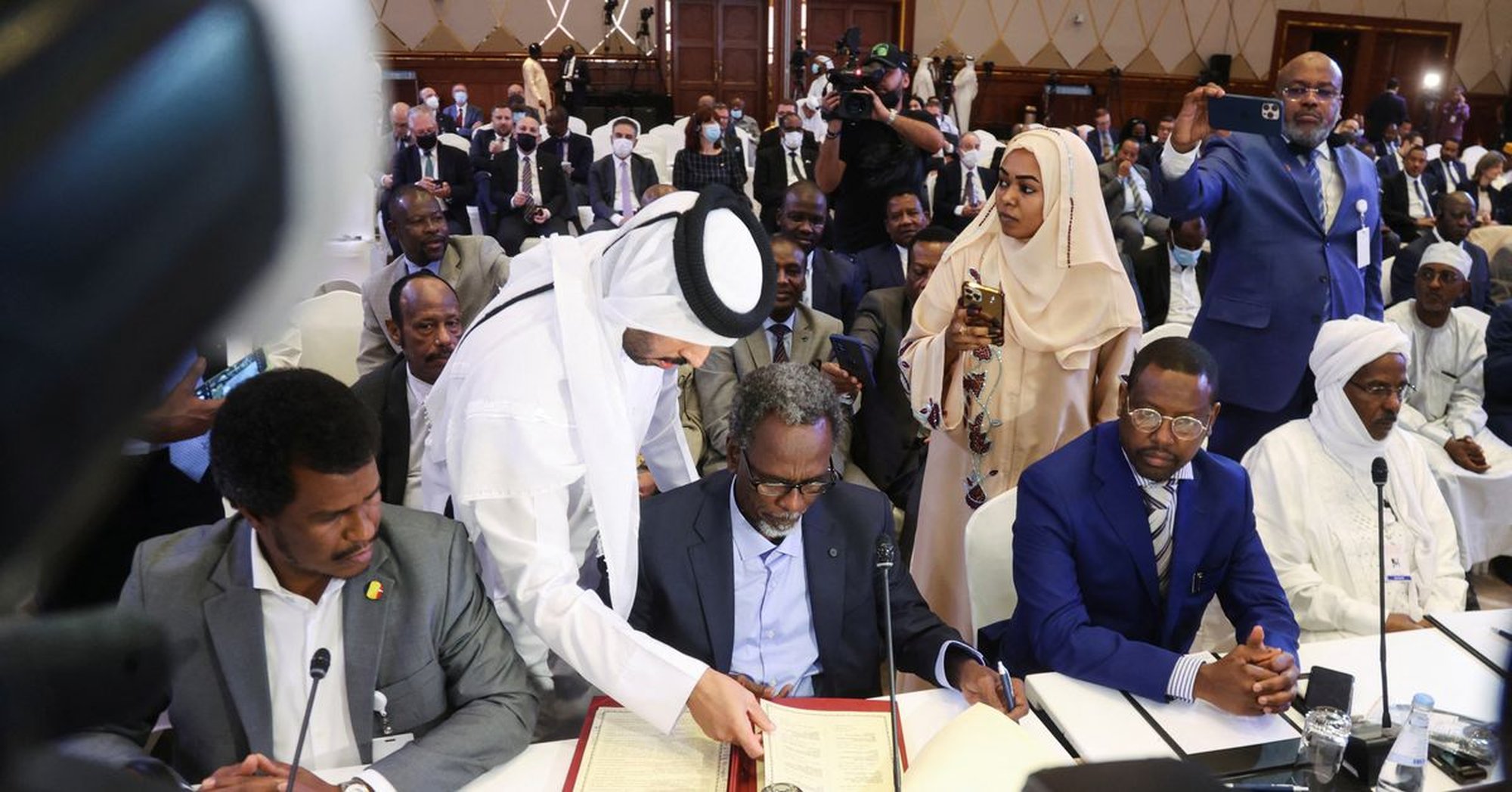
Doha, Qatar- Chad‘s military junta has signed a ceasefire agreement with more than 40 rebel groups.
The national reconciliation talks are planned for August 20. Ahead of those talks, the military government in Chad vowed to not take any military or police operations against the signing groups in countries neighboring Chad.
Qatar’s Foreign Minister, Sheikh Mohammed bin Abdulrahman Al Thani, told those at the national reconciliation talks that other groups will join the march of reconciliation and peace, with a view to achieving the aspirations and dreams of the Chadian people.
“The initial peace agreement we are celebrating today will be an important turning point towards stability and prosperity for the Chadian people,” said Al Thani.
Besides the ceasefire, the agreement signed on Monday includes a disarmament program, amnesty and the safe return of rebels outside Chad, the end of recruitment by rebel groups, and the release of prisoners on both sides.
Nevertheless, the signing of the agreement was overshadowed by the absence of Chad’s most powerful armed group, the Front for Change and Concord in Chad (FACT), which refused to join in the accord, making any prospects for a return to stability all the more uncertain.
FACT said in a statement ahead of the ceremony that it rejects the accord that will be put to signatories on Monday, calling for a new committee to organize new talks and saying participants in the national dialogue would not be treated equally.
The Union of Resistance Forces, which tried to oust the elder Déby in 2019 by sending a column of fighters in 50 pickup trucks from Libya only to be beaten back by French airstrikes signed the agreement, but another powerful group, the Military Command Council for the Salvation of the Republic, rejected the pledge.
After Chad’s longtime autocratic ruler, Idriss Déby, died while fighting against rebels in April last year, his son Gen. Mahamat Idriss Déby seized power and vowed to lead the country through an 18-month transition period.
Human rights organizations have criticized Déby for a broad crackdown on peaceful protests and the arrests of hundreds of members and supporters of the opposition.
“Chad’s significant military commitments in the fight against terror have meant that the international community has felt comfortable turning a blind eye to the serious human rights violations in the country,” said Human Rights Watch’s director for Central Africa, Lewis Mudge.
Follow Canada News Media
Get the day's top Canadian stories and our two daily 60-second news videos wherever you scroll.