

Winnipeg’s Daniel McIntyre neighbourhood has been named one of Canada’s most liveable places by a national real estate titan.
On Wednesday, Re/Max Canada released its 2024 Liveability Report. The West End neighbourhood made its top 10 list, alongside areas such as Sandy Hill in Ottawa and Westmount in Saskatoon.
And many Winnipeg regions — 14 others — joined Daniel McIntyre by being highlighted in more specific Re/Max liveability lists. Winnipeg tied Edmonton with four “best” neighbourhoods for first-time homebuyers.
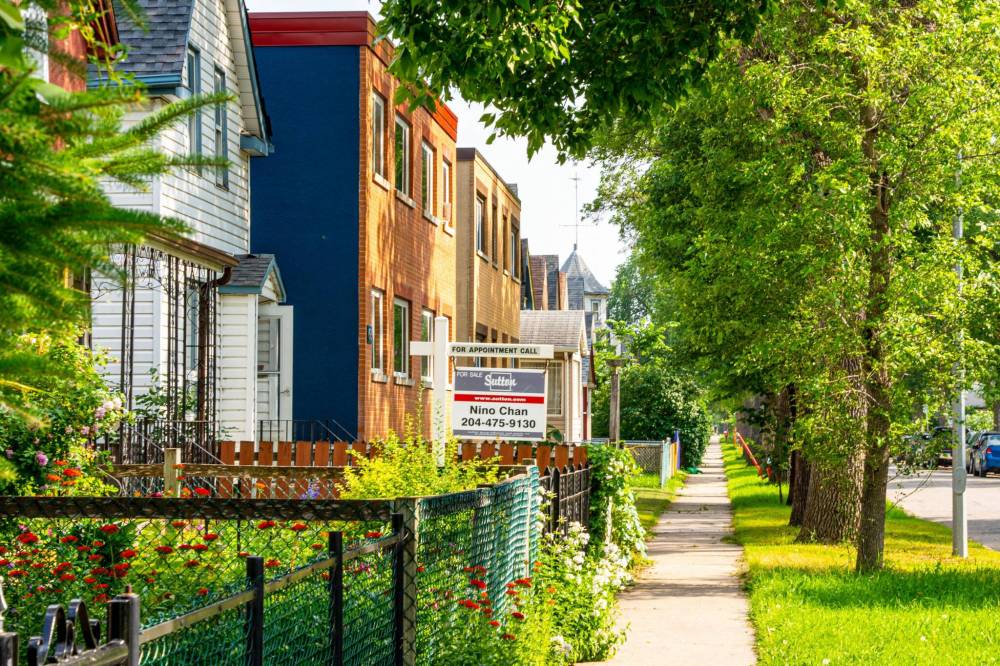
“It’s very exciting,” said Coun. Cindy Gilroy (Daniel McIntyre). “This is now showing, ‘Hey, this is a destination … this is a place that people can call home that is affordable.’”
Re/Max surveyed Canadians about the qualities they seek in a neighbourhood via Leger, a Canadian market research agency. Re/Max also partnered with Local Logic, a Montreal-based data analytics company, to find communities hosting reportedly desired qualities.
However, the search did not account for crime; that data wasn’t available, according to Re/Max.
Liveability factors considered include affordability, commute times and access to transit and green spaces.
In Winnipeg, homebuyers are most likely looking for a low crime rate, walking distance to amenities and a sense of community, the realtor said. Top concerns included affordable housing and a low housing supply.
The report errs, however, in specifying Daniel McIntyre alone in its top 10 list; it’s meant to highlight the West End area as a whole, according to Akash Bedi, a Re/Max broker and liveability report contributor.
The West End checks many boxes — accessibility to transit and shops, affordability, an overall feeling of community, said Bedi. “This is … a hot market for newcomers to Winnipeg.”
He estimates nearly half of his first-time homebuyer clients have been in Canada for three years or less. A majority immigrate from India, the Philippines and Ukraine, Bedi said.
Daniel McIntyre residents typically don’t need a car, due to transit and active transportation routes access; it keeps costs down, agreed Gilroy.
“Our homes are affordable,” she said. “People are trying to buy into the market, which is expensive in other cities and other parts of our city.”
A residential detached home in Winnipeg cost, on average, $437,367 in June, according to a recent Winnipeg Regional Real Estate Board analysis.
The Re/Max report highlighted Winnipeg as having the most neighbourhoods best suited for big-city lovers without kids. Charleswood, Linden Woods, Westwood and Royalwood made the top 10 list.
Winnipeg also tied Montreal in having the highest number of neighbourhoods best suited for big-city lovers with kids. Bridgwater Trails, Sage Creek, Devonshire Park and North Kildonan were featured.
The Re/Max report comes eight months after the Globe and Mail named Winnipeg the country’s best city for raising children and one of Canada’s most liveable cities.
“It helps us continue to put the spotlight on Winnipeg as a great place to live in Canada,” said Alberto Velasco-Acosta, Economic Development Winnipeg’s vice-president, international.
The economic development agency launched a campaign following the Globe and Mail’s ranking. It markets a website (liveinwinnipeg.com) internationally and to Canadians living in cities with a higher cost of living.
“It’s very exciting to see our point (about) Winnipeg being an ideal place to live validated by data,” Velasco-Acosta commented.
Re/Max listed Winnipeg’s West End, downtown and West Kildonan as the city’s most affordable areas. Summerlea, Bison Run and Parkview Pointe are considered Winnipeg’s up-and-comers; Tuxedo, Waverley West and Sage Creek were deemed the most luxurious neighbourhoods by Re/Max.
Liveability scores in Re/Max’s report used data from the firm’s 2024 housing market files, the Canadian census and Local Logic.

Gabrielle Piché
Reporter
Gabrielle Piché reports on business for the Free Press. She interned at the Free Press and worked for its sister outlet, Canstar Community News, before entering the business beat in 2021. Read more about Gabrielle.
Every piece of reporting Gabrielle produces is reviewed by an editing team before it is posted online or published in print — part of the Free Press‘s tradition, since 1872, of producing reliable independent journalism. Read more about Free Press’s history and mandate, and learn how our newsroom operates.
Our newsroom depends on a growing audience of readers to power our journalism. If you are not a paid reader, please consider becoming a subscriber.
Our newsroom depends on its audience of readers to power our journalism. Thank you for your support.