

So said one of the characters in the trailer for Do not seek, Netflix’s new sci-fi disaster movie that begins airing on December 24, in which space debris threatens to wipe out our planet.
It’s a scene we’ve seen on screen before: a giant object rushes towards us, scientists are sounding the alarm, everyone is panicking trying to find a way to avoid total disaster. A pair of thrillers in 1998 were based on a similar premise – remember Deep impact and Armageddon, anybody?
But if this is a common trope in the movies, how likely is it that we will receive an Earth-ending blow from a comet or asteroid in our lifetime?
Experts say unlike the dinosaurs before us, humanity can breathe easily at the moment.
“There is a low, very, very low chance that we could discover an asteroid whose trajectory could cross that of the Earth in the future,” said Paul Wiegert, professor in the Department of Physics and Astronomy at the Western University in London, Ontario. .
“But the risk is remarkably low.”
WATCH | And ifscientists discover comet heading towards Earth, and no one cares: [embedded content]
25,000 asteroids could pose a risk to Earth
In our massive solar system and in our even larger universe, many objects swirl around the cosmos every day.
“We predict that there are probably only around 25,000 asteroids that pose a risk – which seems like a really, really large number,” Wiegert said. “But when you consider the size of our solar system’s space, these asteroids are really very, very few and far between.”
Most space rocks are also not big enough to destroy our planet.
“With the extinction of the dinosaurs, for example, that would require something very large,” said Sara Mazrouei, a planetologist at Ryerson University in Toronto. “A kilometer in diameter asteroid, and that only happens once every half a million years, maybe, or once every million years.”
Smaller asteroids and meteorites are more common and pass through Earth’s atmosphere quite often – on a monthly or even weekly basis.
“Sometimes we see them as shooting stars, we make a wish,” Mazrouei continued. “So we’re more likely to see them than something that will end humanity on Earth.”
A DART mission about to hit an asteroid
Even if a crisis at the level of Do not seek isn’t likely to happen anytime soon, scientists are always bracing for the possibility.
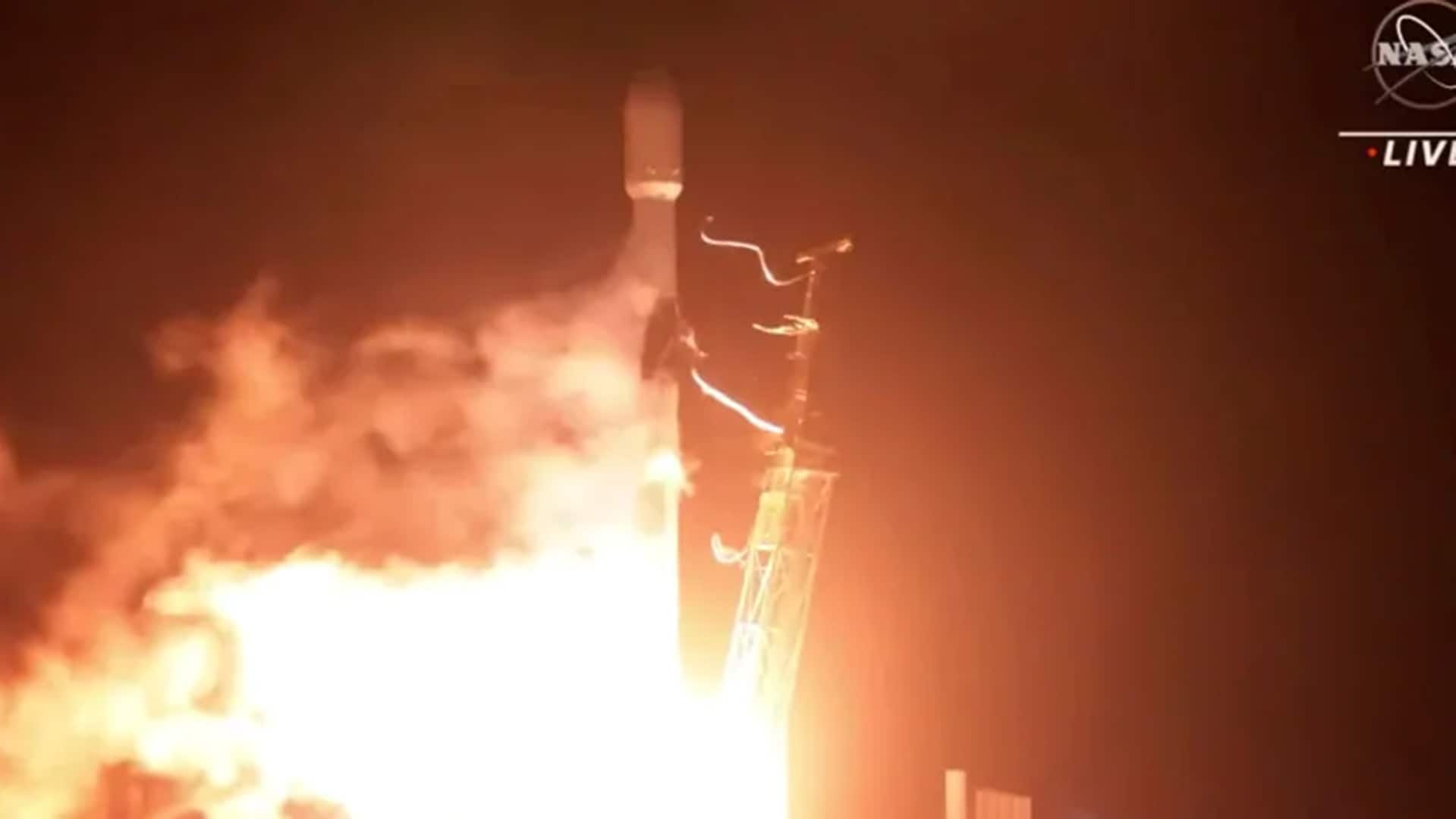
NASA’s $ 330 million DART mission – short for Double Asteroid Redirection Test – took off in November with the aim of deflecting an accelerating space rock.
It is hoped that in September 2022, it will strike head-on Dimorphos, an asteroid 160 meters in diameter, at a speed of around 24,000 km / h.
Wiegert said the approach might sound familiar to hockey fans in Canada.
“An asteroid coming towards us might not be that different from a strong shot in hockey, and even a relatively small tip can deflect the puck quite effectively,” he explained. “So we have to learn how to deflect the puck, so to speak, when it comes to asteroids. “
In other words, it’s not about using explosive force to detonate incoming threats; it’s about pushing them aside.

NASA has launched a spacecraft that will hit an asteroid in 10 months and crash into it – on purpose – to see if it’s possible to change the orbit of the space rock. 3:52
Scientists are also exploring other innovative approaches, according to Mazrouei, such as sending massive spacecraft to deliver a gravitational tug at asteroids to divert them from their path or firing lasers at distant space rocks.
And while those concepts seem ingrained in a sci-fi movie, she pointed out that one plot we see in the movies is highly unlikely: to be caught off guard by a giant object heading our way.
Researchers around the world are constantly scanning the skies, and although we only know about 40% of near-Earth objects, Mazrouei says NASA and other teams have listed up to 90% of the largest – most of which are more years or decades, giving humanity time to prepare.
“If we spot an asteroid that’s coming for us tomorrow, there’s nothing we can do about it with a mission like DART,” she said. “So we have to plan ahead.”

Follow Canada News Media
Get the day's top Canadian stories and our two daily 60-second news videos wherever you scroll.