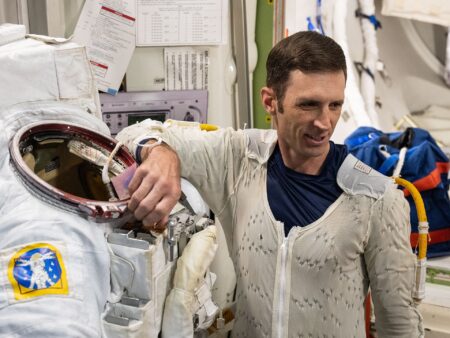



“Everything up here takes about three times as long as it does on the ground,” is one of the nuggets of first-hand experience astronaut Josh Cassada relayed to students from the International Space Station last week.
21 Goderich Air Cadets were able to speak directly to Cassada on Friday, as the International Space Station floated within range of Earth.
“They’re travelling at about 18,000 miles per hour, and they are 400 kilometres above the surface of Earth, so there’s not much line of sight in one pass. You get 10 to 12 minutes, at most,” said Goderich Air Cadets leader, Ryan McClinchey.
The Goderich Air Cadets spent the past several months building their own two-way amateur radio communication link in order to make their conversation with space possible. They applied for the Amateur Radio on the International Space Station (ARISS) opportunity over two years ago, and were just selected a few months ago.
“It’s definitely a once in a lifetime opportunity,” said Jacob Watson, who was one of the 21 air cadets who got to ask Cassada a question.
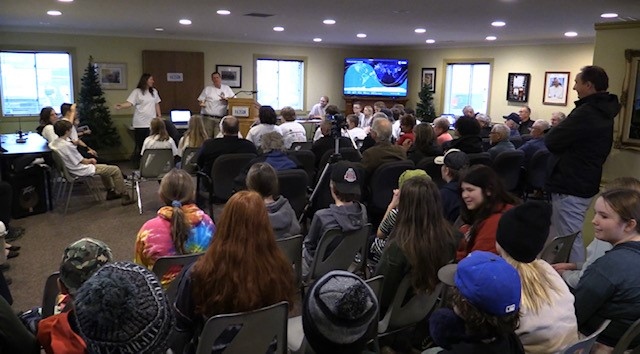
 Ryan McClinchey of the Goderich Air Cadets speaks to a full house at Knights of Columbus Hall after students spoke to International Space Station astronaut, Josh Cassada on Dec. 16, 2022. (Scott Miller/CTV News London)
Goderich’s Air Cadets were one of only a handful of Canadian student contacts with the International Space Station this year.
“It was pretty cool. I was nervous in the first part. I was almost shaking,” said air cadet, Lincoln Henry.
“It was kind of surreal when he asked our call sign. Then you could here his voice come back. It was kind of amazing,” added fellow air cadet, Ronan Knoop.
“Other than aviation, space is sort of an evolving subject in cadets. With the Artemis missions going to the moon now, there’s a lot more interest in the space program again,” said McClinchey.
McClinchey said the Goderich Air Cadets couldn’t have made their conversation with an astronaut happen without the support of local sponsors, who helped fund the equipment they used for their two way amateur radio communication system.
It is a system the cadets plan to continue to use to speak to cadets around the world.