
Shah Alam, Malaysia- Customs authority officials have seized US$18 million worth of elephant tusks, tiger bones and other trafficked animal parts.
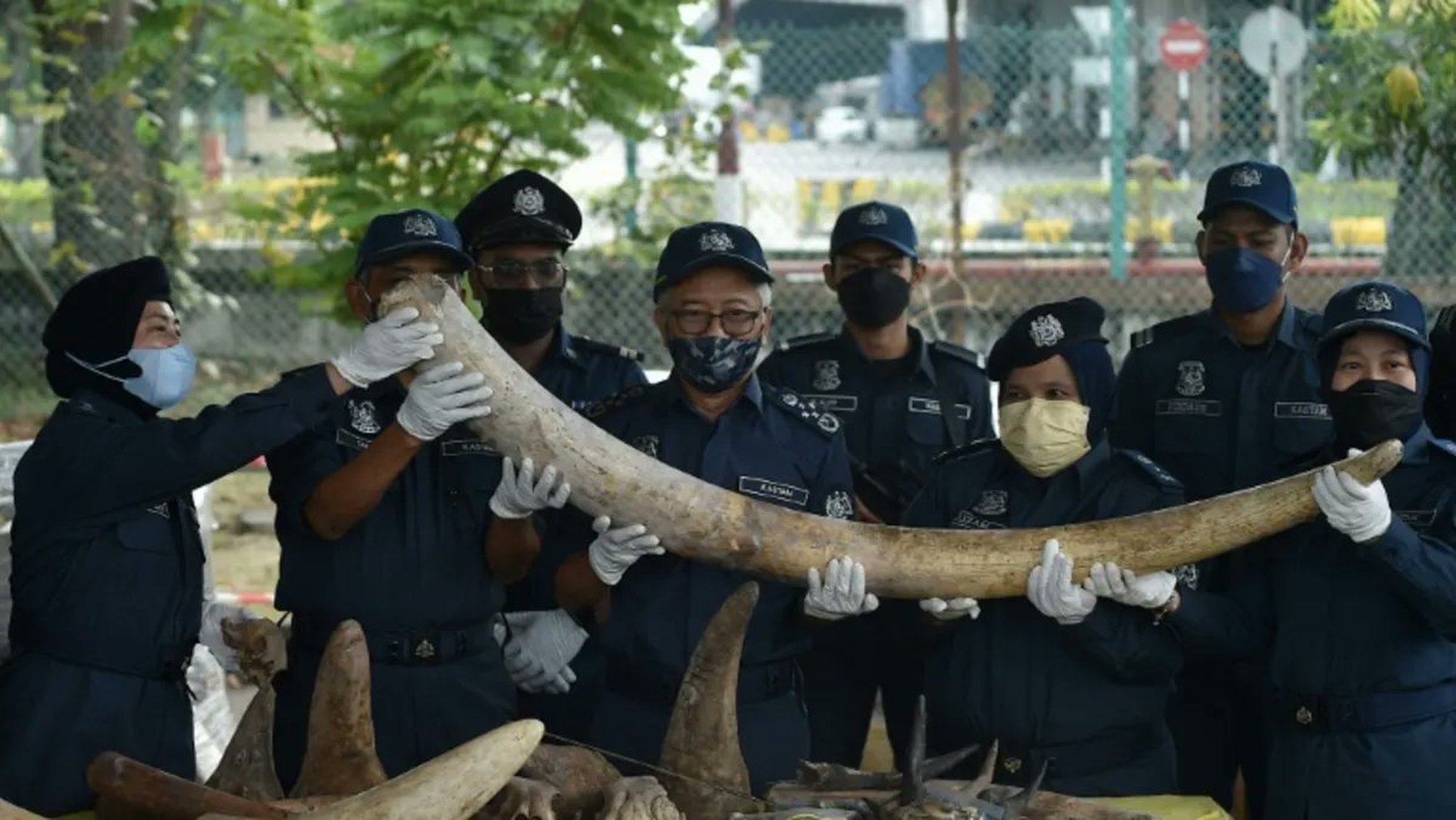
According to the Malaysian Customs Director-General, Zazuli Johan, customs officials discovered around six tonnes of ivory tusks and other animal parts at the western port of Port Klang in Selangor State on Sunday.
“The customs enforcement unit successfully thwarted an attempted smuggling of these items, elephant tusks, rhino horns, pangolin scales, tiger teeth and various other bones and animal parts that were found in a container at Port Klang,” said the Malaysian Customs Director-General.
Malaysian customs shared photos showing a pile of tusks and other animal parts including an animal skull and jewelry that appears to be made of ivory.
The animal parts are thought to have been shipped from Africa and included 6 tons of elephant tusks, 100 kilograms of pangolin scales, 25 kilograms of rhino horns and a further 300 kilograms of animal skulls, and bones and horns.
In addition, Johan said that Malaysia was not the planned final destination for the smuggled animal parts.
Moreso, Kanitha Krishnasamy, the Southeast Asia director at wildlife trade monitoring group TRAFFIC, said Malaysia’s biggest seizure to date of trafficked animal parts was concerning.
“This medley of threatened species in a single seizure is concerning, and it certainly verifies the suspicion that criminals continue to use Malaysian ports to move contraband wildlife,” said Krishnasamy.
Malaysia is one of several Southeast Asian countries identified by conservationists as a hub from which wildlife and animal parts are illegally trafficked to other Asian countries, namely China.
Many of these animal parts, such as lion bones, are used for traditional medicines. Pangolins, which are scale-covered insectivores about the size of a house cat, are highly valued for their meat and scales, considered a delicacy and valuable in traditional medicine and have been hunted to their limits.
In 2020, the Chinese government removed pangolin scales from its list of approved ingredients used in traditional Chinese medicine, a move campaigners described as a critical step toward saving the world’s most trafficked mammal.
Trade in the world’s eight species of pangolin is completely banned under the Convention on International Trade in Endangered Species (CITES).
Still, demand for the animal’s scales, which, like human nails, are made of keratin, is feeding the illegal trade. The pangolin is said to be the world’s most trafficked mammal.
Follow Canada News Media
Get the day's top Canadian stories and our two daily 60-second news videos wherever you scroll.