


COVID-19 has killed 17 more New Brunswickers, including six over the holidays, while influenza has claimed nine lives. These are the first flu deaths of the season and they include a child under four, the latest data from the province shows.
Meanwhile, Dr. Yves Léger, the province’s acting chief medical officer of health, is warning the public about unusually high levels of strep bacterial infections — some of them fatal.
Group A streptococcus, the bacteria that causes illnesses such as strep throat and skin infections including impetigo, “can in rare cases lead to more severe and sometimes life-threatening infections where the bacteria invades parts of the body, such as the blood, the deep muscles, fat tissues or the lungs,” he said.
New Brunswick recorded roughly 100 cases of group A streptococcal infections in 2023, as of the end of October, said Léger. That’s “at least double” the annual average of the past five years, he said.
It’s a “concerning trend” being seen across Canada and in other countries, according to Léger — one that experts can’t yet explain.

Acting chief medical officer of health Dr. Yves Léger says New Brunswick’s flu season is nearing its peak, with strep infections higher than in previous years.
“While the majority of our cases seem to occur in older individuals, we’ve seen increases in most of the other age groups as well,” he told reporters during a media availability Tuesday. He did not provide any specifics.
Asked specifically about deaths, Léger confirmed some people have died, but again did not provide further details.
Group A strep is spread by droplets from the nose and mouth, so Léger urged people to take steps to protect themselves and others, such as staying home when sick, masking in public places and handwashing.
Anyone with symptoms, including bruises or cuts that might be infected, is encouraged to seek medical care, he said. Once people have been on antibiotics for 24 hours they’re no longer contagious.
COVID hospitalizes three children under 4
The Respiratory Watch report covers a three-week period, Dec. 10 to Dec. 30, instead of the usual one, because of the holidays.
Two of the people who died from COVID were between 45 and 64, while the other 15 were aged 65 or older, according to the report.
Their deaths raise the pandemic death toll to at least 989. Only confirmed cases who die in hospital are counted.

A total of 174 people were hospitalized for or with COVID during the three-week reporting period.
Among them were three children under age four, 12 people aged 20 to 44, 26 aged 45 to 64 and 132 aged 65 or older.
Eleven required intensive care.
35 outbreaks, 13 in nursing homes
Thirty-five lab-confirmed COVID outbreaks were declared — 13 in nursing homes and 22 in “other facilities.”
There were 516 new cases of the virus confirmed through PCR (polymerase chain reaction) lab tests over the three weeks. The positivity rate remained stable at between 10 per cent and 14 per cent, the report says.
“COVID-19 activity remains moderate; all indicators remained stable throughout the current reporting period,” it says.
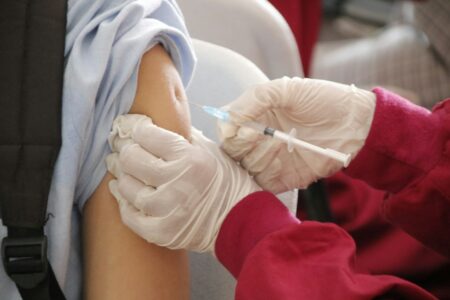
There have been 129,097 XBB.1.5 COVID vaccines administered since Oct. 4, according to figures from the Department of Health.
Flu rates higher than average seasonal peaks
In addition to the child aged 0-4, the flu killed a person aged 45 to 64, and seven people aged 65 or older, the report shows.
Four of the nine deaths occurred between Dec. 24 and Dec. 30.
The flu sent 174 people to hospital during the three reporting weeks, including six children under four and five youth aged five to 19. There were also 15 people aged 20 to 44, 35 aged 45 to 64 and 113 aged 65 or older.
Twenty-three people were admitted to intensive care, one of whom is under 19. The others include one person aged 20 to 44, five aged 45 to 64, and 16 aged 65 or older.

The rate of lab-confirmed flu cases was significantly higher during the three reporting weeks than the average seasonal peak between 2017-18 and 2022-23, which is usually later in the winter, the data shows.
There were 1,143 new cases confirmed. Almost all were influenza A and two were influenza B.
These raise the total number of flu cases since the respiratory reason began on Aug. 27 to 1,501.
The positivity rate jumped from 21 per cent to 29 per cent over the three weeks, the report shows.
The regional distribution of the flu cases includes:
- Moncton region, Zone 1 — 303.
- Saint John region, Zone 2 — 147.
- Fredericton region, Zone 3 — 249.
- Edmundston region, Zone 4 — 64.
- Campbellton region, Zone 5 — 44.
- Bathurst region, Zone 6 — 254.
- Miramichi region, Zone 7 — 82.
Ten schools reported new influenza-like illness outbreaks. No information about the schools, the number of cases or whether it’s students or staff affected has been released.
School outbreaks are based on 10 per cent absenteeism in a school because of influenza-like illness symptoms, the report says.
A total of 200,707 New Brunswickers have been vaccinated against the flu since Oct. 4.
10 Horizon hospital unit COVID outbreaks
Horizon Health Network has 62 active COVID-19 hospitalizations, as of Saturday, according to its weekly COVID dashboard. Six of those people are in intensive care.
Horizon has 10 hospital units with COVID outbreaks, as of Monday. These include:
- Moncton Hospital — chronic care, acute stroke, neurology, general surgery.
- Saint John Regional Hospital — internal medicine, family medicine, orthopedics and urology surgery.
- St. Joseph’s Hospital — geriatric assessment.
- Dr. Everett Chalmers Regional Hospital — perioperative services, palliative care, and the coronary care unit.
- Charlotte County Hospital — family medicine.
Nineteen Horizon health-care workers are off the job after testing positive for COVID with a rapid test or PCR test.
Vitalité Health Network is updating its COVID-19 report only monthly, typically on the last Tuesday of each month. Its December report shows 45 people hospitalized for or with COVID-19.
Seventy-two Vitalité health-care workers had to be removed from work because they were COVID-positive, the dashboard shows.
Vitalité has not updated its hospital unit outbreaks page since Dec. 12.

Follow Canada News Media
Get the day's top Canadian stories and our two daily 60-second news videos wherever you scroll.
X Threads Facebook Instagram LinkedIn TikTok YouTube Pinterest Reddit Substack Flipboard Newsletter RSS