

Somewhere between a narrow stretch of Persian Gulf passage and the bottle of canola oil in your grocery cart, costs are going way up.
The Strait of Hormuz closure has sent fertilizer prices soaring. Right now, that’s hitting canola, wheat and corn farmers the hardest. Those costs are expected to trickle down to the customer later this year and into 2027.
High fertilizer costs are expected to reduce input-heavy crop yields while driving a surge in Canadian wheat production to meet global shortages.
Gas and food prices are highly interconnected and Canadian consumers will face significantly higher grocery bills for bakery staples, cooking oils, meat, and dairy as domestic prices align with rising global commodity markets.
“Both directly and indirectly, energy prices and fertilizer prices, are facing a major chokepoint in international markets,” explained Dr. Evan Fraser, executive director of the Arrell Food Institute at University of Guelph.
“The air we breathe is 70 per cent nitrogen, but it’s tied up in what’s called a triple bond. Plants can’t break up a triple bond.”
To produce usable nitrogen fertilizer to boost crop yield, that bond must be broken — a process requiring enormous heat, pressure and energy that comes from natural gas.
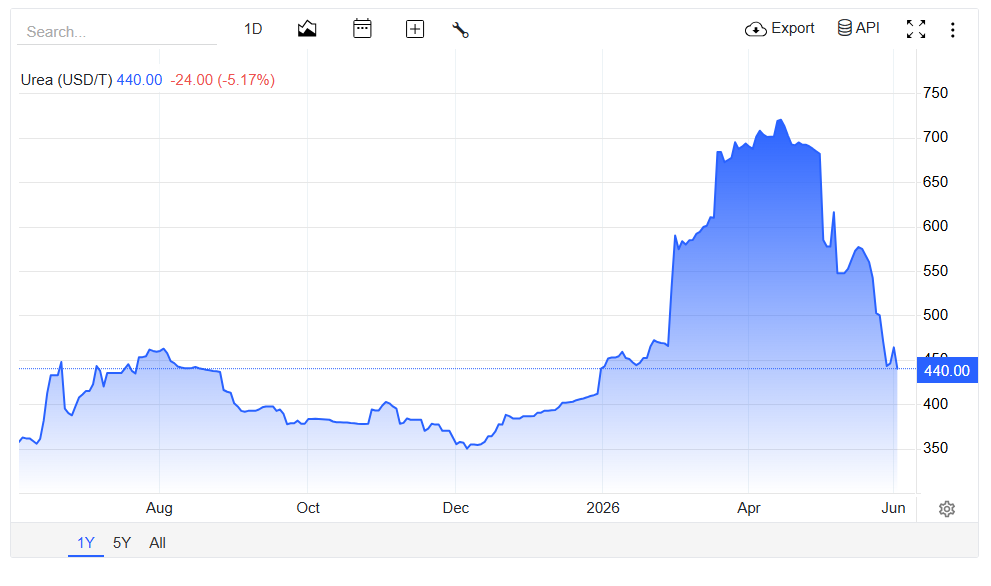
Farmers who did not pre-purchase nutrients in the fall are facing tens to hundreds of thousands of dollars in extra costs. Experts anticipate if disruptions to fertilizer and energy flows through the Strait of Hormuz persist into late 2026, impacts on agricultural production could extend across two crop cycles.
“We used to buy fertilizer anywhere from $500 to $700 a ton,” said Andre Harpe, a canola farmer in Peace River, Alta. “This year, it went up to over $1,300 a ton.”
Harpe locked in his supply in early January, but if he had waited, the same order would have cost him over $100,000 more.
Four thousand kilometres east, outside of Montreal, two brothers, Philipe and Sylvain Leroux, farm 200 hectares of soybeans, corn and cereals.
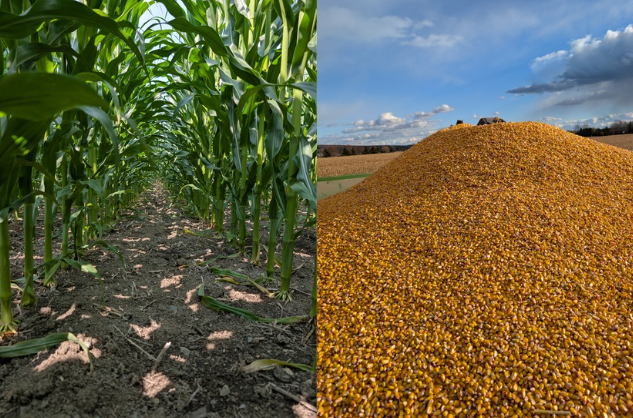
“It will probably have a $15,000 impact on fertilizer prices,” Sylvain Leroux said. “And we cannot forget also our fuel, which is needed to run our equipment, and this has been impacted because of the conflict in the Middle East.”
The Strait of Hormuz, the narrow waterway through which roughly 20 per cent of the world’s oil flows, has been closed since Feb. 28 when Israel and the United States launched a joint military campaign in Iran.
The journey from chokepoint to checkout is longer and diffuse, but for farmers already operating on thin margins, it’s directly devastating.
The crops most dependent on this fertilizer are the ones central to the Canadian diet: wheat, corn and canola. Soybeans are an exception, as legumes fix their own nitrogen through root enzymes and require less synthetic input.
Farmers are already responding to the signal, as soybean acreage is up this year, and wheat and corn acreage is down.
‘Death by a thousand cuts‘
For Harpe in Alberta, the fertilizer spike is the sharpest edge of a squeeze that has been tightening for years.
“I call it death by a thousand cuts,” Harpe said. “Not only are we looking at a 40 to 50 per cent increase in fertilizer, but the price of equipment, the price of everything, it’s just gone astronomically high.”
Meanwhile, the price a farmer will receive for canola and barley has barely moved in four or five years. Farmers like Harpe sell their produce as a global commodity benchmarked against the Chicago Board of Trade, which means they cannot simply pass costs upstream.
His response has been adaptation: where he once made two or three field passes per season, Harpe has consolidated everything into one. He uses variable rate technology to map his fields and applies fertilizer only where it produces the best return. Every inefficiency that can be eliminated, has been.
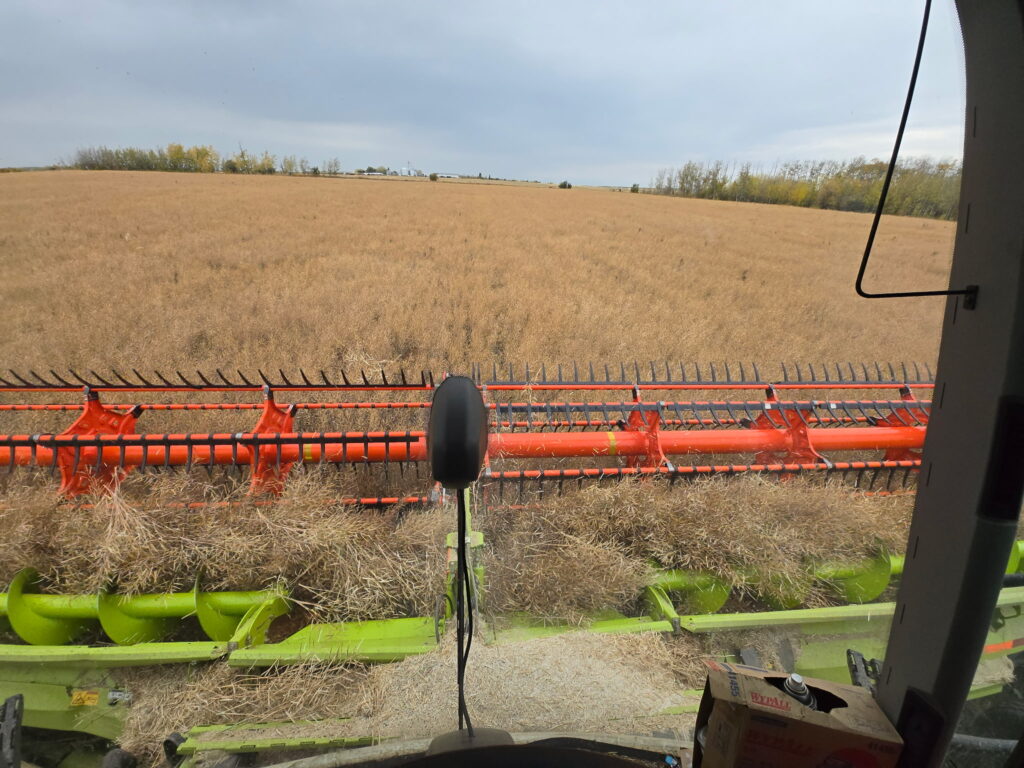
Still, the strain shows. “Farming used to be what I would call relatively boring,” he said. “Its no longer boring. You wake up every morning not knowing what to expect, and that’s always a strain.”
He is also watching the carbon tax with frustration. “It was pulled off a lot of goods, but it still hasn’t been pulled off fertilizer.” It introduces an additional cost to an already volatile input market, providing zero output relief.
Double exposure
The brothers outside Montreal face a version of this crisis with an additional dimension: Canada’s tariff on Russian and Belarusian nitrogen imports, imposed in 2022 following the invasion of Ukraine, has kept fertilizer costs elevated in eastern Canada for five consecutive years. Canada remains the only G7 country to have maintained a 35 per cent tariff against Russian fertilizer, which continued on top of this season’s additional spike.
While Prairie farmers who largely source from the United States and Algerian supply chains have some insulation, Atlantic-facing farmers have less of that.
“We were able to acquire enough fertilizer this year, even though it was more expensive than what we expected,” Leroux said. “But we will have a crop this year, weather permitting. 2027 is another story.”

The 2027 question echoes across the supply chain right now. Farmers who locked in prices this fall are protected for this season. But that window has closed, and next year’s commitments will be made against an unpredictable market.
“I suspect we will see significant declines in wheat and canola in 2027,” said Fraser.
As farmers who can pivot do so, those who cannot will absorb the difference, or reduce their yield, with insufficient fertilizer to support their crops.
The downstream effects would move through animal feed first: poultry, beef and pork will see higher mark-ups at the grocery store as corn and wheat offer nutrients to livestock feed.
The long way to a bigger bill
The connection between fertilizer costs and grocery bills are stretched across a long chain of processors, distributors and retailers, each of whom absorbs or passes on some fraction of the increase.
“A North American consumer is relatively buffered from the fertilizer crisis, because the fertilizer is a small percentage of the crop, and the crop is a small percentage of the finished product that most of us buy,” said Fraser.
“It very much is the increased cost in the supply chain, and it definitely starts with us,” added Harpe, who also acknowledged the complexity of the situation. Crop prices fluctuate daily on global markets, and how a farmer’s input costs increase is reflected in retail prices based on factors outside the control of individual farmers.
“We as producers are very conscious of the costs this may have on the consumer,” Leroux said. “We will do the best that we can to be as efficient with our energy needs, but nevertheless, it will be almost impossible not to pass it all to consumers at some point.”
Even relatively small changes in the price of food can tip a family from being relatively food secure to food insecure very quickly.
Canada is currently seeing unprecedented demand for food banks, with one-in-four families experiencing food insecurity.
Food, unlike rent, is a one line item in a budget where you can cut back, and so people do — in quality and in quantity.
The long term hope for many is to create a country that is more resilient against international geopolitics. A solution Fraser proposes would be to onshore fertilizer production as a matter of national supply chain resilience.
“We wouldn’t be having this conversation if Canada produces more of its own nitrogen,” Fraser said.
The ultimate size and cost of this year’s yield remains unpredictable and while the immediate future may be cushioned by reserves, relying on luck and favourable weather is a cautioned strategy in an era of near constant global disruptions.
“As farmers, we put a seed in the ground,” Leroux said. “Hopefully we’ll have all the weather cooperating enough so that we can grow a crop that will be plentiful at harvest. We need to be hopeful. It’s part of what we do.”
Add CityNews Toronto as a trusted source on Google to see more local stories from us.

Related Products
Follow Canada News Media
Get the day's top Canadian stories and our two daily 60-second news videos wherever you scroll.