



A not-for-profit association based in Nova Scotia says rural communities may need to take matters into their own hands if they want better internet service.
“You can’t count on private companies to step forward and do it,” said Terry Dalton, president and co-founder of a group called i-Valley, which describes itself as a movement to create “smart” communities.
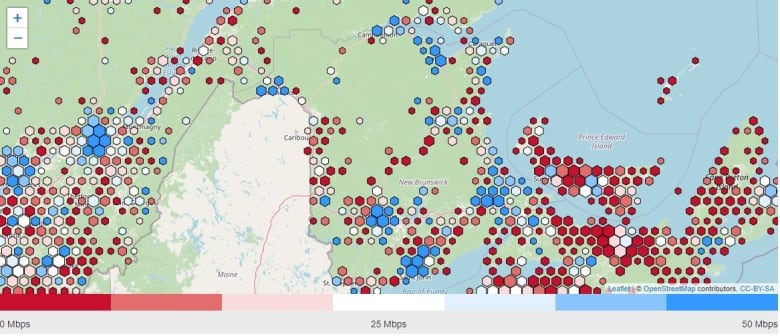
The pandemic has highlighted deficiencies in internet service in many rural areas.
People who live in communities from Mispec to Titusville, all within 40 km east of Saint John, signed a petition that was presented to the legislature in recent days asking for fibre optic internet.
“There’s high demand for teachers, students and the general workforce to be able to work from home,” said Hampton MLA Gary Crossman, when he introduced the petition.
“The current internet service is not sufficient to be able to support these residents at this time.”
Crossman said he had added his name to the petition’s 642 other signatures.

Big telecom companies usually aren’t interested in building new broadband or wireless infrastructure in sparsely populated areas, said Dalton.
“And you can’t blame them.”
“They are a private company trying to make money.”
Shareholders are looking for investments that offer returns within three to five years, said Dalton.
“If you take a long term view — no different than a road or a water project of any flavour — then you can do it with a good return to the community in a 10, 20, 30-year period.”
Dalton said in most cases municipalities have the financial means to go it alone.

Once their fibre optic network is built, they can rent it out to service providers.
That’s the kind of project Dalton’s association has been working on in the municipality of Pictou County in Nova Scotia.
The municipality approved $11 million in funding earlier this year, according to its website, for the first phase of a project to set up high-speed internet in four small communities.
“The Municipality of Pictou County wants to become the first rural community in Canada to create its own high-speed network, which will generate funds for the municipality.”
It’s aiming to enable 1GB download speed for fibre connections and meet the requirements for wireless.
i-Valley says part of its role is to try to win government funding, although Pictou says it has had trouble getting any from the Nova Scotia government.

A consortium led by Nova Communications was chosen to perform the engineering planning and network construction for Pictou.
Dalton said i-Valley works with eight different companies on aspects including design and GIS mapping.
i-Valley is looking to work with some New Brunswick communities too, including Belledune.
The village received a “cold call” from Nova Communications about it, said CAO Landen Lee.
Lee acknowledged that some parts of the village are still on dial-up, and residents have on occasion approached council asking whether anything could be done about it.
He said village council has just begun to look at the proposal.

Follow Canada News Media
Get the day's top Canadian stories and our two daily 60-second news videos wherever you scroll.
X Threads Facebook Instagram LinkedIn TikTok YouTube Pinterest Reddit Substack Flipboard Newsletter RSS