

Good Thursday morning,
Prime Minister Justin Trudeau is planning to recall Parliament again to pass further COVID-19 relief measures, including the feds’ expanded wage subsidy program, marking the second time since it was temporarily suspended March 13.
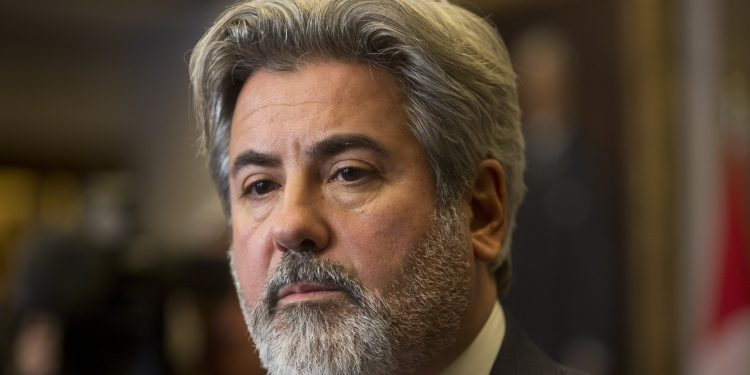
Government House Leader Pablo Rodriguez has been asked to negotiate Parliament’s return with opposition parties. Discussions were still underway on the timing of Parliament’s return, but it’s expected that at least some MPs and Senators will be heading back to the Hill next week.
“This must be a Team Canada effort. Governments of all orders across the country are stepping up to fulfil their responsibilities to Canadians,” Mr. Trudeau told reporters Wednesday at Rideau Cottage. “Canada hasn’t since this type of civic mobilization since the Second World War.”
Finance Minister Bill Morneau, for his part, pegged the cost of the wage subsidy at an estimated $71-billion, far larger than what had been projected by TD and RBC economists, which had put the figure somewhere between $25-billion and $28-billion.
Mr. Morneau will be grilled today on that wage subsidy program at the House Finance Committee, which will be streamed via teleconference, at 2 p.m.
Though it’s unclear whether the legislation Parliament passed last week would cover the boosted wage subsidy program, which has grown from 10 per cent to 75 per cent, according to CBC, one official said the government wanted parliamentary scrutiny, given the massive costs.
The feds confirmed that the Canada Emergency Benefit, which aims to cover those without access to EI and who have been forced to stop working to care for a family member, will be able to apply for the program starting April 6. The application dates are dependent on one’s birth month, with those born between January and March asked to apply on April 6. The $2,000 cheque is expected to be in deposited within three to five days.
Mr. Trudeau declined to offer a precise timeline for how long Canadians can expect restrictive measures to be in place, as other jurisdictions, including the City of Toronto, have signalled that it could be at least another four months. The prime minister reiterated that the duration of such measures is dependent on people’s behaviour and compliance with physical distancing, self-isolation, and in cases in which one has been infected with COVID-19, or been exposed to someone with the virus, quarantine.
Health Minister Patty Hajdu said the government underfunding, coupled with insufficient attention to the nation’s emergency inventory of personal protective equipment, has likely led to a situation where Canada does not have enough to meet the growing demands as COVID-19 cases continue to climb.
“We are pulling out all of the stops … trying to procure equipment in a global situation where equipment is extremely tight,” Ms. Hajdu said.
In Quebec, the provincial police have set up checkpoints since yesterday afternoon to limit non-essential travel to and from Gatineau and Ottawa, and exempting essential service workers and those in need of medical or health services.
For those up north, Inuit Tapiriit Kanatami president Natan Obed is calling on the government to fund and declare northern flights as an essential service, in order to ensure that critical goods such food, medical supplies, and contract nurses are able to fly in amid the pandemic.
The Hill Times