



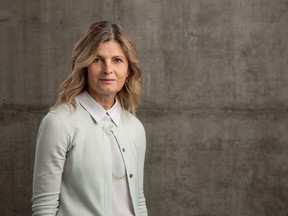
A Queen’s University professor is the lead author of a new paper advocating for better mental health care for children of parents with severe mental illnesses.
Duffy worked alongside scientists, clinicians and experts from 37 different countries to produce the paper, which was published on July 20 in the online journal Nature Mental Health.
“This is an international consortium of experts from complementary disciplines who got together, and we wrote this evidence-based review and call to action to advocate for proactive support and services for children at familial risk of severe mental illness,” Duffy told the Whig-Standard on Monday.
Duffy said that currently in Canada and other places in the world, children would have to present as symptomatic themselves to access their own services.
“We’re sort of seeing this disconnect between the adult and the children services, and also, shouldn’t we be incorporating monitoring the mental health of these children at high risk as proactive prevention and health promotion, being mindful not to stigmatize or over-pathologize, because a lot of the kids are well?”
The many years of research that has led to Duffy and her co-authors’ paper has allowed them to formulate recommendations for policymakers, including Duffy’s 25-year-long Canadian Institutes of Health Research-funded study identified as Flourish, following children at risk of bipolar disorder due to having a parent with that disorder.
Duffy’s Canadian high-risk offspring bipolar study has worked to map biological and psychological risk factors and genetic determinants in the quest to understand the onset of bipolar disorder.
Queen’s is launching a parallel research program for university students, looking at common mental disorders in post-secondary students.
That research and more has informed the recently published paper, as well as the recommendations that its authors are making to policymakers.
The paper puts forward five recommendations, beginning with the creation of a task force of multidisciplinary experts, stakeholders and families on an international level to develop guidelines for supporting children’s well-being.
Further, the paper recommends that new training for psychiatrists and new mental health care pathways for children be developed, and then that academics, health-care providers, research communities, funding agencies and stakeholders be engaged to support both children and their parents through a number of initiatives and resources.
While faculty at universities like Queen’s have historically been well positioned to help inform the development of clinical practice, Duffy believes there is room for improvement.
“We certainly need to do more of that,” she said. “It’s getting the right people around the table. Hopefully, if this is an identified priority with those involved with planning out care, then hopefully they would invite us to the table. … We really do need to get back to the table. We’re currently not at the table, and I don’t know what’s happened. I think there was a different political philosophy in Ontario, and then there was COVID. We really need to have the experts around the table with the politicians in order to be pragmatic and translate the findings into evidence-based care, but also to show the cost-effectiveness of this to the taxpayer.”
“We’re negligent as a society if we continue to turn a blind eye to this,” she said.
After working with parents and their children for 25 years in her research, Duffy sees the need and the commitment to the issue on the part of families.
“What’s lacking is the commitment and willpower from the powers that be that organize care in this province and country,” she said.
“We arguably have the best data in the world … we’ve done really excellent work, like many Canadian research groups have, and sometimes these findings get more readily uptaken around the rest of the world than they do in Canada. I’m really passionate about this because I think we can make a difference in my own lifetime, and today, for young people.”