


Intensive care (ICU) hospitalizations in Saskatchewan are at an all-time high, with 47 patients there now in total. Thirty-one of those patients are in Regina.
Variants of concern are spreading in Regina right now. The Regina zone accounts for 803 — or 84 per cent — of the VOC cases with confirmed lineage reported in Saskatchewan.
Dr. Hassan Masri, an intensive care specialist in Saskatoon, said the numbers there are under control at the moment.
“The situation in Regina is certainly out of control,” Masri said.
“Unfortunately, we did allow those numbers to rise here in Saskatchewan and specifically in Regina and so now we have ICUs that are really full in Regina and potentially patients will have to be diverted to Saskatoon.”
Masri said that has not happened yet, but it is a possibility.
CBC has reached out to the Saskatchewan Health Authority for comment on the ICU situation in Regina on Monday, but has not received a response.
People in the health care system familiar with the situation have told CBC that the breakdown of hospitalizations in the city is as follows:
- Pasqua Hospital ICU: seven total beds, three positive COVID-19 patients, one recovered COVID patient
- Pasqua medical surveillance unit (MSU): five overflow ICU patients, zero positive COVID patients
- General Hospital medical ICU: ten total beds, ten positive COVID patients, one recovered COVID patient
- General surgical ICU: 12 total beds, 11 positive COVID patients
- Cardiology Care Unit at the General: 5 overflow positive COVID patients

Recovered patients are marked as such only after they are no longer contagious, but they may still require hospital or ICU care.
“The other important story in all of this is the age group that are filling the ICUs,” Masri said.
“We are seeing a lot of patients in their 20s, 30s and 40s … the variant, which is really rapidly spreading in Saskatchewan, seems to affect younger people much more profoundly than the original COVID virus.”
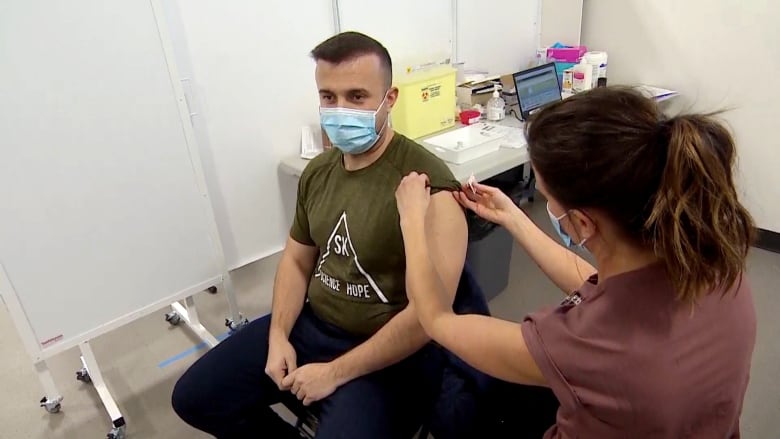
Masri suggested that the vaccine strategy be tweaked slightly to include essential workers sooner.
“You know, there are people going to work every day at grocery stores or truck drivers or even people in health care who are being asked to go to work everyday and put themselves at a really high risk, but yet they may not be vaccinated for two months or three months or four months from now,” he said.
Masri said to see young people fighting for their lives in the ICU is “very disturbing and extremely unusual.”
As for restrictions in the province, Masri said the government should revisit the opening of bubbles and the loosening of those types of restrictions. He also said rapid testing has been underutilized in the province and country.
Masri emphasized that this is not just a Regina problem, and that the entire province should be preparing.