

Thousands of Saint John properties that escaped assessment increases this year, including dozens that sold for record prices, are slowing growth in the city’s tax base for 2022 compared to other cities.
That’s at odds with predictions from Service New Brunswick officials earlier this year, and Mayor Donna Reardon wants to know why assessments in other communities appear to follow different rules.
“That to me is a question I’d like to get answered,” Reardon said.
“I have to say I don’t understand it.”
Real estate sales in Saint John set records in both volume and price over the past year.
But although Service New Brunswick officials told the city in February that it would “reap some of that reward” with growth in its 2022 tax base, the results announced earlier this month were underwhelming.

City’s tax base ranks 43rd among N.B. municipalities
Based on property assessments completed this year by Service New Brunswick, Saint John’s tax base is expanding by 6.24 per cent for 2022 according to figures released earlier this month by the province
That’s more growth than in recent years, but still well below the provincial average of eight per cent.
Part of the sluggishness is because 5,332 residential, commercial and industrial properties in the city, one in every five, escaped any assessment increase at all from Service New Brunswick.
That helped to drag growth in the city’s tax base down to 43rd place among all New Brunswick municipalities.
Moncton had only 888 properties awarded no assessment increase for 2022 and Fredericton just 680.
Most perplexing for Saint John are dozens of properties given no change in their taxable values, even after being sold to buyers for double their assessment and more.
On Saint John’s upscale Anchorage Avenue, five waterview lots sold earlier this year at prices between $151,000 and $230,000.

The sales were an average of 144 per cent above the properties’ 2021 assessed values, but the high prices triggered no changes in their assessments or in assessments of other lots in the neighbourhood.
As a result, the sales added nothing to Saint John’s critical tax base growth for 2022. One of the Anchorage lots purchased in May for $169,000 has since been relisted by its new owner at $209,900. However, for taxation purposes, Service New Brunswick continues to assess it at $75,200.
That appears to contradict Service New Brunswick’s claims that its annual assessments approximate what a property will reasonably sell for if it were put on the market.
According to the agency, a collection of actual sale prices in a neighbourhood are considered the most reliable guide to what assessments should be in an area.
“Your property’s real property assessment value reflects its market value,” the agency explains on its website.
“Our assessors aren’t actually determining market value,” it notes. “They are simply reflecting the values that have been established by buyers and sellers in local real estate markets across the province.”
That is what happened in Moncton in a development going up around the Mountain Woods golf course.
This year, eight lots in the development sold to buyers for an average price of just over $102,000 each — 98 per cent above their assessed values.
Based on those sales, Service New Brunswick raised assessments on all eight lots and six others nearby by an identical 98 per cent. The change accurately reflected sale prices in the development and the rising assessments added $621,400 to Moncton’s 2022 tax base.
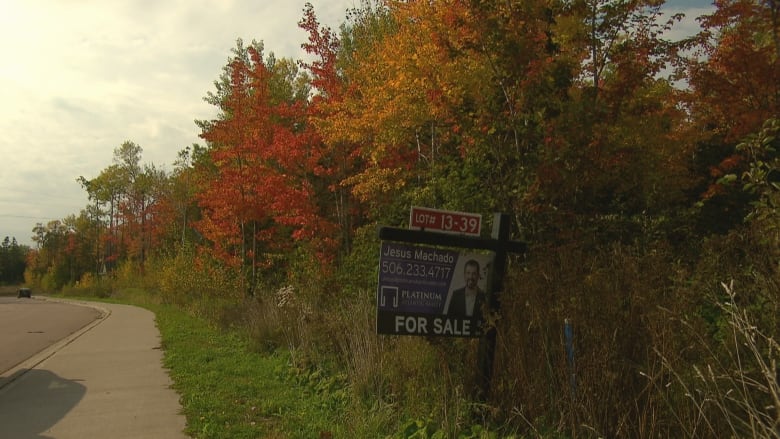
It’s a sharp contrast to what Service New Brunswick did on Anchorage Avenue and in a second Saint John neighbourhood along the Bay of Fundy.
On a stretch of Saint John’s Sea Street, perched above Bayshore Beach with panoramic ocean views, 18 building lots sold to buyers this year for a combined $892,750.
It was, on average, more than double their assessed value.
However, 13 of the lots have been awarded zero per cent assessment increases for 2022, as have seven existing homes that sit among them on the same street.
Service N.B. ‘can’t discuss the details’
Oceanview properties in Saint John have been among the highest in demand over the past year, selling for $100,000 or more above their assessed values in several cases.
Service New Brunswick says it cannot reveal why it concluded Oceanside properties on Sea Street warranted no increases in their values, even those that sold for higher than their assessed price.
“We cannot discuss the details of individual properties,” Jennifer Vienneau, Service New Brunswick’s director of communications, said in an email.
“It is not uncommon for external factors to affect the market value. On an annual basis, property assessors analyze these factors to make adjustments to assessment values that are in line with market activities.”
Reardon thinks Service New Brunswick is not following the same assessment rules in Saint John as it does in Moncton, and that difference is restricting growth in her city’s tax base.
“If I say a lot’s worth $150,000 to me and there’s been a few of them that have sold for that, that’s the price. That’s what they’re worth,” she said.
“We’re trying to work with Service New Brunswick. I think it needs to be more transparent, more clear to people. We need to understand how they come up with the calculations.”

Follow Canada News Media
Get the day's top Canadian stories and our two daily 60-second news videos wherever you scroll.
X Threads Facebook Instagram LinkedIn TikTok YouTube Pinterest Reddit Substack Flipboard Newsletter RSS