


Before smartphones turned ubiquitous, flip phones were the consumer-tech status symbol. They had compact and cool designs and user-friendly features. And let’s be honest: It’s tough to beat the thrill of ending a call by snapping a phone shut.
Nowadays, the flip phone is back in vogue, albeit the “smart” kind, as old becomes new again.Just ask Euphoria star Sydney Sweeney, whom Samsung has tapped to drive that point home. In an ad for the company’s latest flip phone, the actress proclaims that her Galaxy Z Flip 5 is the “best accessory” for “how she looks and feels.”
In July, Samsung unveiled its latest wave of foldable phones at its Unpacked event, where the Galaxy Z Flip 5 was arguably the tech star of the show. Compared to the Galaxy Z Fold 5, it received major upgrades, including a redesigned hinge and a much larger cover screen. The addition of that larger external display, along with software upgrades, means you can do things like record audio, peruse your calendar or track the stock market without ever unfolding the Z Flip 5. Its predecessor, the Galaxy Z Flip 4 had a comparatively small cover screen that wasn’t nearly as versatile.
“Larger cover screens make these clamshells both more useful and more deliberate — sometimes you just want a piece of information without falling into a rabbit hole of app content, ” Avi Greengart, analyst at Techsponential, told CNET over email.

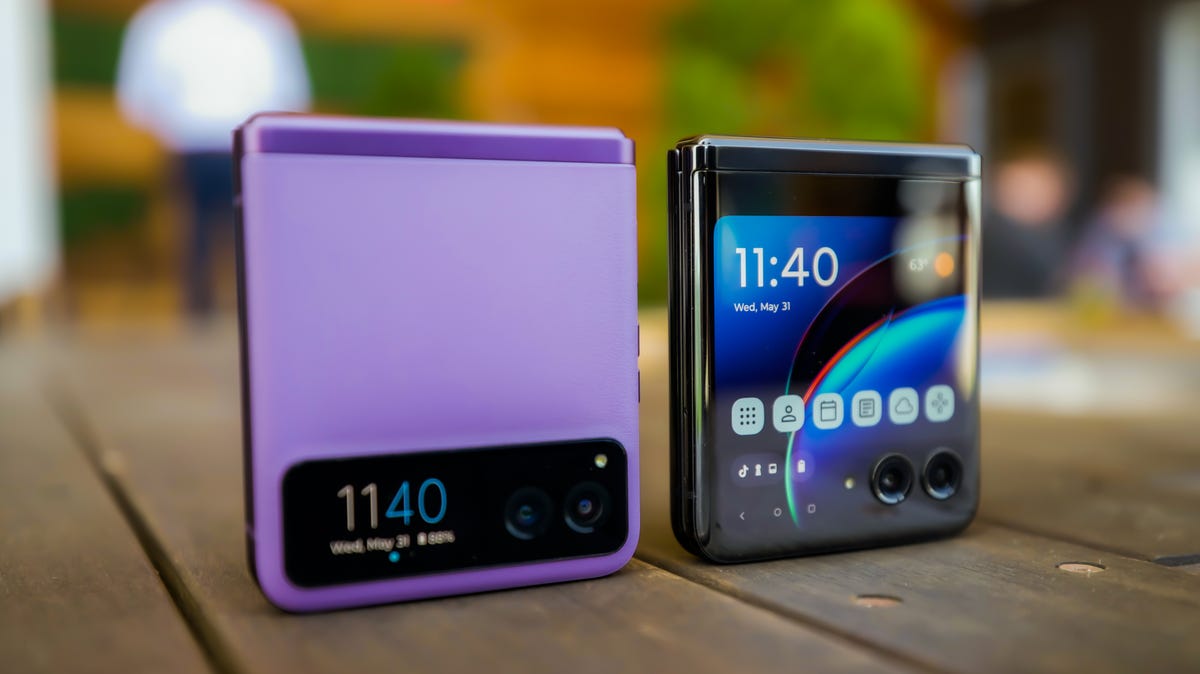
These new flippable cover screens seem to have hit a sweet spot: larger and more useful than a smartwatch, but smaller and less distracting than a normal phone screen. The previous generation of flip phones felt like a regular phone with a smartwatch on the front — convenient for cursory checks, but not much else.
“It’s the ‘be first or be better’ moment for the smartphone vendors,” said Will Wong, senior research manager at the International Data Corporation, a telecom market intelligence firm. “To win the foldable competition, the smartphone vendors will need to either be the first or create a more significant differentiation.”
Armed with bigger cover screens, flippables are poised to come back into the mainstream provided hurdles like durability are overcome. Either way, this latest wave of redesigns underscores how the flip phone is reclaiming its main-character energy/place in the spotlight more than ever before.
Take this anecdotal example: Oppo chose the Find N2 Flip as the product for its global foldable phone push, even though it had previously launched two book-style foldable phones in China. In fact, the Find N2 Flip is the crown jewel of Oppo’s global marketing blitz for its smartphone division, which involves sponsorships of elite sporting events including Wimbledon and the UEFA Champions League, which together attract a worldwide audience estimated in the hundreds of millions.

Refined, not redefined
Samsung announced the Galaxy Z Fold 5, its larger and more expensive foldable phone, alongside the Z Flip 5 at Unpacked. The book-style device is an improved version of last year’s Z Fold 4, with a different hinge. CNET’s Patrick Holland, who reviewed it, described the Z Fold 5 as a refinement rather than a redefinition. However, that essentially sums up the trend across the entire book-style foldable subcategory right now.
Though more players are entering the space, and with a range of designs, the transformation days for book-style foldables seem to be behind us. Sure, new entrants such as Google’s Pixel Fold and Honor’s Magic V2 are exciting and — in the case of the latter — impossibly thin. Book-style foldables may also be seen as being more technologically innovative than flip phones.
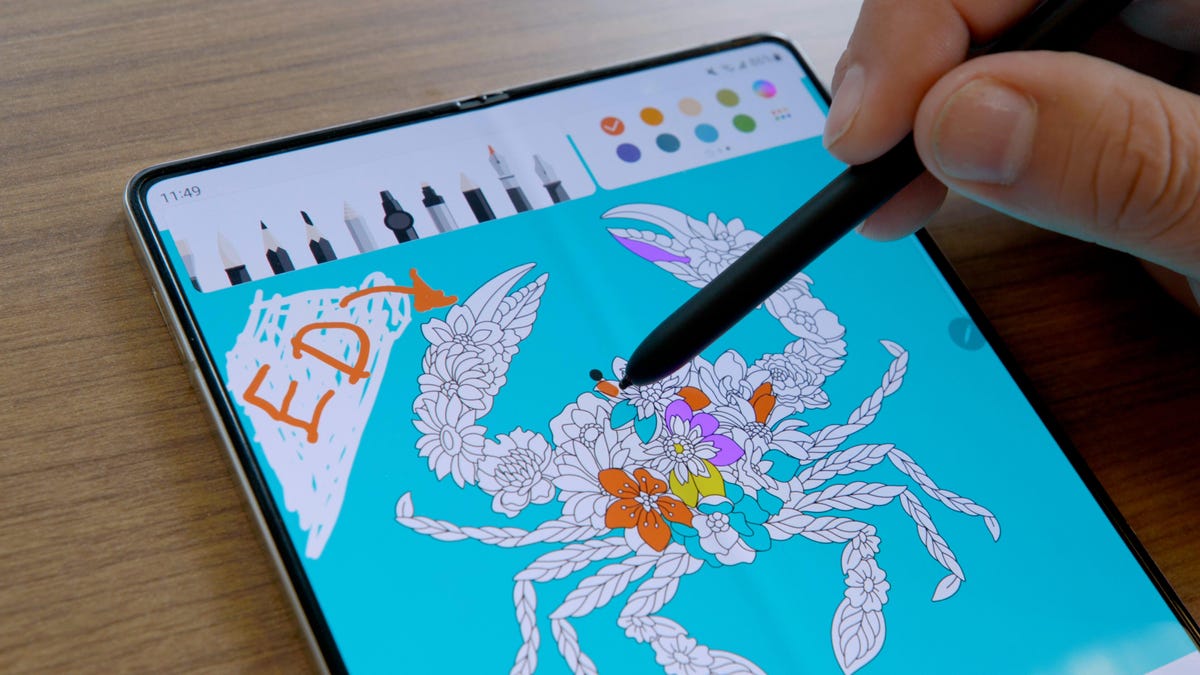
But they aren’t dramatically different from their predecessors right now, and that’s OK. In general, most phone makers have settled on the book-style design pioneered by Samsung in 2019 with its Galaxy Z Fold, meaning that device laid the foundation for the book-style foldable category as we know it today. No small feat. A couple of years later, the Galaxy Z Fold 3 debuted with stylus support, which was also another major milestone in foldable phone innovation, but that was two years ago.
“In the short term, a significant transformation for book-style foldables in terms of hardware is not expected.” Wong told CNET in an email. “Nevertheless, we do see favorable use cases like navigation for this form factor. Thus, software optimization will still be one of the good directions for this particular product.”