

The Society for Armenian Studies (SAS) and the National Association for Armenian Studies and Research (NAASR) will host a roundtable discussion on Vartan Matiossian’s The Politics of Naming the Armenian Genocide: Language, History and ‘Medz Yeghern,’ published recently by I.B.Tauris, an imprint of Bloomsbury Publishing, as the inaugural book in the Armenians in the Modern and Early Modern World series. The event will be held on Thursday, November 11, at 7:30 pm (Eastern Time). The program will be accessible live on Zoom (registration required) and on the SAS YouTube Channel.
The roundtable will feature Talar Chahinian (University of California, Irvine); Bedross Der Matossian (University of Nebraska, Lincoln), the series editor of the Armenians in the Modern and Early Modern World series; and Marc Mamigonian (NAASR).
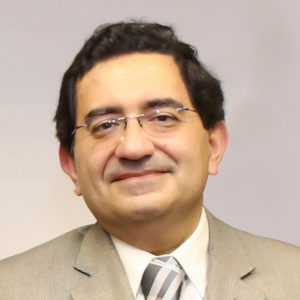
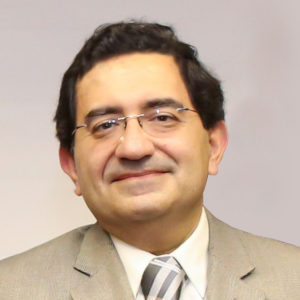
Dr. Matiossian is executive director of the Eastern Prelacy of the Armenian Church in New York City. A historian and literary scholar, over the past 35 he has published eight books on Armenian history, literature and language in Armenian, English and Spanish, along with 22 books in Spanish and English translation, and several edited volumes. He has also published scores of articles, translations and essays in the Armenian and non-Armenian press.
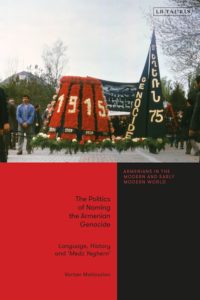 This book explores the genealogy of the concept of ‘Medz Yeghern’ (‘Great Crime’), the widely used Armenian term for the annihilation of the Armenians in the Ottoman Empire between the years 1915-1923. Matiossian has tackled a subject both omitted and misinterpreted in the historiography, taking a combined historical, linguistic, literary, and political perspective. He has drawn upon an impressive collection of Armenian literary and periodical sources, as well as other European languages in order to trace the development of the concepts pertaining to mass killing and genocide of Armenians from the ancient to the modern periods. The book is an insightful exploration of the politics of naming a catastrophic historical event, with a careful analysis of the use and abuse of Medz Yeghern, by the Vatican, Turkey and the US over the past two decades and its repercussions in the Armenian realm.
Khachig Tölölyan, Emeritus Professor of Letters at Wesleyan University, has noted that the book “offers a matchless analysis of texts ranging from newspaper articles and books to 114 monuments and shows how diplomats seeking to evade the moral and legal consequences of fully acknowledging the genocide sought to use the Armenian term for shameful camouflage.”
Philosopher and literary critic Marc Nichanian, author of The Historiographic Perversion, has added that The Politics of Naming the Armenian Genocide is “… an erudite overview of the uses of the Armenian word Yeghern across the ages and an in-depth study of the systematic misuses of this same word in translation within the languages of the civilized world, especially in the last few decades, allegedly for the sake of reconciliation or for more obscure reasons.”

Guest Contributor
Latest posts by Guest Contributor (see all)

Follow Canada News Media
Get the day's top Canadian stories and our two daily 60-second news videos wherever you scroll.
X Threads Facebook Instagram LinkedIn TikTok YouTube Pinterest Reddit Substack Flipboard Newsletter RSS