
“What we saw today is the kind of outage that shouldn’t happen,” an electrical engineering expert said Tuesday. At the height of the blackout, 150,000 of Montreal Island’s one million homes were without power.

This month, an ice storm left hundreds of thousands of homes without electricity for days. A week later, pro-Russian hackers paralyzed Hydro-Québec’s website. On Saturday, thousands of West Island homes faced another power failure.
On Tuesday, for many, the power went out just after noon. At the height of the outage, 150,000 of Montreal Island’s one million customers were affected.
Montreal and the South Shore were the hardest hit, with Laval, the Laurentians and Lanaudière also widely affected.
Power was gradually restored over the following hours. At 5 p.m., Hydro-Québec said all homes affected by the outage had electricity.
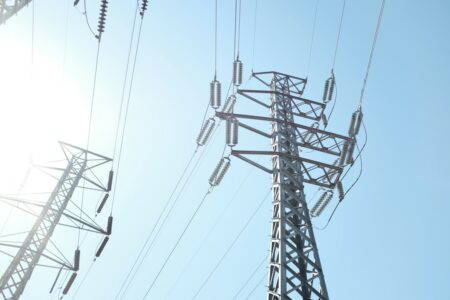
“The loss of generation from some units at Churchill Falls triggered protective mechanisms on our high-voltage transmission system, resulting in a power outage affecting approximately 490,000 customers,” the utility said.
Churchill Falls is majority owned by Newfoundland and Labrador Hydro, with Hydro-Québec owning 34 per cent of the operation.
In a statement, N.L. Hydro took the blame. “During maintenance this afternoon, an issue at Churchill Falls resulted in a loss of supply affecting customers in Quebec,” the utility said. “All units are back online. The incident is under investigation.”
Hydro-Québec’s distribution network has seen its reliability deteriorate in recent years, according to an auditor general’s report.
The number of customers whose service was interrupted by a normalized outage in the medium-voltage system, which includes outages caused by equipment failure and the impact of vegetation, jumped 70 per cent over a decade to 8.2 million in 2021. This outstripped a nine per cent climb in the number of Hydro-Québec clients.
Outages represent significant costs for Hydro-Québec. From 2016 to 2021, the company spent $144 million to $202 million per year on corrective maintenance work following breakdowns.
In response to this deterioration, Hydro-Québec launched an outage reduction plan in 2020 that was initially estimated to cost $800 million to implement. A year later, it revised the cost estimate by 43 per cent, to $1.14 billion.
“What we saw today is the kind of outage that shouldn’t happen,” said François Bouffard, an associate professor at McGill University’s department of electrical and computer engineering.
“Hydro-Québec does have some control over the Churchill Falls station because they are its lone client, so they have a certain part of responsibility. The fact that almost everyone got their power back within a few hours shows that the contingency plans worked. The main question that remains unanswered is whether the network reacted well following the failure. That will need to be analyzed.”
“I have little information about what’s happening right now,” Legault said at 2 p.m.
“What they tell me is that it has nothing to do with what happened a couple of weeks ago. It’s about the production — maybe from Churchill Falls — so I really want to have more information before answering your question.”
Energy Minister Pierre Fitzgibbon said the blackout was not caused by hackers. He said it was unclear why six turbines stopped working at Churchill Falls.
A hydroelectric deal that Quebec signed with Newfoundland and Labrador in 1969 allows Hydro-Québec 85 per cent of the electricity generated by the Labrador dam, meaning Quebec makes most of the profit.
In February, Legault said Quebec is ready to pay more for electricity from Churchill Falls in exchange for a “very advantageous price” for power once the agreement expires in 18 years.
On Twitter Tuesday, angry Quebecers peppered the utility with questions and complaints.
In some cases, Hydro pushed back.
“Who are the clowns in charge? Will the incompetents in their ivory tower be held accountable for their mistakes?” one user asked.
Hydro shot back: “Are you talking about the people in Churchill Falls?”
Another said: “Ice, no ice. Good, bad weather. We always have breakdowns!”
The utility responded: “Did you take the time to read our tweet to understand what happened?”

Follow Canada News Media
Get the day's top Canadian stories and our two daily 60-second news videos wherever you scroll.