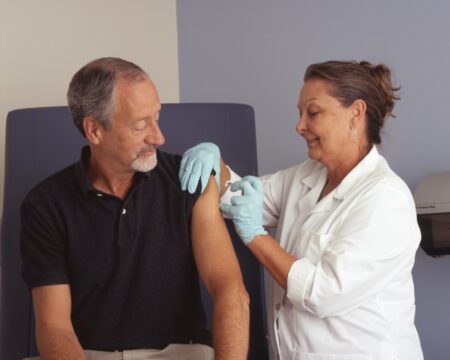



 Federal Health Minister Jens Spahn (CDU) wants to enable booster vaccinations for groups particularly at risk from the coronavirus from September onwards. In addition, all those who have been fully vaccinated and have received vaccines from Astra Zeneca or Johnson&Johnson in recent months will also be able to receive a booster with an mRNA vaccine from Biontech or Moderna from September. This is provided for in a draft resolution of the Federal Ministry of Health for the conference with the health ministers of the states, which will take place this Monday. The paper has been made available to the South German Newspaper.
Study results indicated “that there may be an increased incidence of a reduced or rapidly declining immune response in certain groups of people after a full COVID-19 vaccination,” the health ministry’s draft states. This applies in particular to the group of relevantly immunocompromised patients as well as the very elderly and those in need of long-term care. For this reason, the states are to send mobile teams to nursing homes, institutions providing integration assistance and other facilities with so-called vulnerable groups. For vulnerable persons still living at home, family physicians should offer appropriate vaccinations.
The health ministers also want to pass a resolution on the vaccination of adolescents between the ages of 12 and 17. This issue has recently been the subject of intense debate between politicians and the Standing Commission on Vaccination (Stiko). It is true that the mRNA vaccines from Biontech and Moderna have now been approved in the European Union for this age group. However, the Stiko has so far refused to issue a general recommendation for immunization of adolescents aged 12 years and older due to insufficient data. Recently, Health Minister Jens Spahn and Bavaria’s Minister-President Markus Söder (CSU) had clashed with the Stiko because they feared an unnecessary delay in the vaccination campaign. The Stiko, in turn, had defended itself against political pressure.
In the draft resolution for the conference with the states, the Ministry of Health now refrains from making a clear recommendation for the vaccination of adolescents and thus opposes the Stiko. Instead, it simply states, “All states will now offer vaccinations for 12- to 17-year-olds at vaccination centers.” Medical information, as well as a necessary agreement of the custodial parents, would be ensured thereby. In addition, children and adolescents could also be vaccinated by pediatricians and family doctors in private practice, as well as by company physicians.
Anyway, the inoculations of young people come in the meantime apparently well forward. As Spahn announced on Twitter over the weekend, 900,000 of the 4.5 million young people in this age group, i.e. around 20 percent, have already received at least one initial vaccination since the Biontech vaccine was released for young people exactly two months ago.New entry regulations have also been in place at German borders since Sunday. Drivers and train passengers must now also show proof of vaccination or testing. However, these are only checked on a random basis.
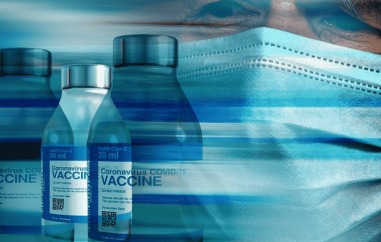
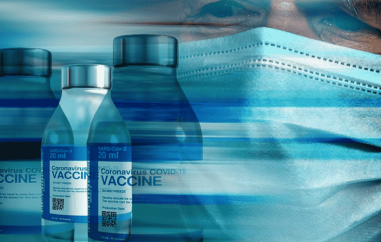
Image by Gerd Altmann