

‘Where Are You, People?’ The Art World’s Deafening Silence After the Hamas Attack in Israel
The First Stateside Auction of the Legendary Rothschild Collection, Built Over Centuries, Nets $43 Million
Most lots soared past their presale estimates in the first of a four-part series at Christie’s New York.
Bidding at the first evening of Christie’s Rothschild auction series in New York was befitting of the gilded wares on offer, as nearly every lot soared past its presale estimate and one was hammered down for a seven-figure sum ten times its high estimate.
The four-part sale began yesterday (October 11) with Rothschild Masterpieces. The series—with offerings spanning Old Master paintings and European furniture to Italian Renaissance maiolica and 17th-century jewelry—marks the first auction dedicated to the European banking dynasty on North American shores.
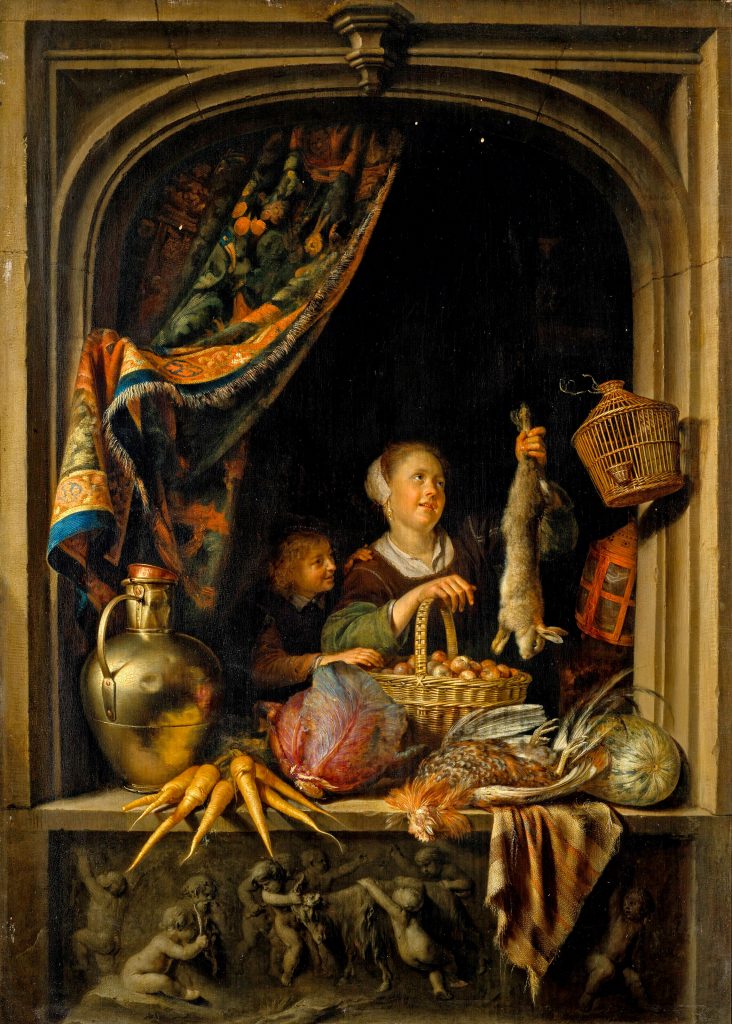
Gerrit Dou, A young woman holding a hare with a boy at a window (ca. ca.1653–57). Courtesy of Christies.
The first evening sale in New York saw a total haul in excess of $43 million, with a 95 percent sell-through rate. The highest-priced item was Gerrit Dou’s A young woman holding a hare with a boy at a window (ca.1653–57), fetching just over $7 million (including fees), blowing past its presale estimate of $3 million–$5 million. Although the artist trained with Rembrandt as a young man, over time he deviated from the Dutch Master’s subject matter and began painting people going about their daily tasks.
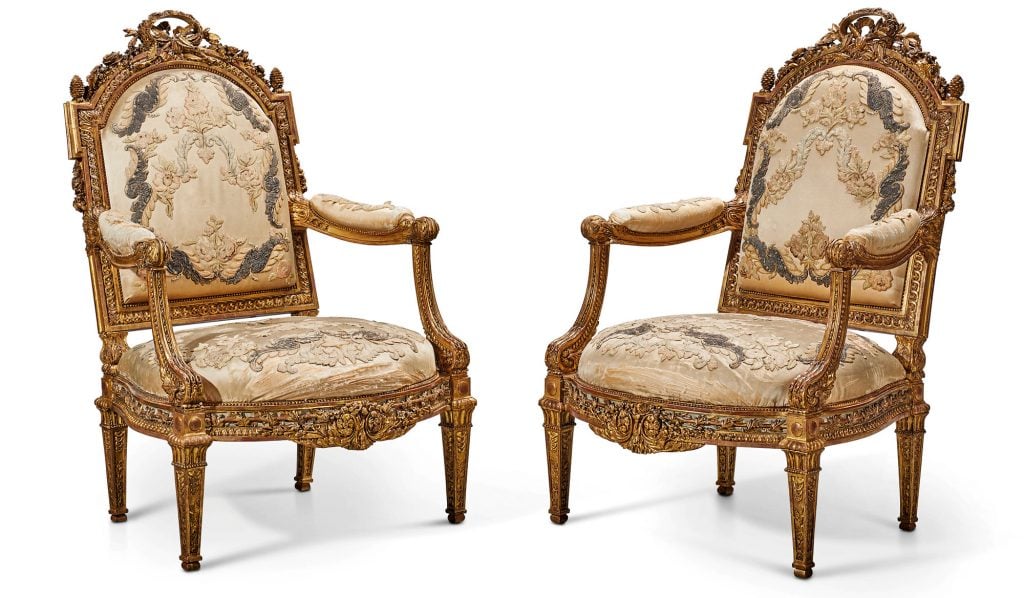
A pair of late Louis XV gilt walnut fauteuils by Louis Delanois, Joseph-Nicolas Guichard, and Jean-Baptiste Cagny for Madame du Barry (ca. 1770–71). Courtesy of Christie’s.
A pair of fauteuils (armchairs), ca. 1770–71, came in second with a realized price of $6.2 million (estimate: $600,000–$1 million). They belonged to the famed Madame du Barry, King Louis XV’s last mistress, who kept them in her château de Louveciennes. A rare survival of the French Revolution, they later adorned Alphonse and Leonora de Rothschild’s hôtel particulier in Paris. The couple, part of the family’s French branch, inherited the mansion in 1868 and filled it with paintings, furniture, and decorative arts.
The Rothschild family rose to prominence after Mayer Amschel Rothschild established a banking business in 1760s Frankfurt. The enterprise evolved into an international dynasty after his five sons set up practices throughout Europe. The Rothschilds had not only a head for banking, but a passion for collecting. So opulent were their homes that the term “goût Rothschild,” or “Rothschild taste,” eventually entered the lexicon.
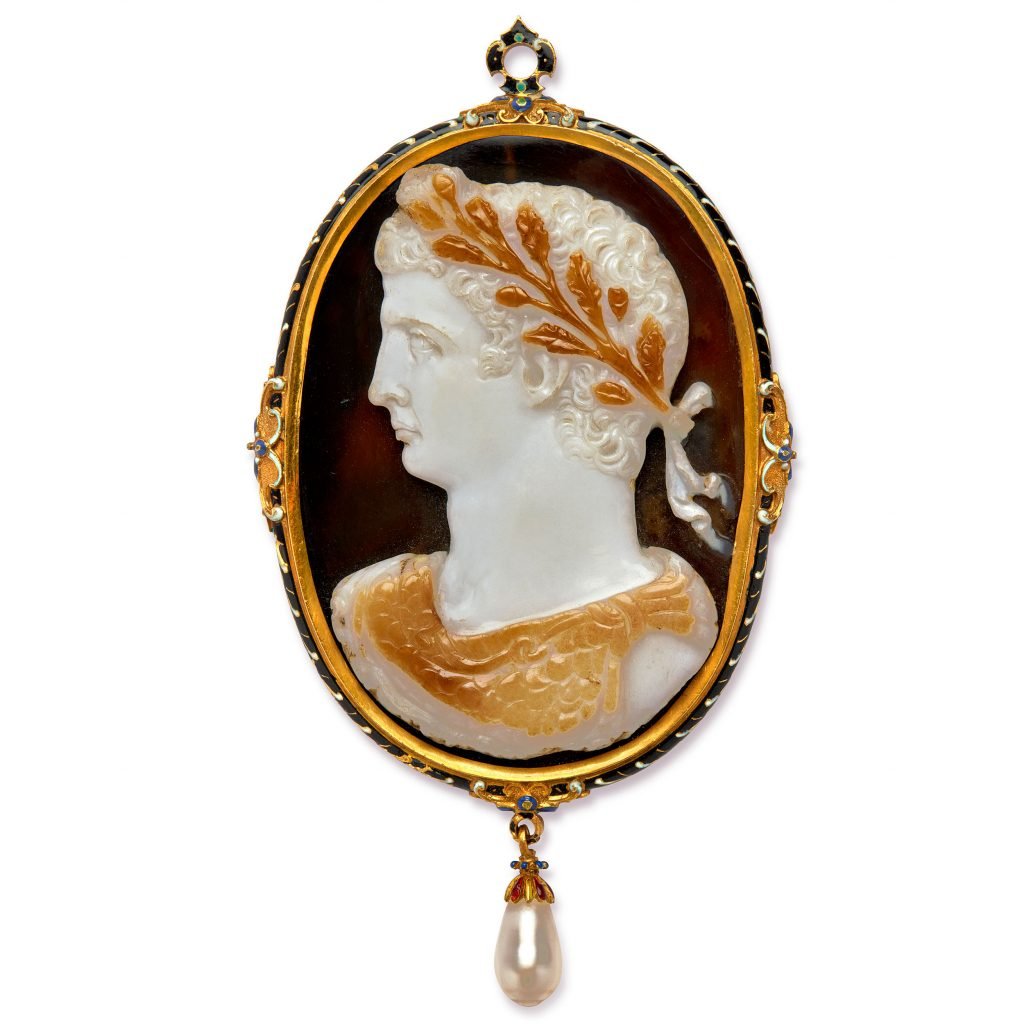
A Roman sardonyx cameo portrait of the Emperor Claudius, ca. 41-54 C.E.. The mount is attributed to Daniel Mignot, Augsburg, ca. 1593–96. Courtesy of Christie’s.
Other lots notched even larger margins over their presale estimates. A Roman cameo portrait of the Emperor Claudius, which had previously been sold by Christie’s in the 19th century, fetched $2.1 million—more than 10 times its low estimate. Sculpted in three layers of sardonyx, the imperial cameo was made ca. 41–54 C.E., although it was mounted in a 16th-century gold setting and bears a drop-shaped pearl that was likely added in the late 19th or early 20th century.
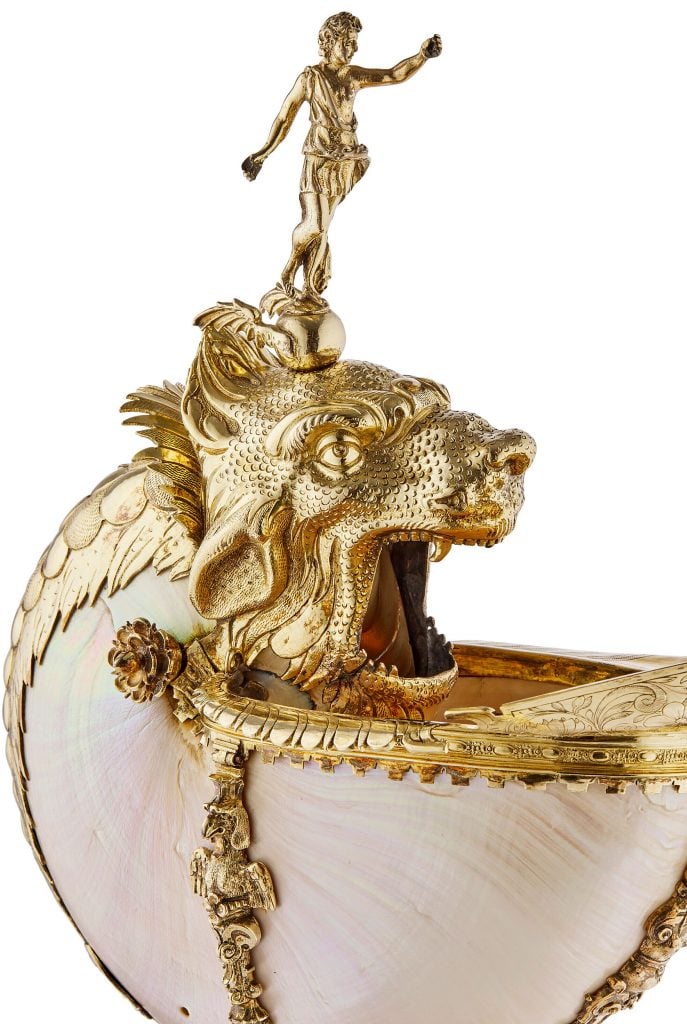
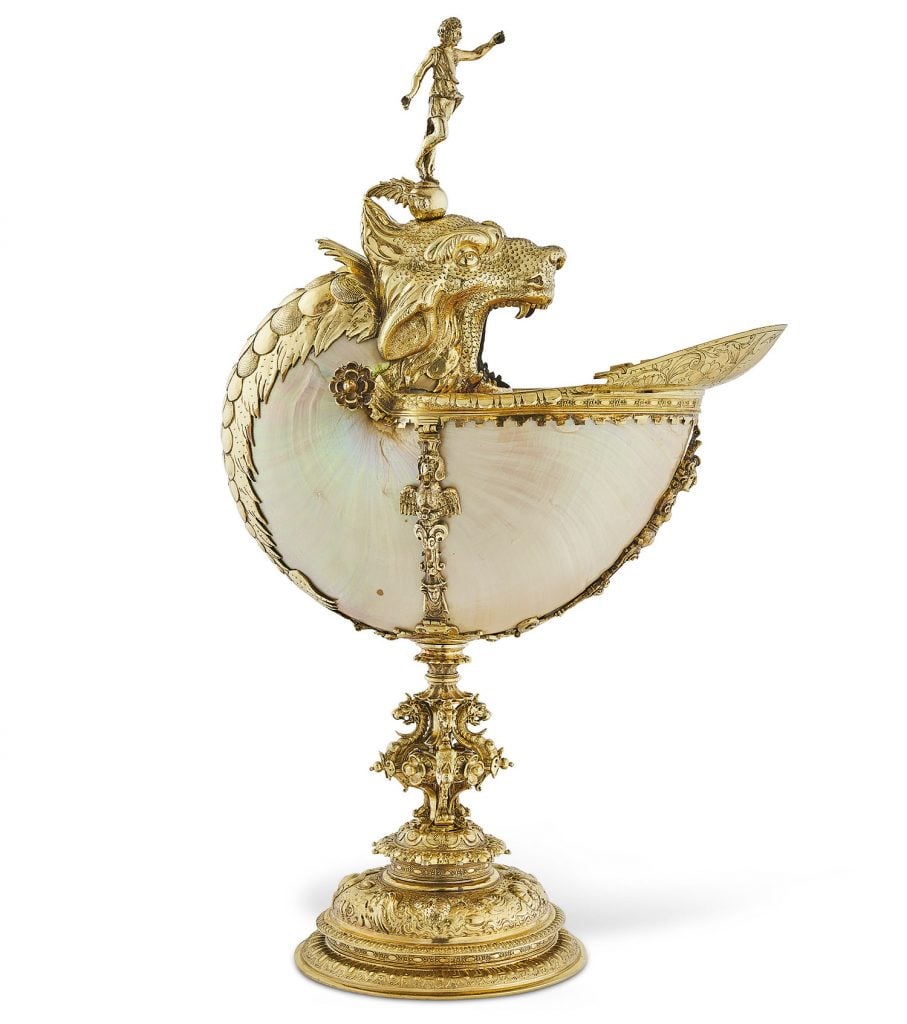
Cornelis Jansz van der Burch, silver-gilt mounted nautilus cup (1607). Courtesy of Christie’s.
A silver-gilt nautilus cup—a goblet with the Greek goddess Nike (victory) riding an open-jawed sea monster—yielded just over $1.5 million, smashing its $100,000–$150,000 estimate. Attributed to Mark of Cornelis Jansz van der Burch of Delft, the Netherlands, its date of 1607 places it just after the establishment of the Dutch East India Company. The comany’s dominance of the spice trade gave it a de facto monopoly over nautilus shells, which were almost exclusively imported through Amsterdam and resold through Dutch traders.
The Rothschild sales continue with additional live auctions on October 12 and 13, and an online auction—where bidding starts as low as $100—from October 3 to 17.
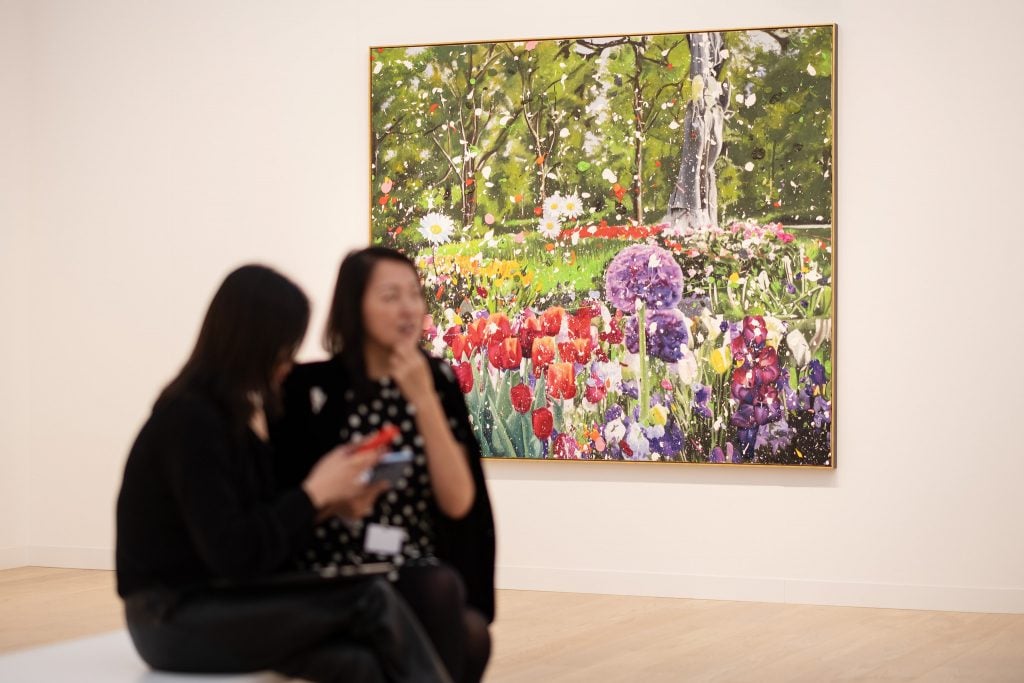
If you were going to try to summarize the zeitgeist based on the offerings along the aisles at Frieze London (October 11–15), which opened its 20th anniversary edition to VIPs yesterday, the evidence might surprise you: it really seems like everything is coming up roses.
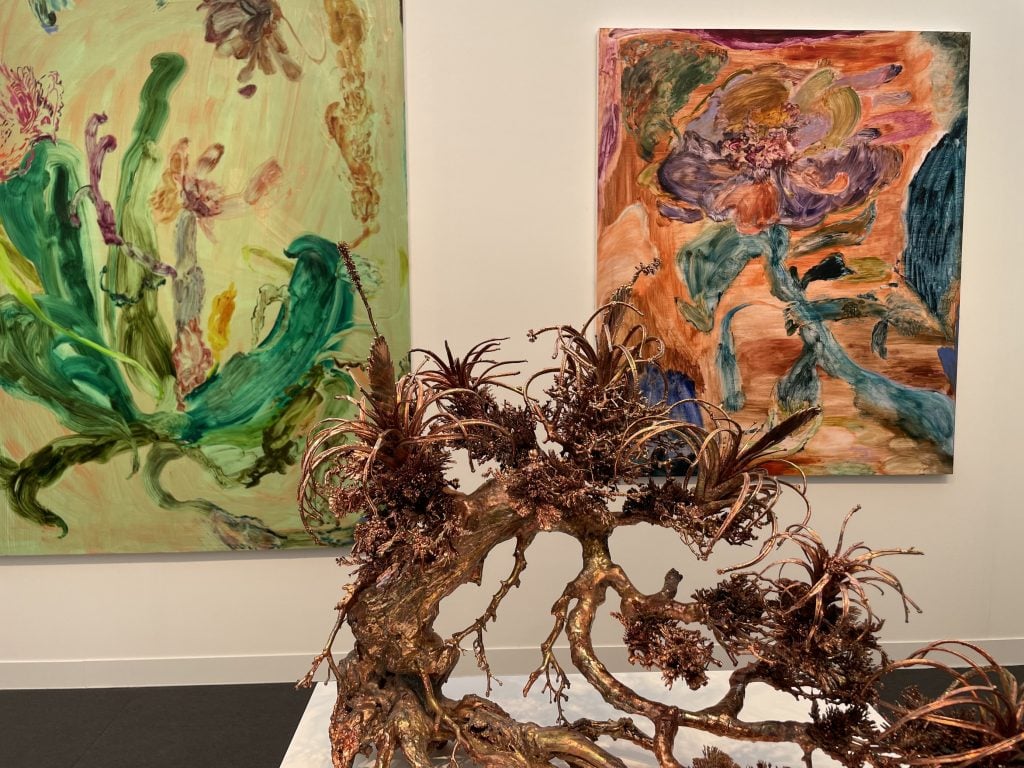
With dealers on their back foot as jitters continue to ripple about the state of the art business, the gambit this year was to appeal to our world-weary eyes with a colorful dose of whimsy. Floral art, delicate pastoral scenes, and playfully surrealistic nature that was more storybook than sci-fi were seemingly on every corner of the fair. While some might write it off as low-hanging fruit, lest one forget that art is supposed to be, among other things, a balm for the times.
The most sizeable iteration of this new flare for botanics was to be found, perhaps unsurprisingly, at Gagosian, where British art star Damien Hirst continues to try his hand at painting, this time in a new series called “The Secret Gardens Paintings” (2023)—the maximalist canvases have traded cherry trees for fields of wild flowers at an intimately close range, atop of which he layered his signature paint splotches.
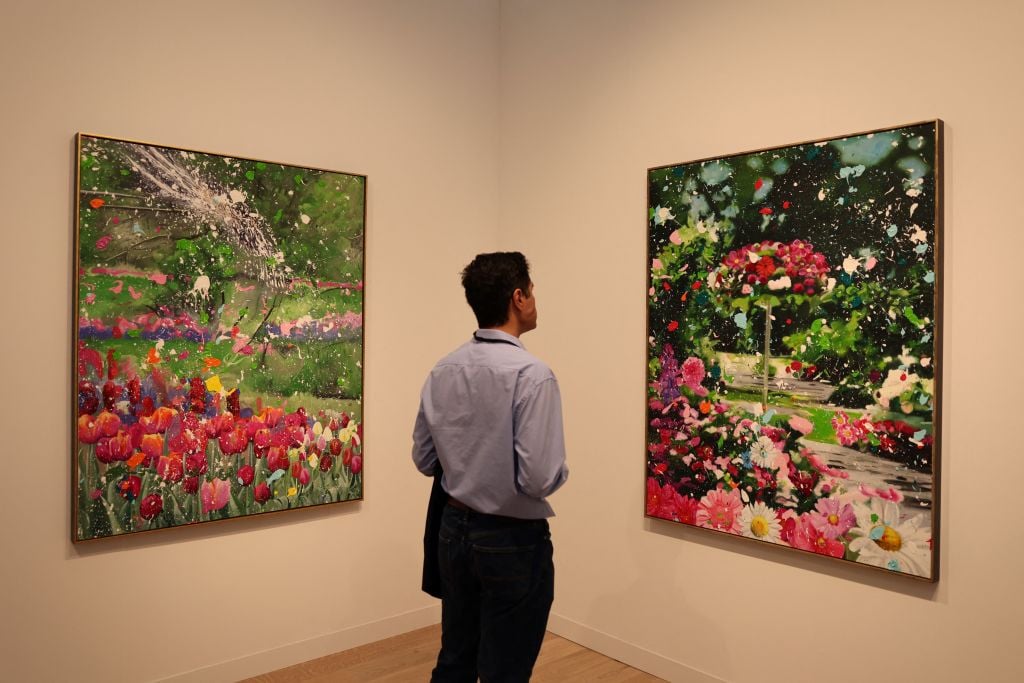
A visitor gazes at Garden of Expression and Beautiful Garden by Damien Hirst during a press preview for the Frieze Masters Art Fair in Regent’s Park in London on October 11, 2023. Photo: Daniel LEAL/AFP via Getty Images.
At Casey Kaplan, Kevin Beasley’s solo presentation struck a similar tone, with new works that merged flora and domestic elements. A series of four Garden Windows depict imagined landscapes in a surreal exterior world that could have been drawn from a fairytale. Just in front, a custom-built grandfather clock with a delicate hand-painted face still intact has been reworked with resin and other elements. The piece’s title, On Time: For Benjamin Banneker and Peter Hill an English Movement (2023), layers in historical heft with its nod to the Black scientist and clockmaker.
François Ghebaly’s group presentation was seamlessly integrated to create a fantastical scene, with works by Farah Al Qasimi, Marius Bercea, Max Hooper Schneider, Patricia Iglesias Peco, and Jessie Makinson. At Clearing, Marguerite Humeau’s wind-activated instruments have fanciful root structures and a trio of color-filled, cloudlike wall pieces have divinatory-like symbols etched onto them.
And Pilar Corrias, who has just expanded in London with a new flagship in Mayfair, had a showstopper booth featuring German artist Sophie von Hellermann that was uplifting and as dreamy as can be. Wisps of paint strokes completely covered the carpets and walls in vibrant splashes of color. The central element of the presentation, which is titled “Dreamland,” is a series of washy pastel works depicting ferris wheels, roller coasters, and carousels.
“A day spent at a seaside fun fair, in all its intensity, can feel like a whole life of dreams and desires compressed into a few hours of an afternoon,” the artist said about the new works. And, as far as this particular thread of art went, such a mood was disarmingly true of the white tent this week as well. Take a whirlwind tour around the fair.
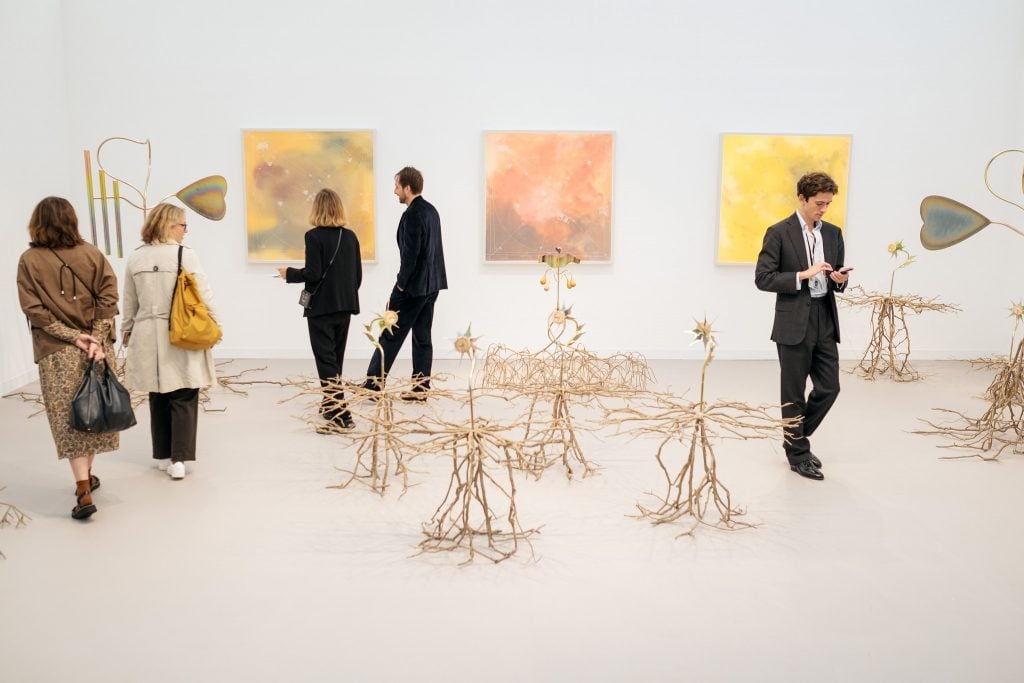
Clearing. Photo: Linda Nylind, courtesy of Linda Nylind/Frieze.
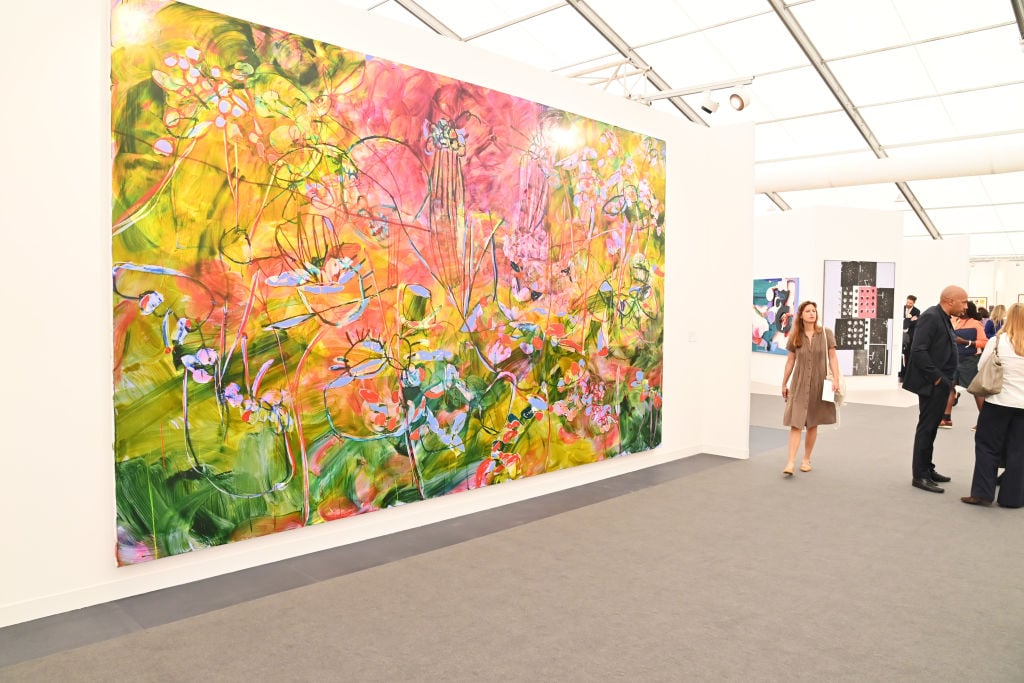
Jadé Fadojutimi at Frieze London. Photo: Dave Benett/Getty Images.
François Ghebaly’s booth. Photo: Kate Brown.
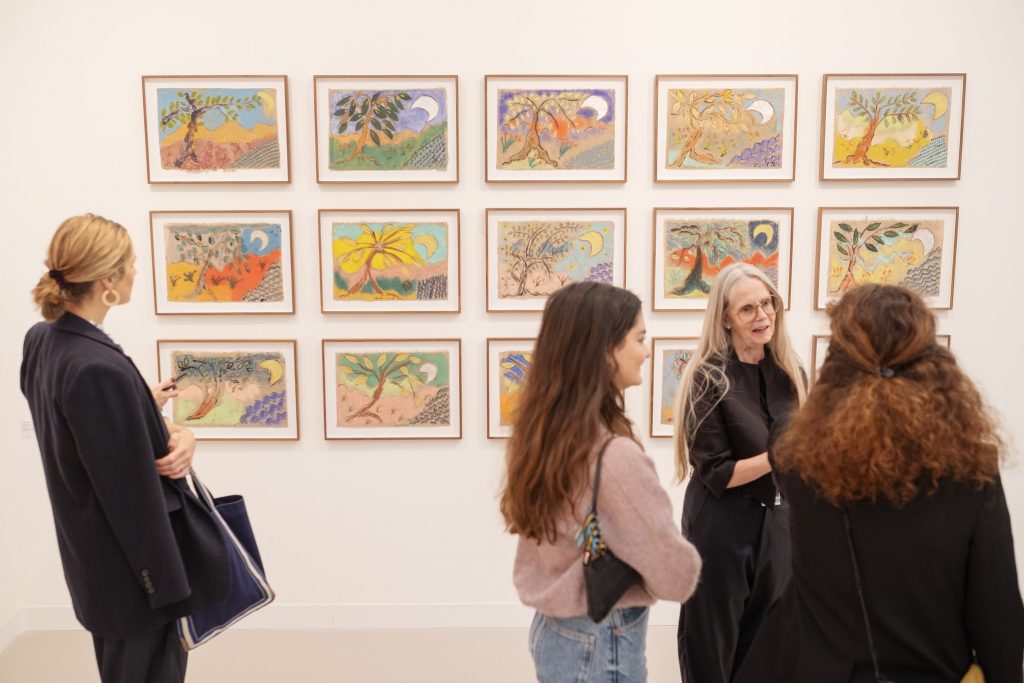
Sadie Coles’s booth. Photo: Linda Nylind, courtesy of Linda Nylind/Frieze.
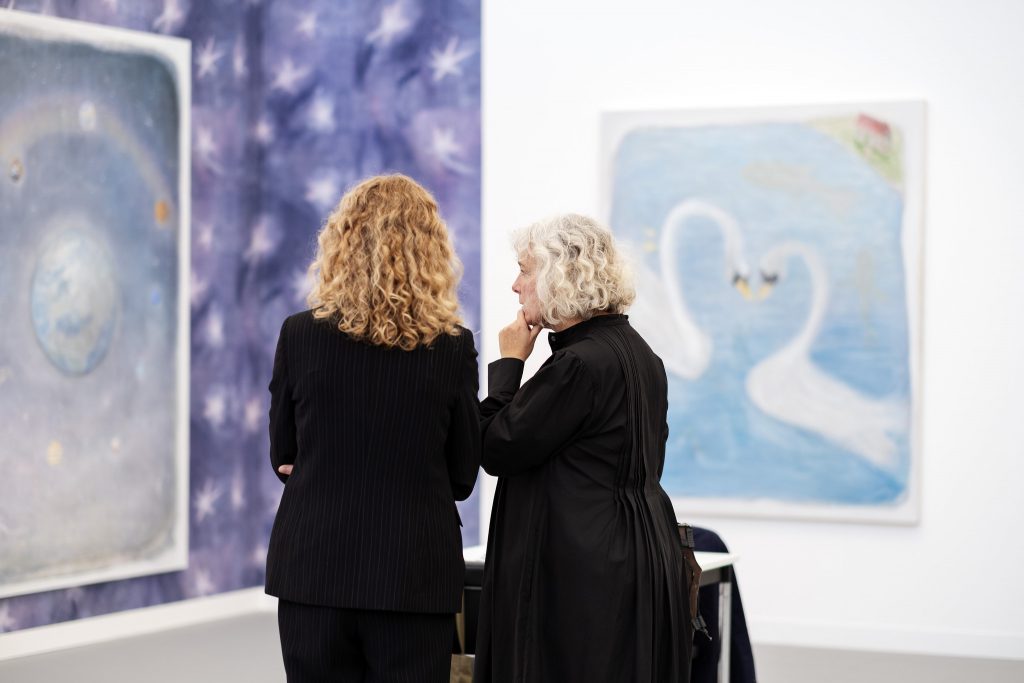
Kristina Kite Gallery. Photo: Linda Nylind, courtesy of Linda Nylind/Frieze.
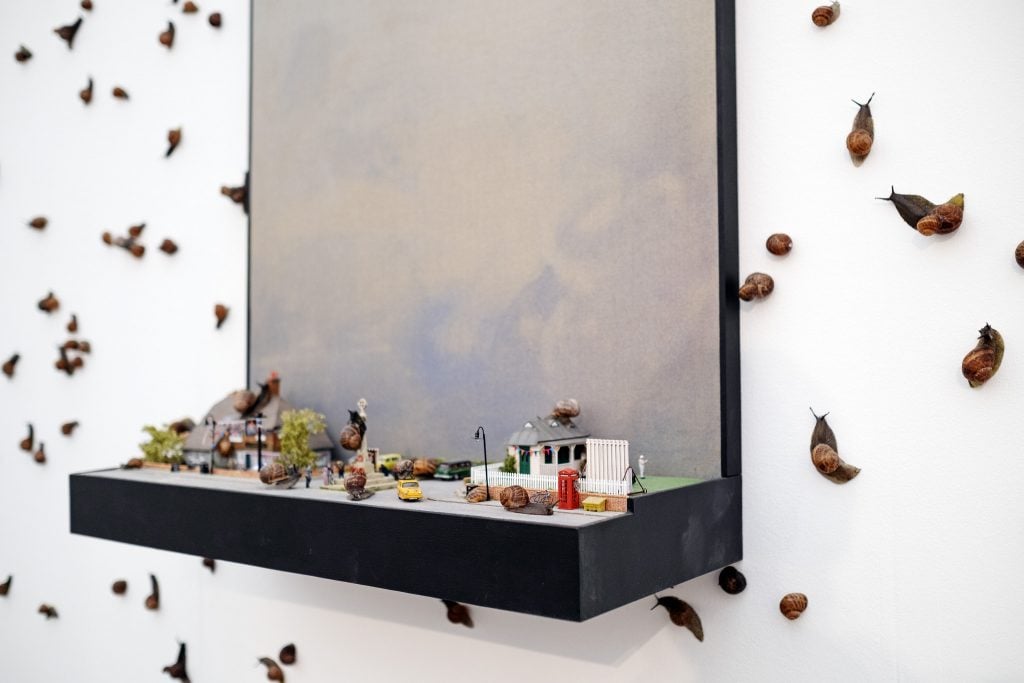
On the stand at Seventeen. Photo: Linda Nylind, ourtesy of Linda Nylind/Frieze.
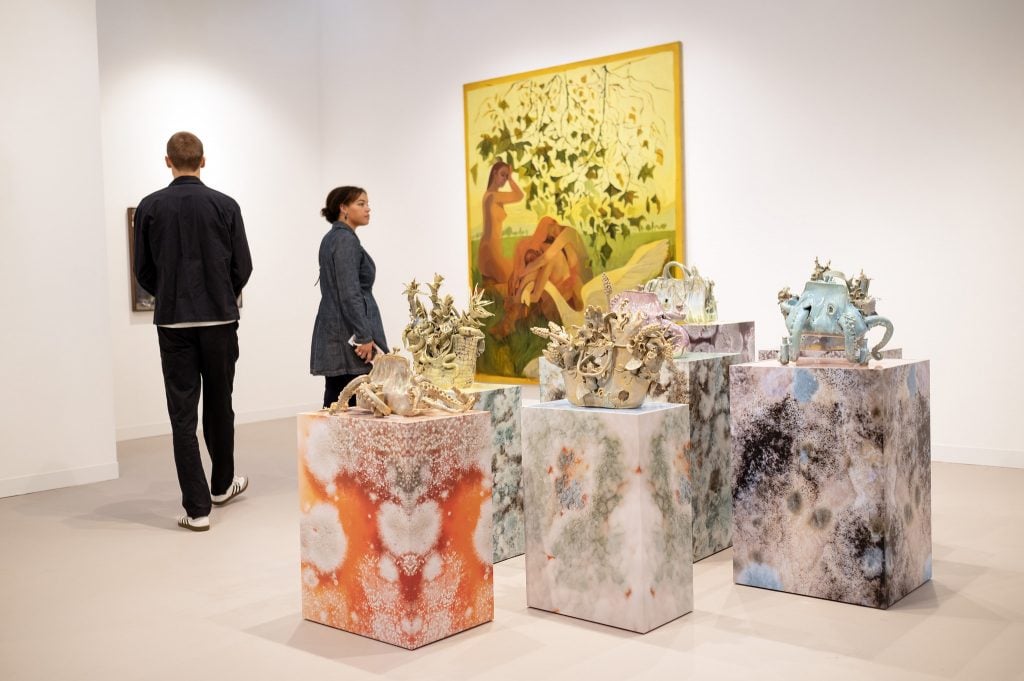
Carl Freedman Gallery. Photo: Linda Nylind, courtesy of Linda Nylind/Frieze.
If this year’s Frieze Masters in London is any indication, enthusiasm for the rediscoveries of historically overlooked women artists is as strong as ever. A section of the fair entitled “Modern Women” is devoted to just these stories, bringing together a curated selection of artists who worked between 1880 and 1980. Curated by AWARE (Archive of Women Artists, Research and Exhibitions), the section’s solo exhibitions bring together both unfamiliar names and artists who have earned acclaim in recent years, including Faith Ringgold, Vera Molnar, and Tarsila Do Amaral.
Among the discoveries is the work of radical French Fauvist painter Émilie Charmy, who made a living from conventional domestic scenes and still-lives but painted seductive nudes and daringly risqué self-portraits on the side. She is included in a new exhibition on Fauvism at the Kunstmuseum Basel, which spotlights the women integral to the movement.
A smattering of female Old Masters are also on offer at the fair, including works by the fabulously successful Venetian Rococo painter Rosalba Carriera. Philip Mould is bringing two of her pastel studies. One of the studies, Personification of Africa (c. 1720), depicts a Black allegorical figure in exoticizing dress and holding up a scorpion. The image is indicative of the ways in which non-Western cultures were othered by European artists during the 18th century and beyond.
Two women artists who passed away in the last year are also being honored by exhibitors. The Italian photographer Lisetta Carmi, who spent her life representing marginalized communities will have works shown at Ciaccia Levi and Galleria Martini & Ronchetti. Meanwhile, Cecilia Brunson Projects will present paintings by the Brazilian artist Judith Lauand, who was associated with the Concrete movement and recently received a major retrospective at the São Paulo Museum of Art.
Below are five women artists whose works can be discovered at this year’s Frieze Masters (October 11–15) who we think you should know.
Emily Kam Kngwarray
D’Lan Contemporary, Melbourne and New York
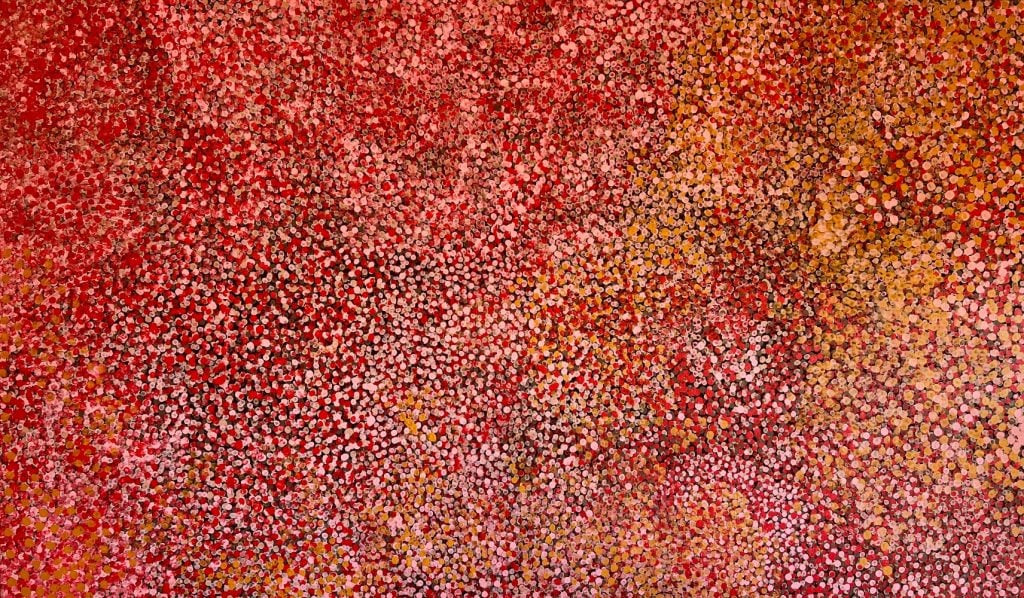
Emily Kam Kngwarray, Muna-Everything (1991). Photo courtesy of D’Lan Contemporary.
One of Australia’s most celebrated contemporary artists, the First Nations painter Emily Kam Kngwarray (1910—1996) will be represented by nine works at D’Lan Contemporary. As an elder within the Aboriginal community, she co-founded the Utopia Women’s Batik Group, which embraced the traditional Indonesian method of batik for dyeing textiles in the 1970s. In the summer of 1988, Kngwarray switched to acrylics and began producing abstract canvases that speak to her land’s life and spiritual cycles as well as ritual, movement, and ceremony. She gained international renown when her work was exhibited at the 47th Venice Biennale in 1997, just a year after her death.
Paule Vézelay
England & Co, London
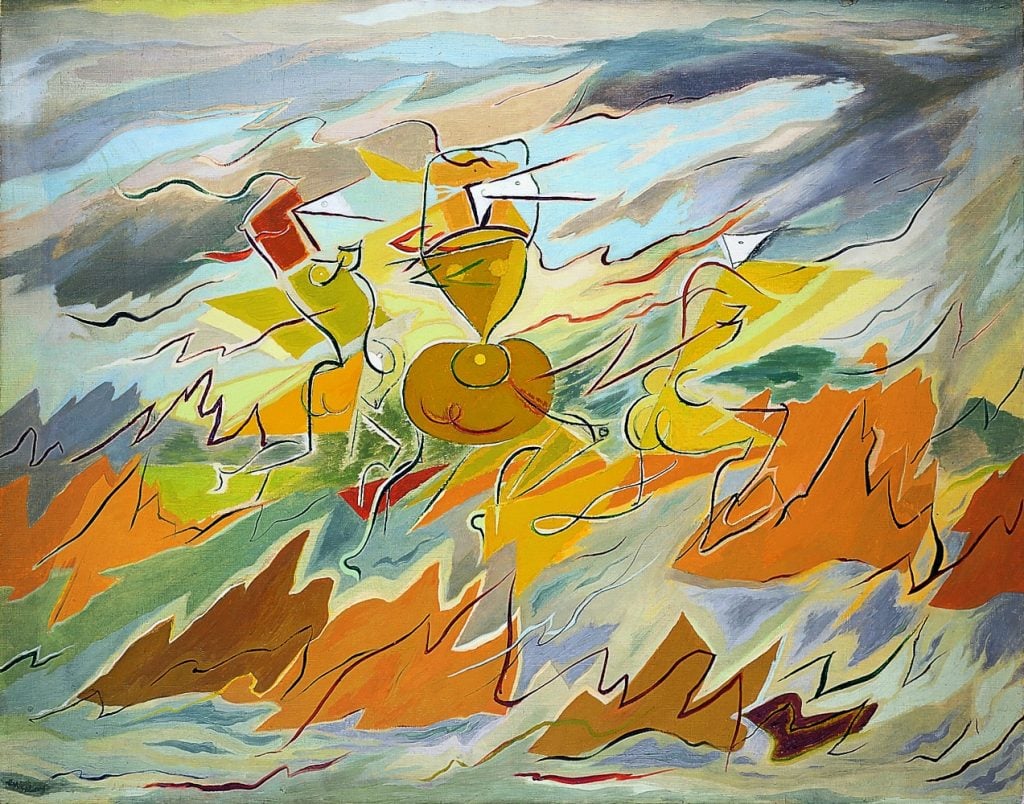
Paule Vézelay, Walking in the Wind (1930). Photo: England & Co, © Estate of Paule Vézelay.
Though she was born in Bristol, England, as Majorie Watson-Williams, the artist Paule Vézelay (1892-1984) had her own aspirations. She moved to Paris in 1926, where she changed her name and soon fell in with the avant-garde, forming a romantic partnership with the Surrealist artist André Masson. She also moved away from figurative painting towards abstraction at this time, but the outbreak of war forced Vézelay back to London where she eventually founded a branch of the Parisian constructivist movement Groupe Espace. Her work will also be included in a presentation of women artists who changed their original names by Marlborough Gallery, which features Gluck, Valentine Hugo, Marlow Moss, and Nicolaas Warb.
Anna-Eva Bergman
Perrotin
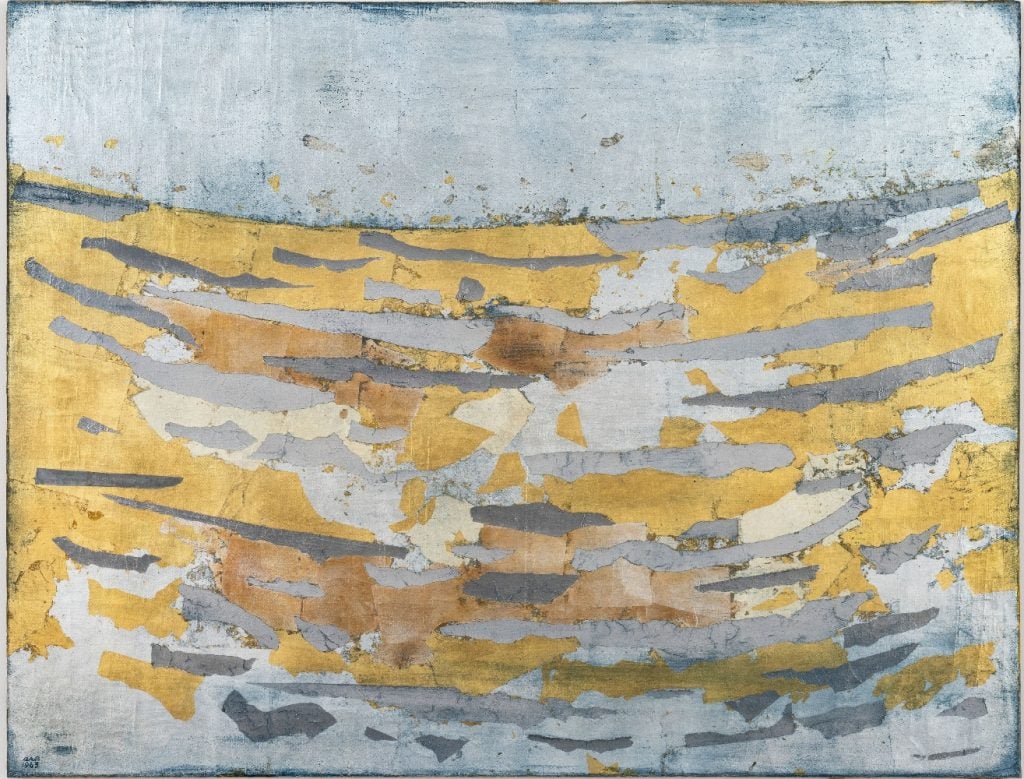
Anna-Eva Bergman, N°30-1963 Panorama (1963). Photo: Claire Dorn. Courtesy of Hartung Bergman Foundation and Perrotin.
Though Anna-Eva Bergman’s (1909–1987) paintings and works on paper appear to be highly abstract, they are greatly inspired by the landscapes of her native Norway. Attentive viewers will notice repeat motifs like the moon, star, mountain, valley, and tree, and appreciate how elements of the natural world are expressed in her palette and compositions. Prior to this, Bergman spent many years living in Paris where she met her twice husband, the German Abstract Expressionist Hans Hartung, whose reputation has since overshadowed hers. The Hartung-Bergman Foundation was later established at their old house in Antibes, where they lived after 1973.
Jung Kang-Ja
Arario Gallery, Seoul and Shanghai
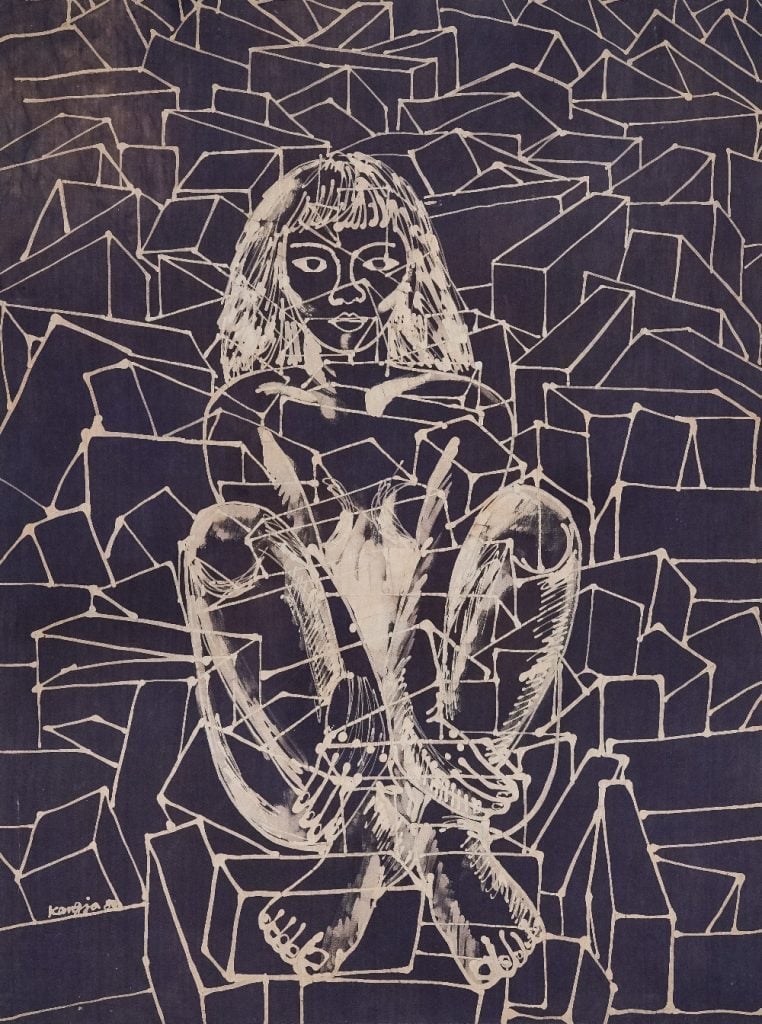
Jung Kang-ja, Untitled (1980). Photo: © Jung Kangja Estate and Arario Gallery.
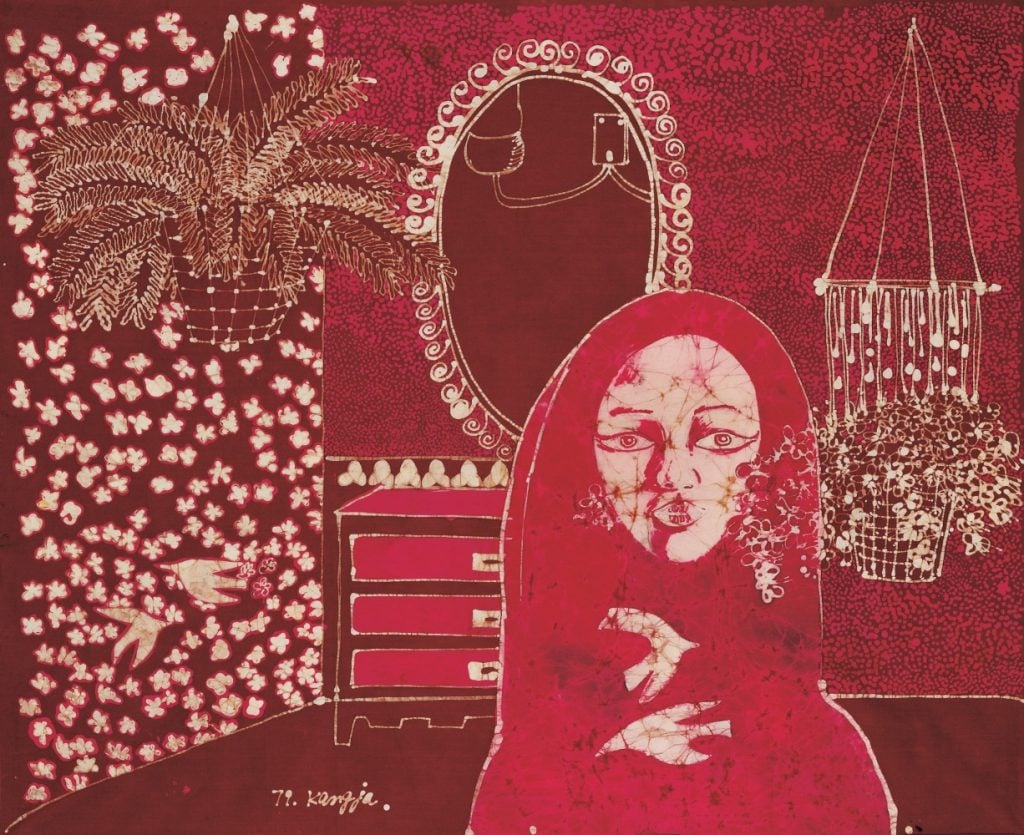
The boldly experimental practice of Korean artist Jung Kang-ja (1942-2017), who never shied from making political statements, was censored in 1970 by the Korean government, forcing her to flee to Singapore. It would be more than a decade before she could return. One of Jung’s installations on show will be To Repress (1968), a visual representation of “the oppressed existence of women” in which a heavy steel pipe squashes and compresses piled sheets of cotton. Like Kngwarray, she also used batik, producing many ambiguous studies of lone female figures. Jung’s work is currently included in “Only the Young: Experimental Art in Korea, 1960s–1970s” at the Guggenheim in New York through January 7, 2024.
Ethel Schwabacher
Berry Campbell, New York
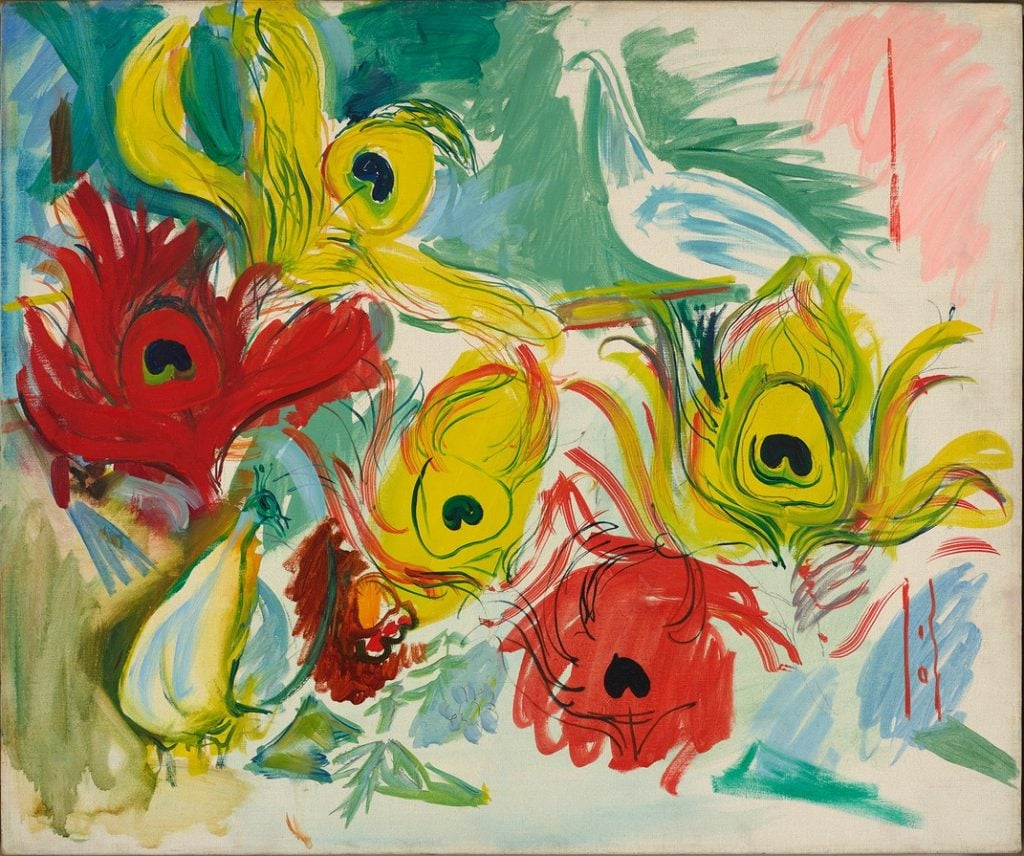
Ethel Schwabacher, Untitled (c. 1950). Photo: © Estate of Ethel Schwabacher, courtesy Berry Campbell, New York.
A regular of the New York art scene throughout the 1940s to the 1960s, the Abstract Expressionist Ethel Schwabacher (1903–1984) was included almost yearly in the Whitney Museum of American Art’s annual exhibitions. She had five solo shows at Betty Parsons Gallery. While living in Europe in the early 1930s, she experimented with Surrealist techniques like automatism to make early abstract works that explored her bodily experiences as a woman. On her return, she sought out as a mentor Arshile Gorky, who was himself reinventing European modernist influences within a New York context. She would later become his biographer.
Ethel Walker
Piano Nobile, London
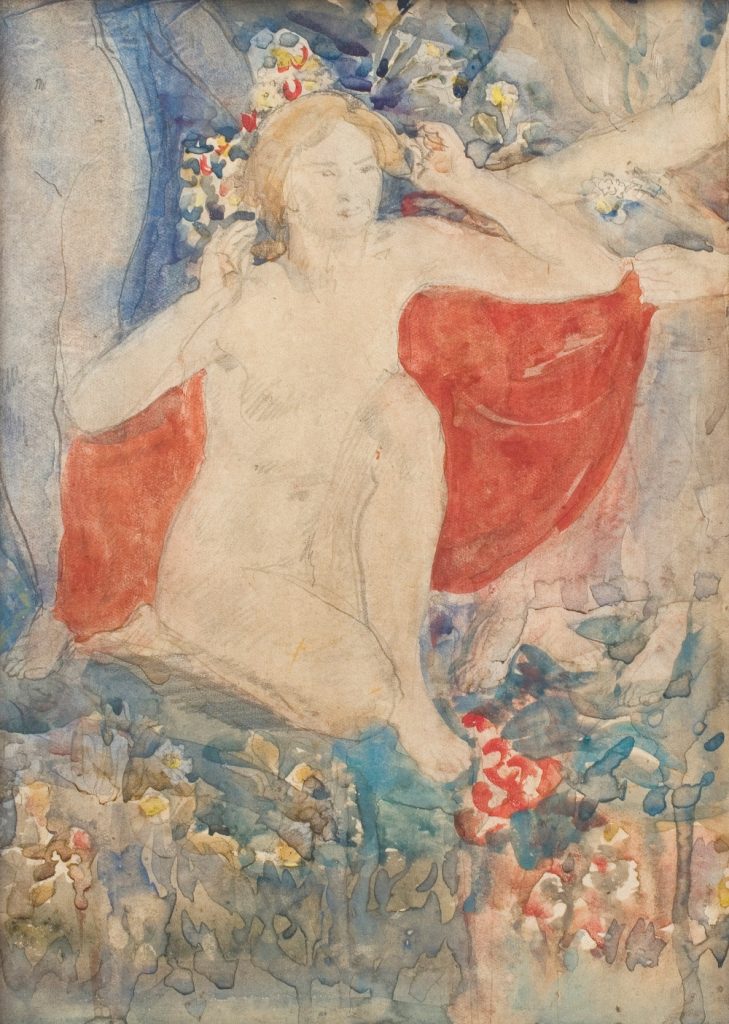
Ethel Walker, Kneeling Nude (1935). Photo courtesy of PIANO NOBILE, LONDON.
Well-regarded in her lifetime for her sensitive portrayals of other women, including artists Barbara Hepworth and Vanessa Bell, the Scottish painter Dame Ethel Walker was the first female member of the New English Art Club in 1900 and represented Britain at the Venice Biennale four times between 1922 and 1930. Her reputation has since waned dramatically, but recent research into Walker’s life has led to informed speculation that she was a queer artist. She was also closely associated with the Bloomsbury Group. Walker will be the subject of a spotlight at the Tate Britain this fall.