

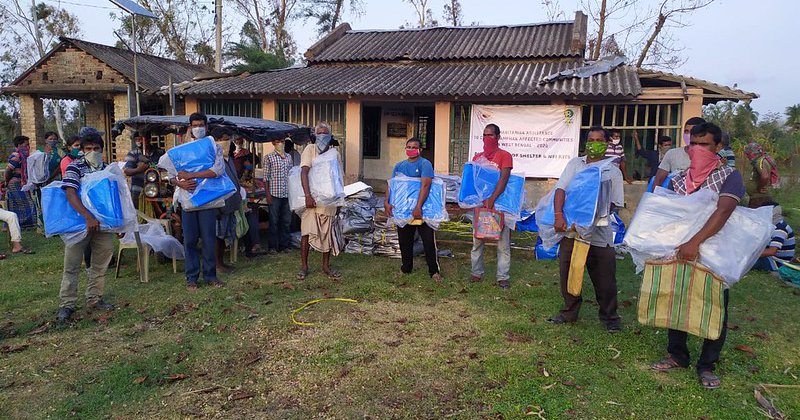

This matters because those messy flavours of uncertainty are so important to so many areas of life. They are part of people’s everyday experience all around the world – from farmers seeking insurance against droughts, to people in managing power grids or water supplies, fishers and farmers in coastal India or Bangladesh coping with climate change, villagers responding to infectious diseases, migrants on the search for a better life, a community building a place of sanctuary or refuge.
They’re written in the bodies of those undergoing chronic stresses and anxieties, baked into everyday rituals and habits, often below the surface, not easily seen or documented. Professional managers of power networks or transport systems – where it’s really important things don’t explode or grind to a halt – have to ‘manage’ the non-measurable uncertainties without seeking to control everything. Far away from the control rooms and power stations, shepherds on high mountains or dusty plains do something similar – as they plan beyond their control for changes in the weather, the fluctuations of markets, the health of their flocks.
Space for alternatives
In all these circumstances, uncertainty can be exhausting and stressful – making it hard to plan ahead and make decisions – but it can also open up new possibilities. If the future isn’t written in advance, maybe space can be made for alternatives.
These kinds of uncertainties may be messy, but we don’t just have to wave our hands or back away from them. There’s no shortage of approaches that can help policy makers or organisations respond to them – from adaptive management, to experimentalist approaches, to deliberative governance. For example, in rapidly-expanding cities, ‘smart’ systems promise to help track flows of people and manage transport, energy or water. For some, they may even provide a way to monitor ever more details of daily life, threatening privacy. But in some places, such as Milton Keynes in the UK, the technology is being used in more tentative, experimental ways as planners learn as they go. Key to these experiments are conversations with local people that allow them to shape the way the technology is used – in keeping with the city’s history of innovation. Rather than rushing into building a ‘smart city’, different technologies are being tried, tested and discussed.
In all of these approaches, it’s important to be able to learn bit by bit and reflect as you go along, and leave space for negotiation, maybe even pursuing several different possible outcomes at the same time. They also require people to engage with different sources of knowledge and experience – benefiting from diversity, rather than relying on one narrow model of expert advice. Solidarity and collective action, mutual aid and equality are vital ingredients. Humility and care are not luxuries, but practical necessities.

Follow Canada News Media
Get the day's top Canadian stories and our two daily 60-second news videos wherever you scroll.
X Threads Facebook Instagram LinkedIn TikTok YouTube Pinterest Reddit Substack Flipboard Newsletter RSS