

Southbound Canadian snowbirds will provide a bit of a bump for businesses in Oroville, Wash. next month when the Canada-U.S. border re-opens to non- essential travel.
But the struggling town just south of Osoyoos will still be missing the Canadian day-trippers who have for decades been an important part of the economy, shopping in local stores, eating in restaurants and stocking up on fuel.
A cavalcade of snowbirds is expected starting Nov. 8, when recreational travel is set to resume following an announcement from the U.S. State Department.
And they will stop for gasoline, groceries and other provisions on their way to sunny winters in California, Arizona and elsewhere.
Those travellers — at least as current Canadian pandemic safety measures stand — will need to present a recent negative COVID test upon returning to Canada following their winter get-aways.
That rule applies to all Canadians entering the U.S. at land border crossings, even for a half an hour to buy fuel and beer.
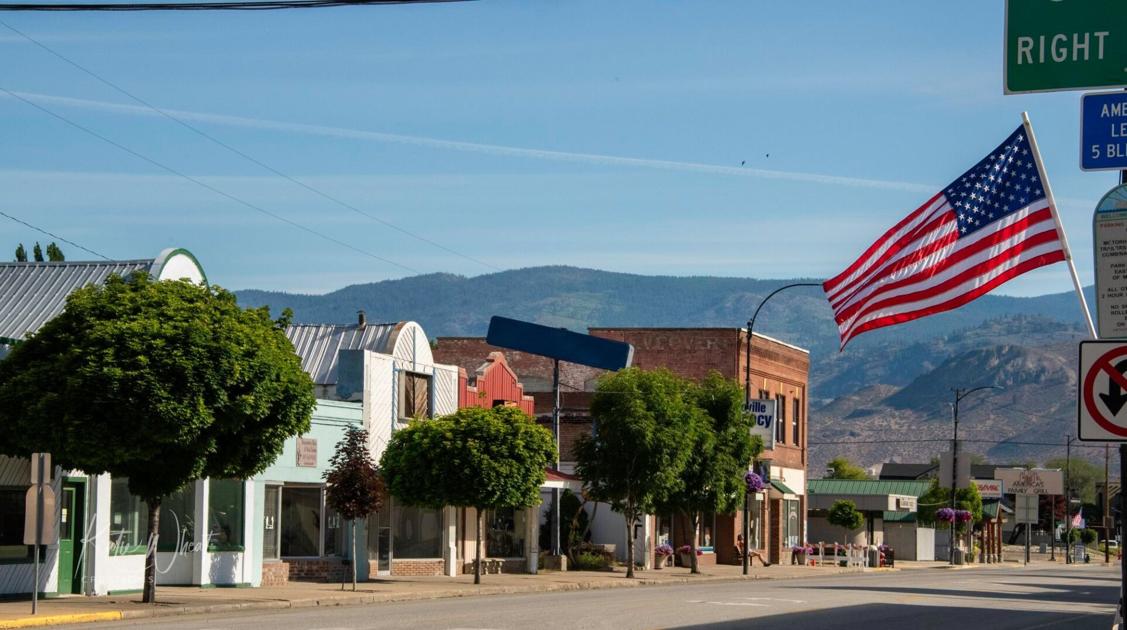
With a local population of around 2,000, Oroville is about five minutes into the U.S., clinging to the southern end of Osoyoos Lake. It’s an agricultural service centre and recreational hub.
A vital aspect of the town’s pre-pandemic economy was the daily influx of Canadians, from the South Okanagan particularly, who nip across the border for cheap gasoline, liquor and groceries or to eat in the several local restaurants. The cost and hassle of having a COVID test is expected to curtail or eliminate those visits.
Beyond the requirement to be fully vaccinated to travel to the States, Canadians re-entering their country are required to take a so-called “molecular test” for COVID within 72 hours. Such tests can cost around $200 and tend to be available only in larger centres.
There have been calls from both sides of the border for the Canadian government to simplify or drop the testing requirement for vaccinated travellers.
But there is little indication the requirement will end anytime soon. Federal Public Safety Minister Bill Blair told the CBC on the weekend that such a negative test has “proven to be one of the most effective requirements” for travellers and remains the recommendation of the Public Health Agency of Canada.
“Again, we’re continuing to evaluate it, and we’ll look at the experience in other jurisdictions. But right now, it’s been a very effective protection for Canadians,” Blair said.
Reaction in Oroville is anything but positive.
“They might as well have (left) the border closed,” said Pioneer Foods supermarket owner Pat Davisson. “I can’t see people (complying) … I wouldn’t,” he said.
Davisson said his grocery store, one of two in town, has survived reasonably well since the pandemic began because it tends to be “more of a local store.”
But casual Canadians continue to be an important portion of his business. “I hope that they get this all lined out for next year and we’ll be back to normal for the summer.”
Just up Main Street at Betta Services, the mood is sombre as the long-time Oroville anchor business is closing its doors.
Chris, an employee who prefers not to disclose his last name, said the decision to close came after the recent death of store founder Betta Lidstrand combined with the loss of business from the closed border.
In an interview last summer, Lidstrand estimated business was down about 85%.
Chris said it’s possible the business will reopen some time, but for now, “I don’t have the financial resources to stay open.”
At this point, the attitude in the town is very “wait and see,” he said. “No one is getting excited about the re-opening announcement.” When restrictions are lifted and Canadians return in numbers, “We’ll all shout Hallelujah,” Chris said.
Oroville Chamber of Commerce president Karen Frisbie said: “Oroville is a strong and resilient community (which has) worked hard at keeping things together.”
As for COVID-test requirements being lifted and Canadians coming back to town, “I’ll believe it when I see it. … (but) we are looking forward to having our neighbours back again.”
Frisbie said there have been a number of business closures in the town, mostly the result of deaths or planned retirements. But a number of new businesses have also opened up, she said.
“People will be surprised at what they see when they eventually come back.”
Restaurants have been particularly hard hit with the lack of Canadians on the streets.
Rancho Grande manager Salvador Zuniga estimated business there is down 80% since before the pandemic. “The town looks pretty dead right now,” he said.
The eatery has survived by reducing staff and hours.
“We are just breaking even,” he said.
The first stop for many Canadians crossing into Washington — for a few hours or a few months — is Super Duper Foods, formerly Oroville Texaco.
Long-time employee Daniel Sanchez said he looks forward to seeing the southbound snowbirds next month, after missing them last winter when travel south was restricted.
Sanchez says lack of Canadians stopping in for fuel and groceries has reduced business by as much as 90% and seen staff reduced by half and opening hours by a third.

Follow Canada News Media
Get the day's top Canadian stories and our two daily 60-second news videos wherever you scroll.
X Threads Facebook Instagram LinkedIn TikTok YouTube Pinterest Reddit Substack Flipboard Newsletter RSS