



/cloudfront-us-east-1.images.arcpublishing.com/tgam/HDOKU2N3RNEPHAZFJXD5BI2EMM.JPG)
Hello,
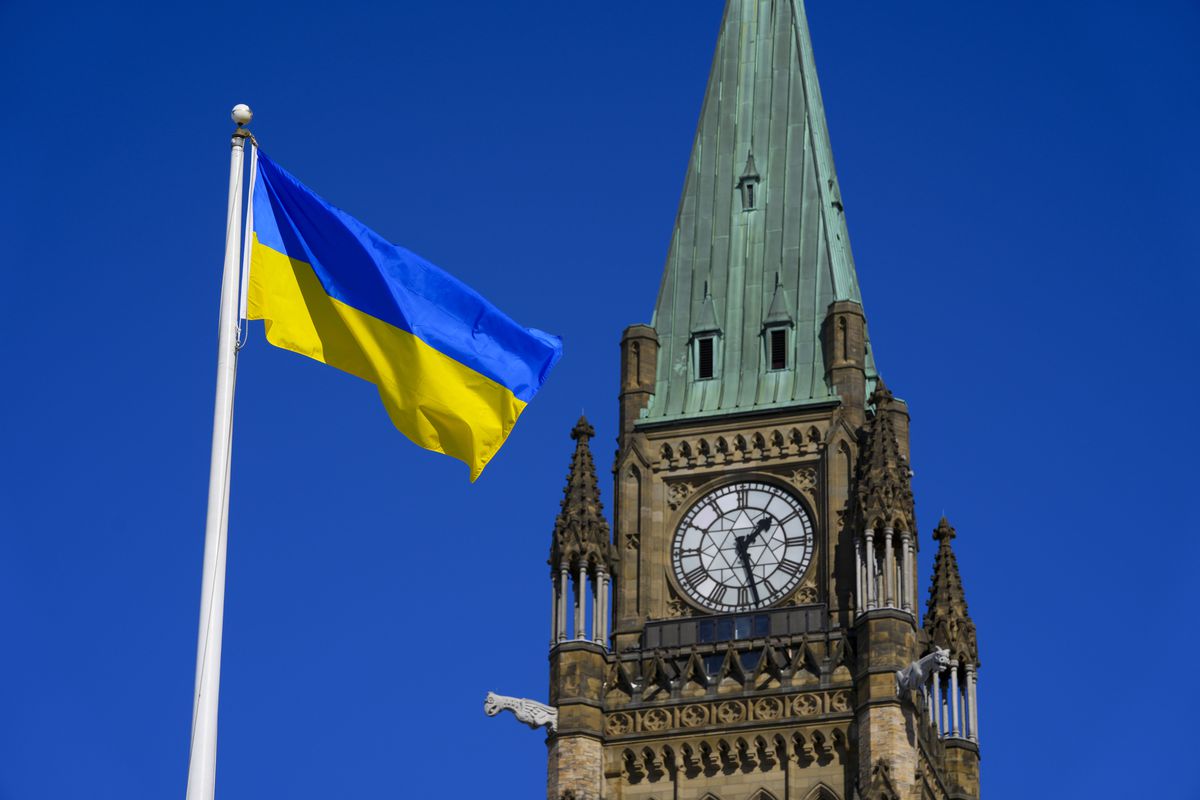
Canada has announced new measures related to the Russian invasion of Ukraine, involving tariffs, weapons and immigration.
On Thursday, Ottawa slapped a massive tariff on Russian imports, announced a shipment of rocket launchers to Ukraine and unveiled a streamlined immigration process for Ukrainians fleeing Moscow’s military assault.
Deputy Prime Minister Chrystia Freeland said Thursday that a new 35-per-cent duty will apply to all imports from Russia and Belarus, the country’s close ally, in a further economic sanction of Russian President Vladimir Putin’s full-scale invasion of Ukraine.
And Defence Minister Anita Anand announced Canada will send more weapons to Ukraine: 4,500 M-72 rocket launchers and 7,500 hand grenades. She said this gear would be drawn from existing Canadian Armed Forces stockpiles.
Senior parliamentary reporter Steven Chase and Ottawa Bureau Chief Robert Fife report here.
Also Thursday, Prime Minister Justin Trudeau announced Canada and other close partners are calling to suspend Russia from Interpol, the International Criminal Police Organization, which consists of 195 member countries who share and access data on crimes and criminals.
“We’re supporting this because we believe that international law enforcement co-operation depends on a collective commitment to the Universal Declaration of Human Rights and mutual respect between Interpol members,” Mr. Trudeau told a news conference.
This is the daily Politics Briefing newsletter, written by Ian Bailey. It is available exclusively to our digital subscribers. If you’re reading this on the web, subscribers can sign up for the Politics newsletter and more than 20 others on our newsletter signup page. Have any feedback? Let us know what you think.
TODAY’S HEADLINES
UKRAINE
CANADIAN-MADE TARGETING GEAR HAS IMPACT – Canadian-made air strike targeting gear appears to be playing an important supporting role in the fight Ukraine is mounting against invading Russian forces. Story here.
DON’T FIGHT FOR RUSSIA IN UKRAINE: FREELAND – Deputy Prime Minister Chrystia Freeland is warning Canadians against fighting for Russia in Ukraine, saying anyone who does so could face severe consequences. Story here.
NEWFOUNDLAND OIL AS ALTERNATIVE TO RUSSIAN PRODUCT: FUREY – Asked by reporters about the Russian invasion of Ukraine, Premier Andrew Furey stopped just short of calling it an opportunity, but he did say his government is pushing Newfoundland and Labrador oil as an alternative to Russian fossil fuels. Story here from CBC.
UPDATES: Watch here for the latest Globe and Mail updates on the Russia-Ukraine crisis.
OTHER HEADLINES
OTTAWA LAUNCHES $4-BILLION ONLINE PROGRAM – The federal government launched the Canada Digital Adoption Program Thursday, a $4-billion package of grants and loans aimed at encouraging small and medium-sized businesses to expand their online presence. Story here.
HIGHER INFLATION RATES NECESSARY DESPITE PINCH: MACKLEM – Bank of Canada Governor Tiff Macklem said that Canadians will feel the pinch of rising interest rates, but argued that higher borrowing costs are necessary to bring inflation back under control and to stop demand from outstripping supply, sending consumer prices higher. Story here.
CHAREST DETAILS AGENDA IF HE LEADS TORIES – Former Quebec premier Jean Charest says that if he became the leader of the Conservative Party and prime minister, he would bring fiscal discipline to federal spending, mend regional divisions and restore Canada’s brand on the international stage. Story here.
FREEZE CARBON-TAX INCREASE: BROWN – Brampton Mayor Patrick Brown, considering a run for the leadership of the federal Conservatives, is calling on the federal government to freeze the federal carbon-pricing increase on April 1, arguing “now is the wrong time for any new burden.” Story here from The National Post.
MANITOBA CONSIDERS ELECTRONIC BALLOT COUNTING – Under a bill introduced in the Manitoba legislature this week, electronic machines would count votes. Voters would continue to fill out paper ballots, but the machines would be a faster alternative to counting by hand. Story here.
BECK FOR SASKATCHEWAN NDP LEADER – Carla Beck, a member of the Saskatchewan legislative assembly, has announced her bid for leadership of the province’s New Democrats. If she wins the leadership election in June, she would become the first woman to be elected to lead the Saskatchewan NDP. Story here.
THIS AND THAT
TODAY IN THE COMMONS – Projected Order of Business at the House of Commons, March 3, accessible here.
RULES OF THE RACE FOR TORY LEADERSHIP – The federal Conservatives have announced that their new leader will be elected Sept. 10. The party’s Leadership Election Organizing Committee has adopted rules that include a June 3 deadline for the submission of membership applications, and plans for ballots to be mailed to party members in late June/early August. There’s also a total entry fee of $200,000, in addition to a compliance deposit of $100,000 refundable after the conclusion of the leadership election.
I’LL SCRAP CARBON TAX: POILIEVRE – Also on the Conservative leadership front, Pierre Poilievre, the only declared candidate so far, said in a statement that he will scrap the carbon tax if he becomes prime minister. “My environment plan will be about results, not revenue; technology and not taxes,” he said. “As Prime Minister, I will scrap the carbon tax to lower the cost of gas, groceries and heating.”
SPONSORED TRIPS BY MPS “QUITE LOW” : DION – The federal ethics commissioner says that, for the second year in a row, the number of sponsored trips accepted by MPs is “quite low” from the prepandemic yearly average. On Thursday, the List of Sponsored Travel 2021 prepared by Conflict of Interest and Ethics Commissioner Mario Dion was tabled in the House of Commons. Members reported seven trips in 2021 compared with a yearly average of 83 between 2007, when the office started publishing the List of Sponsored Travel, and 2019. The 2021 list of Sponsored Travel is here . The list is an annual compilation of all domestic and international travel worth more than $200 taken by MPs and their guests and whose costs are not fully paid by the government, a political party, a recognized parliamentary association or by the members themselves. The combined declared value of the trips taken in 2021 is $13,651.43. There’s a list here of the travel rules for MPs.
THE DECIBEL – On Thursday’s edition of The Globe and Mail podcast, senior international correspondent Mark Mackinnon , who is in Lviv, Ukraine, returns to talk about what Russia’s gains mean for the people of Ukraine and whether they have a chance at holding Russian troops back. Plus, he tells us about his journey out of Kyiv as the invasion began. The Decibel is here.
PRIME MINISTER’S DAY
Private meetings. The Prime Minister made an announcement, in Ottawa, and held a media availability with International Trade Minister Mary Ng. The Prime Minister is also scheduled to chair a meeting of the Incident Response Group on the situation in Ukraine.
LEADERS
No schedules released for party leaders.
OPINION
David Parkinson (The Globe and Mail) on how the crisis in Ukraine is pulling monetary policy in multiple directions: “And yet there remains some hesitance in Wednesday’s decision. Russia’s invasion of Ukraine has thrown a whole set of new and fast-changing variables into the mix. The conflict already looks like the driver of still more inflation: Uncertainty over the security of oil and natural gas supplies from Russia have sent crude prices skyrocketing more than 20 per cent since last Friday. On the other hand, if supply interruptions and shortages were to occur in Europe, the implication is certainly negative for output, business confidence, consumption and investment – it would be a major drag on global growth. And yet, higher oil and gas prices are a boon for Canada’s energy sector, generating increased income and, perhaps, creating a powerful impetus for new investment in the sector. The surging energy prices also improve the country’s terms of trade – which would be supportive of a stronger dollar, offsetting at least some of those inflation pressures by easing the cost of imports.”
Konrad Yakabuski (The Globe and Mail) on how Chrystia Freeland, on Russia sanctions, is in the right place at the right time: “No one in the Canadian political class has studied Russia, or its now pariah president, more than Ms. Freeland. As a student of Russian history at Harvard and exchange student in Kyiv in the 1980s. As the Moscow correspondent for the Financial Times in the 1990s. Or, since 2015, in her successive roles as Canada’s minister of international trade, foreign affairs and finance. “There are moments in history,” Ms. Freeland said on Monday, “when the great struggle between freedom and tyranny comes down to one fight, in one place, which is waged for all humanity.” Her five-minute speech overshadowed that of her boss, Prime Minister Justin Trudeau, and went viral on social media. Like her other pronouncements on Russian President Vladimir Putin’s military assault on Ukraine, it stood out from the boilerplate recrimination uttered by many politicians.”
Alexandra Wrage and Peter Klein (Contributed to The Globe and Mail) on how money – not missiles – will lead to Russian President Vladimir Putin’s undoing: “Without a single foreign soldier on their soil, Russians are under fire – lining up for cash at ATMs, seeing the ruble massively devalued, and watching powerlessly as the fragile Russian stock market refuses to open for fear of collapse. American President Joe Biden opened his State of the Union address this week pledging sanctions targeting Russia’s kleptocratic ruling class, saying the U.S. will “seize your yachts, your luxury apartments, your private jets. We are coming for your ill-begotten gains.” In Vladimir Putin’s war of bullets and bluster, it is money, not missiles, that may prove to be his undoing.”
Don Braid (The Calgary Herald) on Alberta Premier Jason Kenney lowering the traditional bar for keeping his party leadership: “Premier Jason Kenney radically shifted the debate around his UCP leadership with one short sentence. “In a democracy, the majority is 50 per cent plus one,” he said Wednesday at a news conference. This Premier might be a lot harder to get rid of than his party opponents expected. A reporter asked Kenney what level of party support he needs at the April 9 leadership vote to keep his job. Would it be 60 per cent? Seventy per cent? Earlier PC premiers thought they needed that kind of backing to remain as party leader. A short time ago, even Kenney’s own boosters seemed to be suggesting 65 per cent. But on Wednesday, Kenney lowered the bar several notches by simply invoking the common democratic standard, which also happens to be his party’s formal rule.”
Got a news tip that you’d like us to look into? E-mail us at [email protected]. Need to share documents securely? Reach out via SecureDrop


