


Nowadays, it’s easier to get distracted and demotivated with your tasks or job, especially if you’re working in the wrong place. Freelancers, remote workers, or self-employed entrepreneurs who don’t have their own proper and formal office yet may opt to work in their kitchen, couch, or bedroom. As comfy as these places may sound, they’re not exactly conducive to productivity and are much more prone to distractions. That’s when coworking spaces come into the picture.
What’s a coworking space?
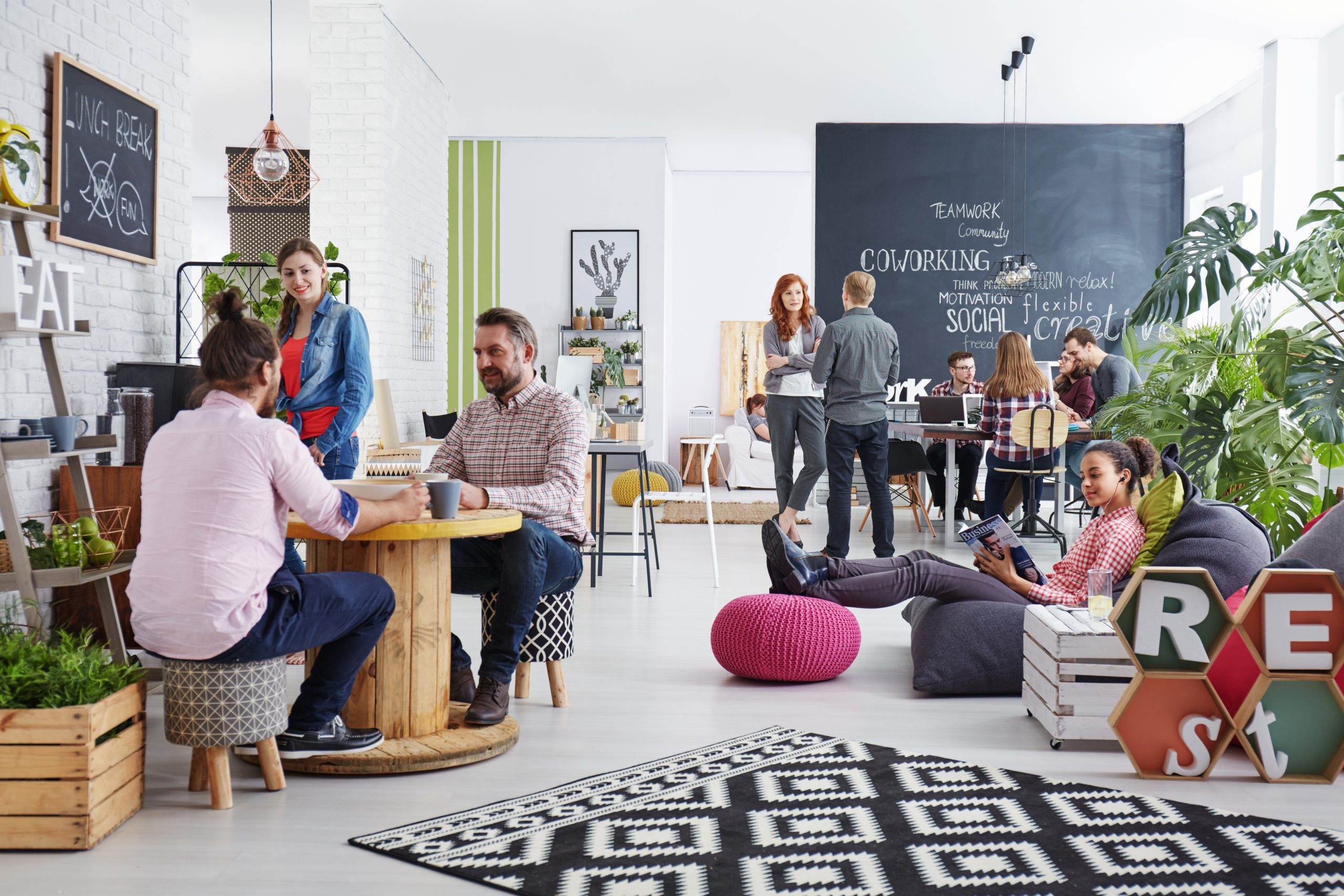
A coworking space is a shared workplace intended to accommodate different workers and professionals who don’t necessarily work in the same field or company. This place brings workers from various organizations and industries to work and do their daily routines together. Depending on their needs, they can choose whether to work independently or collaboratively on one table. Furthermore, many workers also claim that they get to socialize with other professionals and expand their network because of the coworking environment. (1)
Typically, a coworking space is equipped with high-speed internet access, table arrangements, a socializing area, and conference rooms. While a coworking space provides a spacious workplace for people who don’t have their own offices, it can also be prone to distractions and disruptions. This can be troublesome for workers who can’t focus well when exposed to crowded places or surrounded by people they barely know. (1)
How to create a productive coworking environment?
Creating a productive coworking environment is essential to ensure that the workplace can accommodate all kinds of workers along with their specific needs. Enumerated below are ten ways you can create a coworking space that promotes productivity and ensures all workers will return to it again and again:
-
Provide adequate lighting
One of the crucial aspects of a productive workspace is adequate lighting. Regardless of what kind of job you do, access to proper lighting is essential to ensure you can perform your best. Otherwise, a dim or poor light setting could make it difficult to finish your tasks, make you feel tired, and, eventually, make you feel demotivated to do or finish anything.
Preferably, a coworking environment should have access to natural light. You can achieve this by incorporating glass windows or installing skylights that allow more sunlight to illuminate the interiors. (2)
In addition to providing good lighting, natural sunlight is also known to provide vitamin D, which is beneficial in fighting off fatigue and balancing your moods throughout the day. Meanwhile, if you only have limited access to natural lighting, you can use unique lamps or light fixtures to add vibrance into your coworking space. (2)
-
Have a nice entryway
A well-designed entryway can help make an excellent first impression of your coworking space. Although this may not directly affect a person’s productivity, a beautiful entrance or lobby area that exudes credibility and professionalism may help professionals feel motivated to do their best once they’re inside the facility.
So, be innovative with your entryway by adding live plants, a welcome rug or carpet, or add an artistic backdrop. (3)
-
Create different spaces for different needs
Some people thrive best when working on quiet, independent workspaces. Meanwhile, others may also perform better when working in a busy environment filled with teamwork and collaboration. When creating a coworking environment, make sure you designate different spaces to accommodate different needs. Meeting the needs of these workers can help boost their productivity levels.
Here are some ideas you can consider from the get-go:
- Coworking tables or shared office desks: As you’ve noticed in a regular office setting, each office table is covered with long walls or permanent cubicle partitions, which prevent each worker from seeing other people working. Although this setup is intended to help them focus on their work, this may not fit some people who can only thrive when they can visibly see others working. Walls and traditional cubicles can be boring and demotivating, too. (3)
When creating a space for workers who prefer busy places or collaboration, consider putting coworking tables or shared office desks on a particular area. Additionally, you can use a glass partition system that allows sound privacy or minimizes noise distraction. This way, those professionals can still work in collaboration and see each other working in the same area but with minimal noise. Overall, shared tables in your coworking space may be the best way to motivate these people to up their performance and encourage proactive working. (4)
- Standalone breakout space: Meanwhile, for those individuals who can only focus and do their best when they’re alone, designing a standalone breakout space can provide them with a private space to do their own thing. To make the area look more peaceful and quieter, you can incorporate potted plants, invest in breakout chairs or couches, and use deep earth tones for the interiors. (3)
-
Invest in freestanding cubicles
Freestanding cubicles are office cubicle systems that you can easily install, reconfigure, or move when necessary. The great thing about this type of cubicle system is that employees can choose to create a larger workspace or smaller workspace, depending on their needs.
For instance, if you wish to work and collaborate with other freelancers, you can reconfigure the freestanding cubicles to create a wider space that can accommodate everyone in one area. Meanwhile, if you wish to have some privacy, you may reinstall and reconfigure the cubicle to accommodate only one person.
-
Provide storage options
Although some of these workers are only using their laptops for their job, some may have other office supplies they need, which they don’t want to bring back and forth every day. Finding out that they left some of their things at home could affect their mood and productivity for the day. (3)
To resolve this problem, consider putting up a set of lockers so each worker can have a place to store their things. Make sure they’ll be the ones who’ll provide the lock, assuring them that they’re the only ones who can access the things inside. Other than lockers, storage options you can use are lockable medical file cabinets, private rental locking storage, or office desks that feature lockable drawers.
-
Designate a space for their office or work supplies

Even if most of their jobs can be done on their laptops or phones, there may be times when paper and pens are the only things needed to complete a job. Having no access to any immediate office supply could disrupt their workflow and affect their productivity. Thus, consider designating a space intended for office or work supplies. (3)
You can fill this area up with bond papers, pens, paper clips, staplers, notepads, folders, envelopes, and other traditional office supplies. A coworking environment that can provide them with office supplies anytime could help boost their performance without any disruption and improve their productivity. (3)
-
Create a space for break time or lunchtime
Break time is also necessary for workers to stay productive. Spending eight to nine hours each day doing all your work without any break will eventually drain you and demotivate you about your job in the long run. Thus, when designing a coworking environment, make sure you create a space intended for break time or lunchtime. (3)
For instance, if space and budget allow, you can design a gaming room filled with board games or indoor sports (e.g., golf, ping-pong table). You can also designate a space where people can take their power naps. If you don’t have these resources, you can invest in comfy sofas or chairs, magazines, indoor hammocks, a radio, TV, or other sources of entertainment that’ll help them relax, re-energize, and recollect themselves before resuming their jobs. (3)
-
Set up a beverage and snack station
Nowadays, coffee and tea have become a necessity for many working adults. Coffee makes them feel energized and keeps them awake, especially if they’re about to take a long, tedious workload. So, help these people stay on top of their game by setting up a beverage station. This way, they can easily access and serve themselves a cup of coffee or tea whenever the work is too much, and they need their ‘coffee/tea break.’ (4)
In addition to beverages, perhaps some of them may also need snacks to reload their energy. Although most of them would probably bring their own snack, it would also help if you had some finger-food snacks that they could pick up any time along with their coffee. Some of these foods you can include in your snack station are nuts, biscuits, chips, crackers, and sandwiches. (4)
-
Have a sanitation and touch-up station
Like a regular office, having a touch-up or sanitation station is also an excellent spot to help workers recollect themselves before going back to work. This station can be a perfect place for them to fix themselves, do some breathing exercises, do their private bathroom businesses, and do other grooming routines. They can also visit this station whenever they need some alcohol, tissues, or other sanitizing materials they can use to clean up and sanitize their workspace.
As simple as this station can be, things like this will surely help those professionals feel welcome and cared for. (4)
-
Be a tech-smart facility
Although office tools, supplies, and furniture pieces play a huge role in providing productive coworking space, so do your technological devices. Hence, create a tech-smart coworking environment by investing in CCTV cameras, access cards, biometric machines, projectors, and other technological tools needed for their tasks. Adding these advancements will make your coworking space more efficient. (3)
Wrapping Up
A coworking space shouldn’t only give some workers a reason to work outside their houses. Instead, this space should provide them with an opportunity to stay productive as much as they can. Don’t worry, as a coworking environment doesn’t have to be perfectly designed in terms of aesthetics. (1)
However, by incorporating the right materials, office tools, and function rooms, you can ensure that all types of workers can perform their best and keep their productivity levels high. Overall, a well-designed and well-structured coworking space can create a better place for freelancers, entrepreneurs, and remote workers to get things done and set them up for a successful career.
References
- “The Rise Of Coworking Spaces: A Literature Review”, Source: http://www.ephemerajournal.org/contribution/rise-coworking-spaces-literature-review
- “Lighting Ergonomics – General”, Source: https://www.ccohs.ca/oshanswers/ergonomics/lighting_general.html
- “The Anatomy Of Good Coworking Space Design”, Source: https://www.fohlio.com/blog/anatomy-good-coworking-space-design-pictures/
- “Coworking Space Design Tips That Foster Success”, Source: https://www.2020spaces.com/blog-coworking-space-design-tips/
Follow Canada News Media
Get the day's top Canadian stories and our two daily 60-second news videos wherever you scroll.
X Threads Facebook Instagram LinkedIn TikTok YouTube Pinterest Reddit Substack Flipboard Newsletter RSS