



B.C.’s second case of domestic avian influenza has been confirmed in a small flock in the City of Kelowna, but it is unclear what the government considers to be a small flock.
READ MORE: B.C.’s second case of domestic avian influenza confirmed in the Okanagan
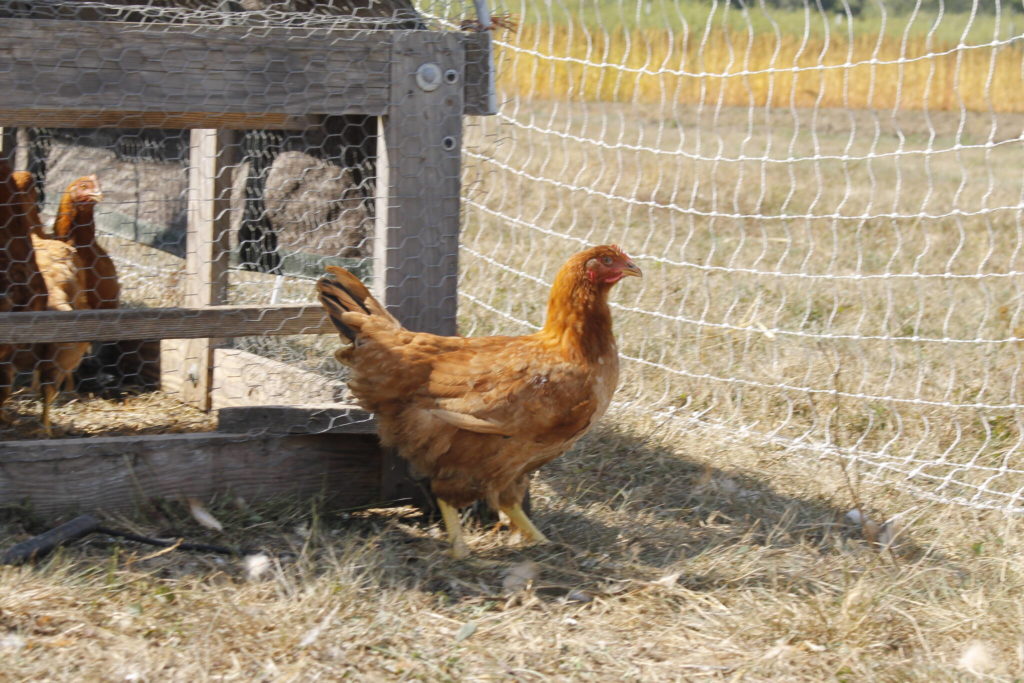
J.M. Giroux, an Okanagan smallholder farmer and admin to the BC Poultry Group Facebook page said the term “small flock” can be interpreted to mean many things and doesn’t have a set definition. He said that a “small flock” emcompasses farms with under 199 birds that are intended for individual use.
BC egg considers small lot farms to be farmers with under 399 hens. Under CFIA guidelines, “small flocks” are considered farms with up up to 1000 birds.
The provincial government has not yet released their parameters of small and large flocks meaning that the “small flock” that was infected may have consisted of hundreds of birds.
The B.C. ministry of agriculture and the CFIA were unavailable for comment at the time of the article.
“Numerous field studies have shown that backyard flocks are typically insignificant spreaders of the avian flu,” said Giroux.
This statement is supported by research that found backyard flocks contribute little to typical avian flu outbreaks.
“Large commercial laying farms are at a higher risk of illness”
Giroux said that birds in industrial livestock operations live in close quarters and typically have low genetic diversity because they are from the same parent stock. He explained that because of this the birds are prime candidates for infections of highly pathogenic viruses, like H5N1.
The Ministry of Agriculture and Food said that producers within a 12-kilometre radius in both the North and Central Okanagan have been notified of the positive test result.
The Canadian Food Inspection Agency reported that the area surrounding the infected farm has been placed under quarantine, however, the area of quarantine in the Kelowna region has not been publicly specified.
Giroux alleges that the majority of transmission between large farms is because of the sharing of equipment, truck contamination and workers with contaminated clothing working on multiple farms.
The Government of Canada has suggested that poultry farmers implement Avian Biosecurity Measures to prevent the spread of H5N1.
“Usually, the transfer is between farms on contaminated clothes and equipment,” said Giroux.
“The risk isn’t really from wild birds.”
He said that wild birds are not the culprit,
He said that although a recent sample from a bald eagle found in Delta tested positive for the same disease, wild birds are not the primary vector of the disease.
The ministry released an order mandating that “all regulated commercial chicken and turkey operations, as well as commercial duck and geese (both live and egg) producers with 100 or more birds must maintain indoor operations”.
Giroux said that it is not feasible for backyard farmers to move their flock indoors during the outbreak and instead suggests keeping flocks in a clean, low-stress environment with access to diverse foods where they can be “as wild as they can be”.
“By no means am I trying to minimize it,” said Giroux.
He said that he acknowledges that the highly pathogenic virus can spread quickly and said that when a flock becomes infected they are all culled.
Giroux said that he wants to “promote backyard farms and reduce reliance on commercial laying farms” in order to prevent avian flu epidemics.
According to B.C.’s Ministry of Agriculture and Food, the CFIA and B.C. poultry producers, enhanced prevention and preparedness, measures are in place and the current outbreaks are being monitored to prevent spread.
In the past, strains of the avian flu have caused a near 100 percent mortality rate among infected birds. Giroux said that an outbreak could negatively impact both commercial and small-scale poultry farmers and owners.
Capital News has reached out to the Ministry of Agriculture and will update this article if more information becomes available.
READ MORE: UPDATE: Avian flu near Enderby creates large control zone
@Rangers_mom
[email protected]
Like us on Facebook and follow us on Twitter and subscribe to our daily and subscribe to our daily newsletter.
City of KelownaFarmingflu season

Follow Canada News Media
Get the day's top Canadian stories and our two daily 60-second news videos wherever you scroll.
X Threads Facebook Instagram LinkedIn TikTok YouTube Pinterest Reddit Substack Flipboard Newsletter RSS