

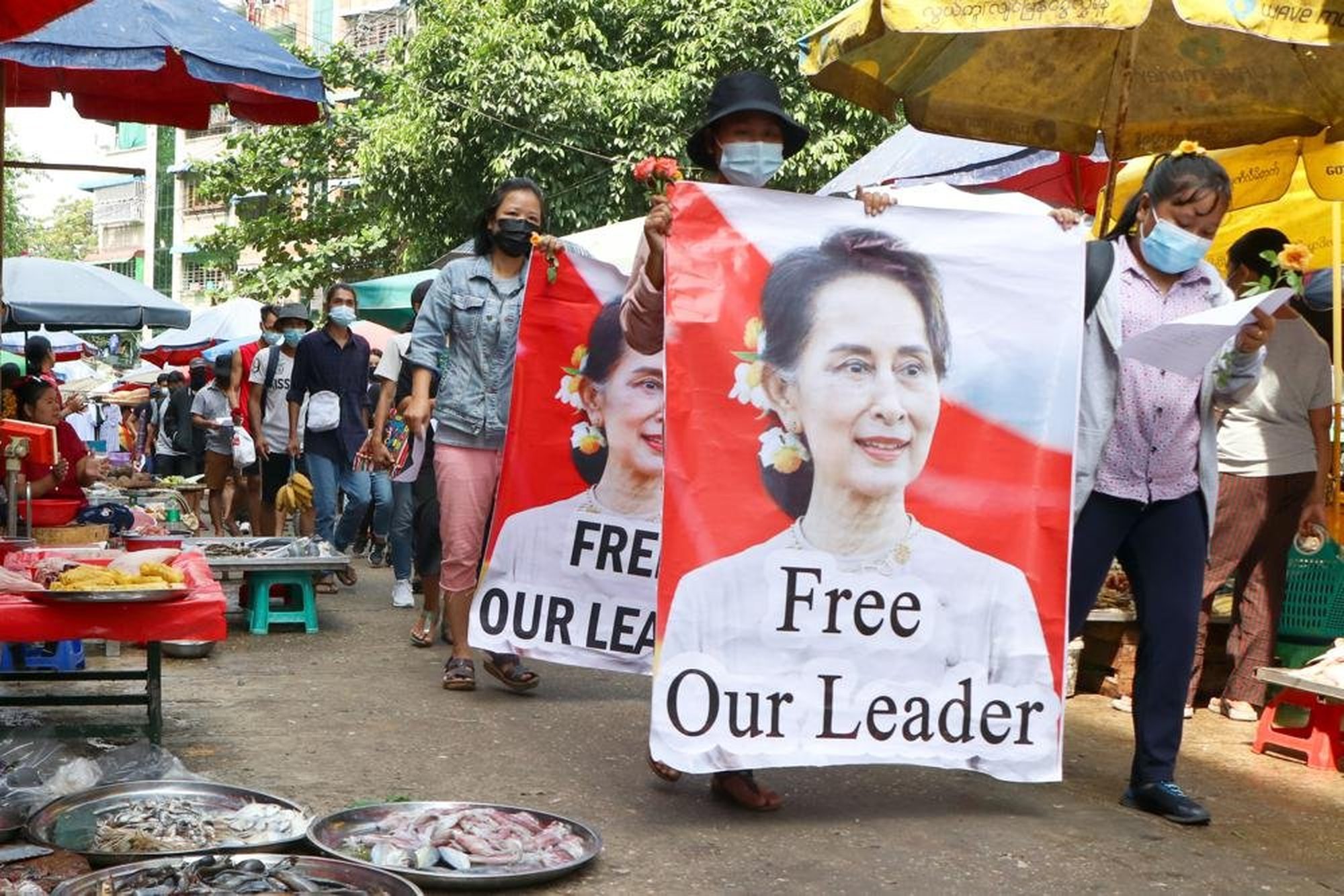
Naypyidaw, Myanmar- Aung San Suu Kyi, Myanmar’s former leader who was toppled in a military coup last year February, has had her prison sentence extended by six more years.
The latest verdict in the series of secretive trials against the Nobel laureate takes her total prison term to 17 years.
On Monday, she was found guilty of misusing funds from a charity and leasing government-owned land at discounted prices.
“The Myanmar military junta’s unjust conviction and sentencing of Aung San Suu Kyi is part of its methodical assault on human rights around the country. The military’s willingness to forcibly disappear the country’s high-profile civilian leader reveals the brutality that lesser-known political prisoners face,” said Elaine Pearson, acting Asia director at Human Rights Watch (HRW).
Prior to Monday’s sentence, the Nobel laureate had already been sentenced to 11 years in prison for corruption, incitement against the military, breaching COVID-19 rules and breaking a telecommunications law.
The 77-year-old has since been hit with a series of charges, including violating the official secrets act, corruption and electoral fraud and faces decades in prison if convicted on all counts.
In June, Suu Kyi was transferred from house arrest to a prison in the capital Naypyidaw, where her trial continues in a Courthouse inside the prison compound.
Many of her political allies have also been arrested since the coup, with one Minister sentenced to 75 years in prison.
Life for Suu Kyi has now been restricted to a prison cell measuring about 200 square feet (18.5 square metres). Daytime temperatures can surpass 100 degrees Fahrenheit, (37.7 degrees) but there is no air conditioning. When it rains, which is often, water splashes in through windows that have no coverings.
Allies bring her food as well as white-and-brown clothing so she doesn’t have to wear the louse-infested uniforms given to prisoners. Female staff come to her cell and taste her prison food to show her it isn’t poisoned.
According to the Assistance Association for Political Prisoners, Suu Kyi is one of more than 15 000 people arrested for opposing military rule, and of these, 12 000 remain in detention.
Many have been tortured in interrogation centers and sentenced by military Courts after brief trials where defence attorneys and the public are barred. Convicted prisoners are often transferred to remote prisons, creating additional hardship for them and their families.