



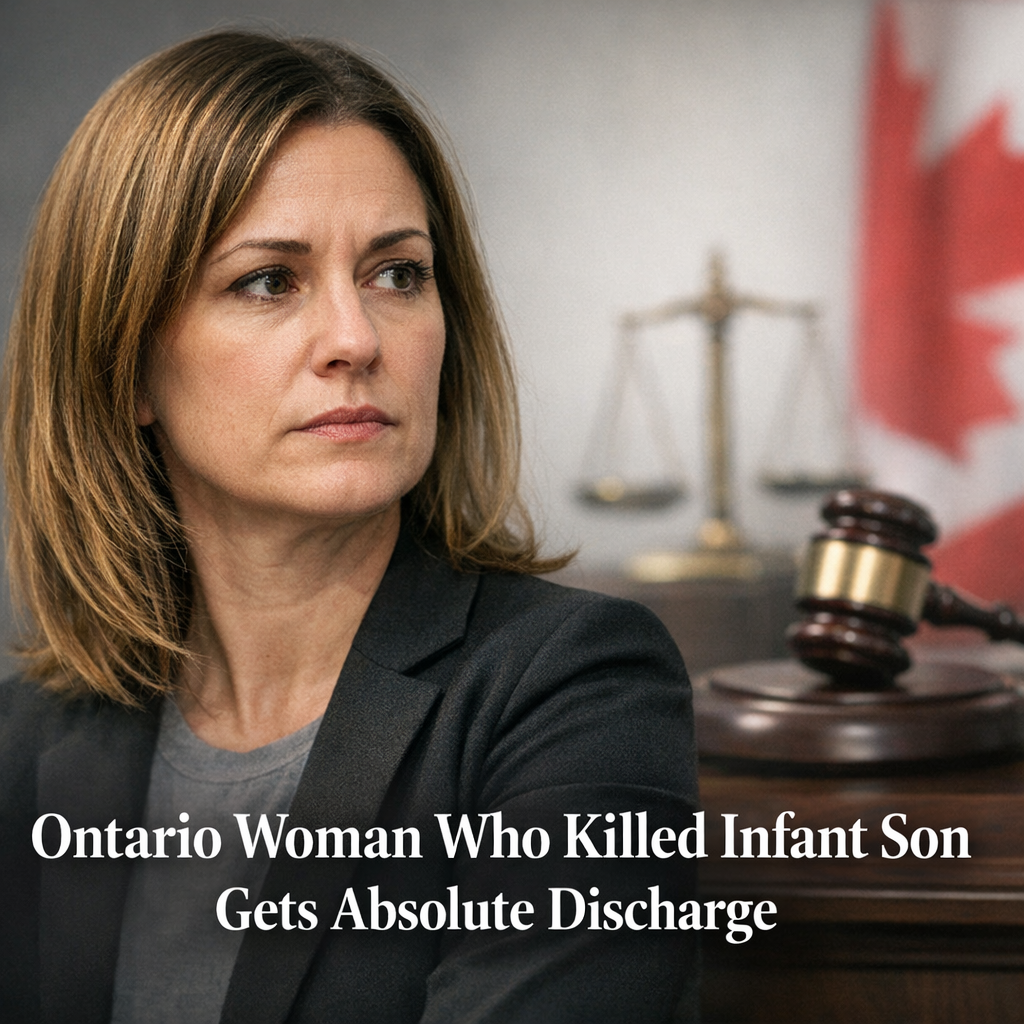
An Ontario Review Board decision is drawing attention after it found that a Hamilton mother who killed her young daughter during a severe psychotic episode was not criminally responsible because of mental disorder. The board said the woman was suffering from intense delusions and hearing voices that directed her to harm her child, leaving her unable to understand reality in a normal way at the time of the killing. The case has resurfaced in public discussion because it sits at the difficult intersection of criminal law, psychiatric illness, and child protection. It also raises hard questions about how families and institutions respond when someone’s mental health rapidly deteriorates.
For Canadian readers, the case highlights how the country’s justice and health-care systems deal with people found not criminally responsible, often referred to as NCR. In Canada, those cases do not simply end with an acquittal; they move into a specialized legal and psychiatric process overseen by review boards that weigh public safety, treatment needs, and the person’s medical condition. The story is also relevant to everyday life because it underscores the warning signs of severe mental illness, including psychosis, paranoia, and auditory hallucinations, and the importance of early intervention for both the individual and those around them. For parents, caregivers, health workers, police, and social agencies, it is a stark reminder that mental-health crises can escalate quickly and can have devastating consequences if supports are not in place at the right time.
What comes next will depend on ongoing psychiatric assessments, treatment progress, and future decisions by the Ontario Review Board. In cases like this, the board typically reviews whether the person should remain in hospital, be granted supervised privileges, or move toward a less restrictive setting, always based on medical evidence and risk to the public. Canadians watching this case will likely be looking for broader discussion about whether earlier intervention, stronger family supports, or better access to psychiatric care could help prevent similar tragedies.
To understand the full picture, it helps to know how the NCR system works in Canada. A finding of not criminally responsible is not the same as being found innocent in the ordinary sense; instead, it means the court accepts that the person committed the act but was so impaired by mental disorder that they could not appreciate what they were doing or know that it was morally wrong under the law. After that finding, a provincial review board takes over and regularly reassesses the person’s condition, treatment needs, and the risk they may pose. Ontario’s review board, like others across Canada, is required to choose the least restrictive outcome that still protects the public, which can mean detention in a secure hospital, a conditional discharge, or in some cases an absolute discharge when the risk is no longer considered significant.
The case is especially disturbing because it involves a child and a parent, making it emotionally difficult for the public to separate grief and anger from the legal and medical findings. Even so, Canadian law is designed to treat severe mental illness as a health issue when it destroys a person’s grasp of reality, rather than handling every such case through punishment alone. That approach has long been debated, particularly in tragic cases where the consequences are irreversible and families are left shattered. At the same time, mental-health advocates often argue that these cases show the need for better psychiatric care long before a crisis becomes fatal.
Cases involving command hallucinations are among the most serious forms of psychosis encountered in forensic psychiatry. These hallucinations can involve voices instructing a person to carry out harmful acts, and when combined with delusional beliefs, they can create a dangerous break from reality. Doctors and legal experts examining such cases look closely at medical history, behaviour before and after the event, witness accounts, and psychiatric evaluations to determine the person’s mental state at the time. In Canada, that evidence is central to deciding whether criminal responsibility applies and what level of supervision is necessary afterward.
For many Canadians, the story may also prompt concern about pressure on the mental-health system. Across the country, families often report long waits for psychiatric care, difficulty navigating crisis services, and uncertainty about what to do when a loved one appears to be spiraling into psychosis. Emergency rooms, police services, children’s aid organizations, and community agencies are frequently drawn into these situations, but support can vary widely depending on region and resources. That broader context matters because tragedies like this rarely emerge from a single moment; they often unfold amid missed warnings, fragmented care, and immense strain on everyone involved.
There is also a wider public-policy question in Ontario and beyond about how to balance compassion, accountability, and safety. Review board decisions can be controversial because they rely on clinical assessments and legal standards that may not align with public expectations of punishment. But the Canadian framework is built around the idea that people who were profoundly mentally ill at the time of an offence need treatment in secure settings when necessary, not a sentence that ignores their medical condition. Whether that system is working as intended is likely to remain part of the conversation as this case continues to be reviewed.
For readers trying to make sense of the case, the key point is that the board’s finding turns on the mother’s psychiatric state at the time of the killing, not on a denial that the death occurred or that it was deeply tragic. The legal process now focuses on treatment, monitoring, and public safety rather than a standard criminal sentence. As the case moves through future reviews, it will continue to test how Ontario’s institutions respond when severe mental illness, family vulnerability, and the justice system collide.
Follow Canada News Media
Get the day's top Canadian stories and our two daily 60-second news videos wherever you scroll.
X Threads Facebook Instagram LinkedIn TikTok YouTube Pinterest Reddit Substack Flipboard Newsletter RSS