
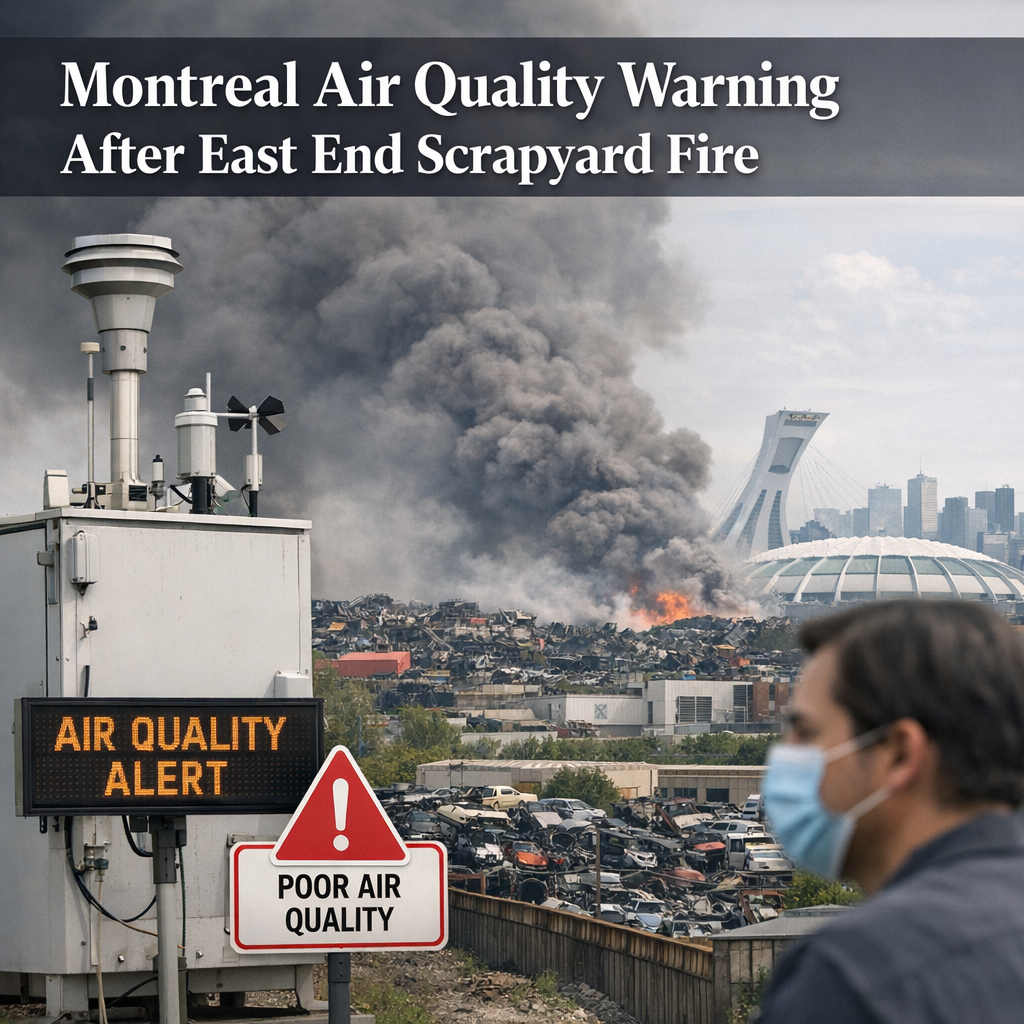
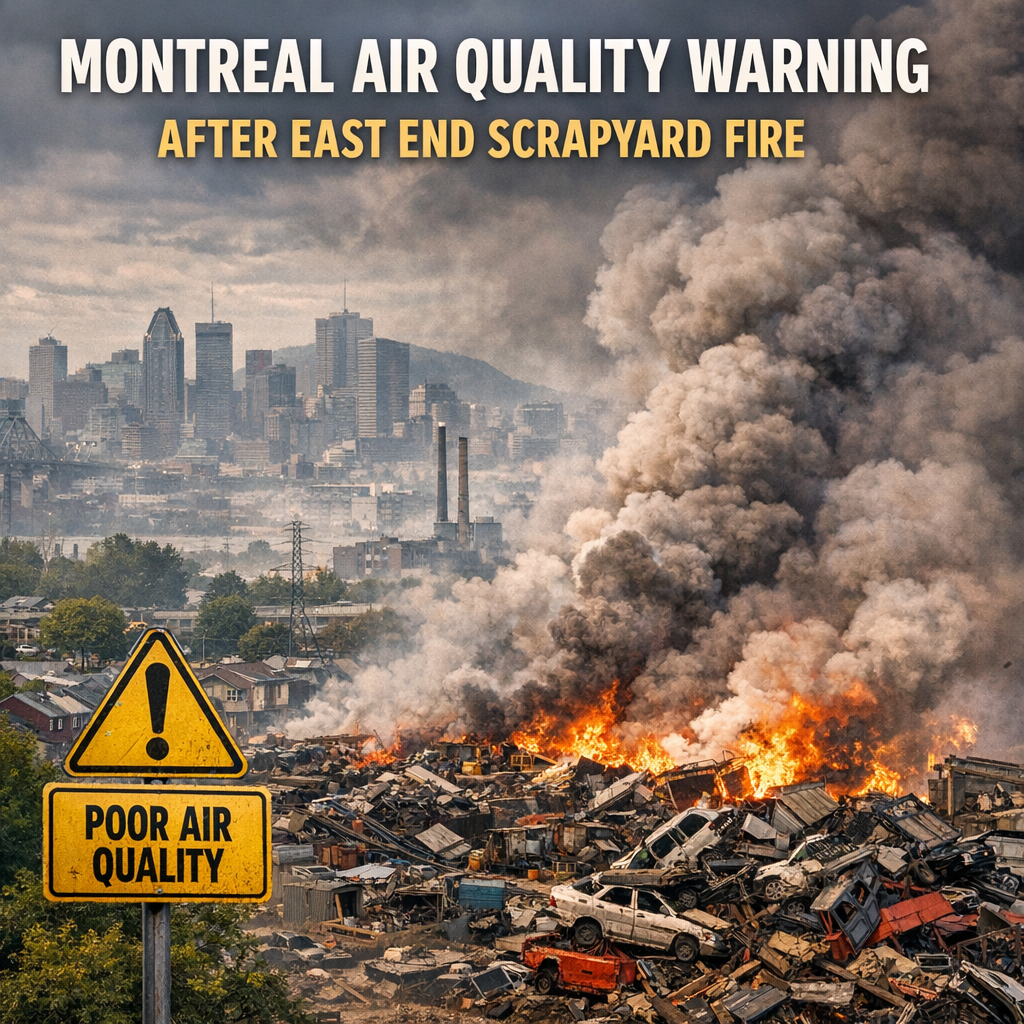
Montreal public health officials have warned residents about poor air quality after a major fire broke out at an outdoor vehicle-recycling facility near Highway 40 early this morning. Thick smoke from the blaze prompted authorities to urge people in nearby areas to stay alert and take steps to limit exposure, especially if they have breathing or heart-related health concerns. Emergency crews responded as the smoke spread over parts of the city, raising concerns about what may have been released into the air as scrapped vehicles and industrial materials burned. The incident quickly became both a firefighting operation and a public health issue, with officials monitoring conditions as the day unfolded.
For Canadians, this kind of event is a reminder that air-quality risks do not only come from wildfire season. Industrial fires in urban areas can affect daily life in immediate ways, from school drop-offs and outdoor work to commuting on major routes such as Highway 40. In Montreal and other large Canadian cities, public health alerts like this one can change how families plan their day, particularly for children, seniors, and people living with asthma, COPD, or other respiratory conditions. It also highlights the role of local public health departments, firefighters, and municipal emergency systems in responding quickly when environmental hazards threaten neighbourhoods.
In the hours ahead, residents will be watching for updates from Montreal public health, the fire department, and local officials on whether air quality improves or if further precautions are needed. Investigators are also expected to examine what caused the fire and whether any hazardous substances were involved in the smoke plume. Traffic disruptions, cleanup work, and possible environmental testing around the site may continue even after the fire is fully contained.
The broader context matters here. Vehicle-recycling yards can contain a mix of metals, plastics, fluids, tires, and other materials that may produce dangerous smoke when they catch fire. In a dense urban region like Montreal, where homes, businesses, and highways sit close to industrial areas, a single fire can quickly affect a large number of people. Air quality alerts are issued to reduce exposure and give residents practical advice, such as keeping windows closed, avoiding strenuous outdoor activity, and checking on vulnerable neighbours. Incidents like this also renew questions about industrial safety, land use, and how cities prepare for environmental emergencies in populated areas.
Montreal air quality alert after vehicle-recycling plant fire near Highway 40
Montreal’s public health department moved quickly this morning to alert residents after a fire at an outdoor vehicle-recycling plant sent smoke into the air near Highway 40. While firefighters worked to control the blaze, health officials focused on a separate but closely linked concern: what the smoke could mean for people living, working, or travelling nearby. The warning reflects the fact that smoke from industrial fires can carry fine particles and chemicals that irritate the lungs and may worsen existing medical conditions. Even when the fire itself is limited to one site, the effects can stretch well beyond the property line.
That concern is especially important in a city like Montreal, where major roadways, industrial operations, and residential districts often sit close together. Highway 40 is one of the region’s key transportation corridors, so any emergency near it can ripple into morning traffic, transit schedules, and delivery routes. Drivers passing through the area may have encountered reduced visibility or detours, while nearby residents may have noticed a strong smell of smoke or haze drifting through their neighbourhood. For workers in outdoor jobs, including construction crews, delivery staff, and road workers, an air quality alert can have immediate consequences for health and safety.
Public health advice in situations like this usually centres on reducing exposure. People are often told to stay indoors if possible, keep doors and windows shut, and avoid intense physical activity outside until conditions improve. Those most at risk include young children, older adults, pregnant people, and anyone with asthma, emphysema, chronic bronchitis, or heart disease. If smoke is noticeable indoors, residents may turn to air purifiers or ventilation systems set to recirculate indoor air rather than pulling more air from outside. People who develop symptoms such as coughing, shortness of breath, chest tightness, dizziness, or eye irritation may need medical advice, particularly if symptoms are severe or do not improve.
The fire also draws attention to the environmental side of urban industrial incidents. Auto-recycling sites are designed to handle end-of-life vehicles and recover valuable parts and materials, but they can become complex hazards when fire breaks out. Burned cars and scrap piles can release smoke containing a wide range of pollutants, depending on what is stored on site and how the fire spreads. Fuel residues, plastics, upholstery, rubber, wiring, and other automotive components can contribute to a more toxic smoke mix than a typical wood fire. That is why air monitoring and health guidance are essential in the immediate aftermath.
For Canadian readers, there is a wider lesson in how local emergencies intersect with public systems people rely on every day. Municipal public health units, fire services, police, transport officials, and environmental agencies often have to coordinate quickly when an industrial fire happens near a busy urban corridor. Residents depend on these institutions not only to fight the fire but also to communicate clearly about risks, school activity, road conditions, and whether neighbourhoods face any ongoing danger. In Quebec and across Canada, trust in those updates is crucial because fast-changing smoke conditions can make a normal morning suddenly unpredictable. The event is also a reminder for households to pay attention to emergency alerts and know simple ways to reduce smoke exposure at home.
Another issue likely to come into focus is prevention. Once the immediate danger passes, questions often shift to site safety practices, fire prevention measures, and whether the facility was storing materials in a way that increased the risk or complicated the response. Investigators may review equipment, weather conditions, the layout of the yard, and the presence of combustible materials to determine how the fire started. Regulators and city officials could also examine whether any additional inspections or safeguards are needed to lower the chance of a similar incident in the future.
What happens next will depend on both the fire response and the air-monitoring results. If smoke lingers or changes direction, health officials may expand or extend their warning to cover more neighbourhoods. Residents should watch for official updates on air quality, road access near Highway 40, and any advice on reopening windows or resuming outdoor activity. The investigation into the cause of the blaze and any environmental cleanup requirements could continue well after the smoke clears.
This story fits into a larger pattern seen in many Canadian cities, where aging industrial lands and busy transportation networks exist side by side with growing residential communities. That mix can bring jobs and economic activity, but it also raises the stakes when accidents happen. Fires at recycling, scrap, and industrial storage sites can create difficult conditions for firefighters and create uncertainty for the public about what is in the air. By issuing an alert early, Montreal’s public health department is signalling that even without complete information in the first hours, reducing exposure is the safest approach. For residents near the scene, the key message is simple: stay informed, limit contact with the smoke, and wait for official guidance as emergency crews bring the situation under control.
Follow Canada News Media
Get the day's top Canadian stories and our two daily 60-second news videos wherever you scroll.
X Threads Facebook Instagram LinkedIn TikTok YouTube Pinterest Reddit Substack Flipboard Newsletter RSS