


/cloudfront-us-east-1.images.arcpublishing.com/tgam/WXC2ZTVPSBB2ZCTV73J5VIDOQQ.jpg)
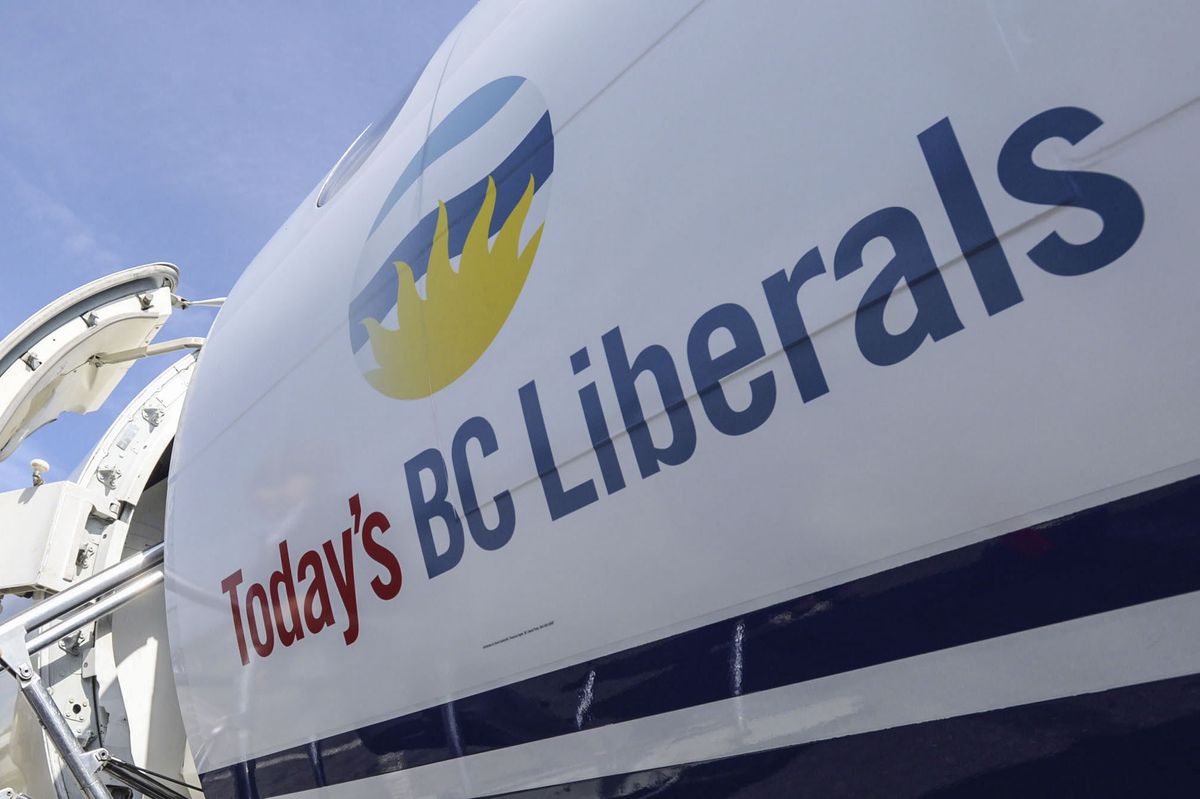
Canada could be about to lose one of its Liberal parties. BC Liberal members will be asked to vote on a new name for the venerable party.
Subject to the pending vote, the British Columbia party could take on the name BC United.
The possibility, announced on Tuesday, would be a major rebranding for a party that governed, most recently, under premiers Gordon Campbell and Christy Clark between 2001 and 2017. Prior to that run, the party last ruled in 1952.
The proposed new name was one of 2,000 suggestions from party members vetted through a process of review by the centre-right, “free enterprise” party that has no affiliation with the federal Liberal Party of Canada.
Other names in the mix included the BC Party, Together BC, One BC and the Pacific Party, BC Liberal vice-president Caroline Elliott said in an interview on Tuesday.
The voting process is to be laid out in the coming weeks and party members are to cast their votes “by the end of the year,” the BC Liberals said in a statement. They have already registered BC United with Elections BC as an alternative name.
Ms. Elliott said the idea of a name change, supported by two-thirds of members at a convention this year, has been bandied about for about two decades, but is now being discussed as a part of a renewal process. The BC Liberals failed to win power in the province’s 2020 election, in which the BC NDP won a majority for the first time since 1996, and John Horgan become the province’s first BC NDP leader to win a consecutive second term as premier.
Ms. Elliott said the move is not being done as a reaction to challenges facing the federal Liberals. “That’s not what it is being driven by at all. This has been an ongoing conversation for so long in our party,” she said.
However, political scientist Hamish Telford said the name issue has bedevilled the BC Liberals.
“[The party] has always styled itself as a coalition of Liberal and Conservative voters and it is, for all intents and purposes, a conservative party. It is the right-of-centre party in the B.C. political spectrum,” said the academic from the University of the Fraser Valley.
“So the name has not always resonated well with a large portion of the party’s base. Now, with Justin Trudeau having been prime minister for seven years, some more conservative members of the BC Liberal party base don’t like that identification, however erroneous it is, between their party and Justin Trudeau’s Liberal Party.”
Ironically, he said, the party has lost its liberal urban base while retaining its conservative base so the party’s new leader, Kevin Falcon, faces the task of rebuilding the urban liberal base.
Of the new proposed name, Mr. Telford said it sounded like a soccer team, but also that it speaks to the party’s depiction of itself as a coalition of Liberal and Conservative voters.
In a statement, the BC NDP said the name change won’t hide aspects of the record of Mr. Falcon, a former finance minister, such as cuts to health care budgets and increased costs imposed on British Columbians.
Asked if she had advice for other parties elsewhere in Canada considering such name changes, Ms. Elliott offered one key point. “By far the most important thing is to make sure you are engaging members.”