

Canada’s Minister of Immigration, Refugees and Citizenship says Conservative Leader Pierre Poilievre’s suggestion that the federal government close the Roxham Road irregular border crossing is “reckless.”
“It’s reckless and frankly, not a thoughtful approach to simply say ‘within 30 days, you close Roxham Road,'” Fraser told reporters during a media availability in Dartmouth, N.S. on Wednesday morning.
“What would happen if we took such an approach rather than actually dealing with people with dignity and respect, and pursuing an option that requires bilateral conversations with the United States, is you would simply displace the problem to other points along the Canadian-U.S. border,” Fraser said.
“The result would likely be serious risks that would fall upon vulnerable migrants who are seeking safe haven in Canada, who would be forced to potentially cross through a dangerous portion of the border not knowing how the elements — particularly at this time of year — would impact themselves and their family.”
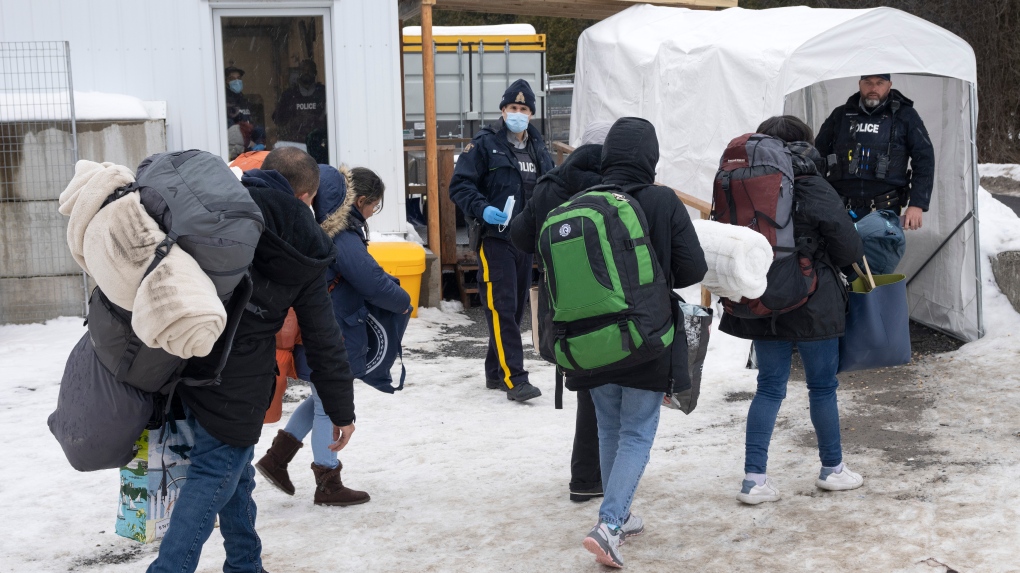
On Tuesday, Poilievre called for the federal government to present a plan to close the crossing at Roxham Road along the Quebec-New York border within a month, suggesting it can be done as it was for some time during the COVID-19 pandemic. In a press conference on the topic, the Conservative leader accused Trudeau of encouraging irregular crossings there, after failing to find a solution for years.
“If we are a real country, we have borders. And if this is a real prime minister, he is responsible for those borders,” Poilievre said. “He’s had six years since the influx began. It is his job to close the border and we’re calling him to do it.”
This comes on the heels of Quebec Premier Francois Legault putting the issue back on the national political agenda by asking Trudeau to make renegotiating the Safe Third Country agreement a priority when U.S. President Joe Biden visits next month. Legault says that agreement has resulted in an increased and disproportionate flow of migrants into Quebec.
Federal figures show more than 39,000 people claimed asylum after crossing into Quebec by land in 2022.
Fraser said Wednesday that Legault is right to raise the issue, noting that Quebec is facing disproportionate pressure on the province’s social services as well as its health and education systems. He nevertheless called Poilievre’s approach: “brash bumper sticker arguments that seek to gain political favour in a time of a real challenge.”
“It’s a time to solve problems through adult conversations with our most important strategic trading partner in the United States,” Fraser said, pointing to ongoing conversations with his American counterpart on a “lasting solution” through modernizing the Safe Third Country Agreement.
The cross-border agreement was first signed in 2002 and, despite some recent tweaks, talks about modernizing it have been ongoing since 2018. Under the pact, people seeking refugee status in either Canada or the U.S. must make their claim in the first country they enter.
The loophole that the agreement applies only to official land border crossings means asylum seekers who manage to enter a country via an unofficial crossing — such as Roxham Road— are not returned.
Work is also underway across the country, Fraser noted, to fund communities in other provinces, including in Ontario and Atlantic Canada, which would have the capacity to accommodate additional asylum seekers.
“Because it’s not fair or right that one community or one province ought to bear the brunt of a challenge that we’re facing as a result of Canada abiding by its domestic and legal obligations,” Fraser said.
With files from CTV News’ Spencer Van Dyk
More to come…