

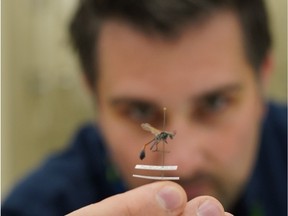
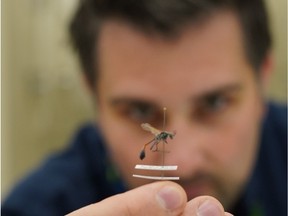
An extensive study of bee and wasp biodiversity from the Canadian Museum of Nature reveals a previously undiscovered bee species while showing the importance of at-risk sand dune habitats in southern Saskatchewan.
Thomas Onuferko, an entomologist and research associate with the Canadian Museum of Nature, examined over 12,000 bee and wasp specimens from dunes in Saskatchewan, Manitoba and Alberta, collected over four months in the spring and summer of 2019.
With warmer and wetter summers, the ecosystems within the sand hills are being threatened by increased vegetation from invasive plant species.
The specimens were collected with relatively simple techniques. Most were caught in coloured plastic bowls that were filled with soapy water while smaller numbers were collected in a hand-held insect net.
“Species that were not present on active dunes all of a sudden show up on stabilized dunes, and then some species on active dunes don’t show up on stabilized ones,” said Onuferko. He added that the abundances of wasps that habitat open sandy dunes, decreased with increased colonization of the dunes by plants.
The dunes in the southern prairies formed during glacial periods over two million years ago when grinding ice sheets reduced bedrock to silt, sand, and gravel. Some bees and wasps require dunes for nesting use and searching for mates. Predatory wasps also use them as hunting grounds.
Thirteen areas were surveyed including the Great Sandhills Ecological Reserve and Douglas Provincial Park in Saskatchewan and Spruce Woods Provincial Park in southwestern Manitoba.
The team identified 374 species of bees and wasps among their samples. 150 of those species represent previously unknown records. There are 16 new records for Canada and several potentially undescribed species of bees and wasps.
New type of sweat bee discovered
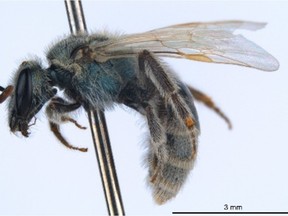
Onuferko, Buck and Gibbs discovered a new type of sweat bee, which they named Lasioglossum onuferkoi. Sweat bees are found on evert continent except for Antarctica. Lasioglossum onuferkoi, however, has a relatively restricted habitat, which is why it had been previously overlooked.
During his career, Onuferko has named several species of bees, but has never had one named after him — which he says is an honour.
Onuferko is likely to have collected the most specimens of sweat bees with approximately 360.
The results of the study are reported in the Royal Entomological Society journal Insect Conservation and Diversity.
“While the results are not really unexpected, this study illustrates that more work needs to be done in this region,” said Onuferko. “Now that we know more about the diversity of bees and wasps in these habitats, it might make sense to look at other understudied groups of insects, and this study provides a baseline for any future surveys.”