



Peter Haddow misses many friends he has lost to AIDS over the years.
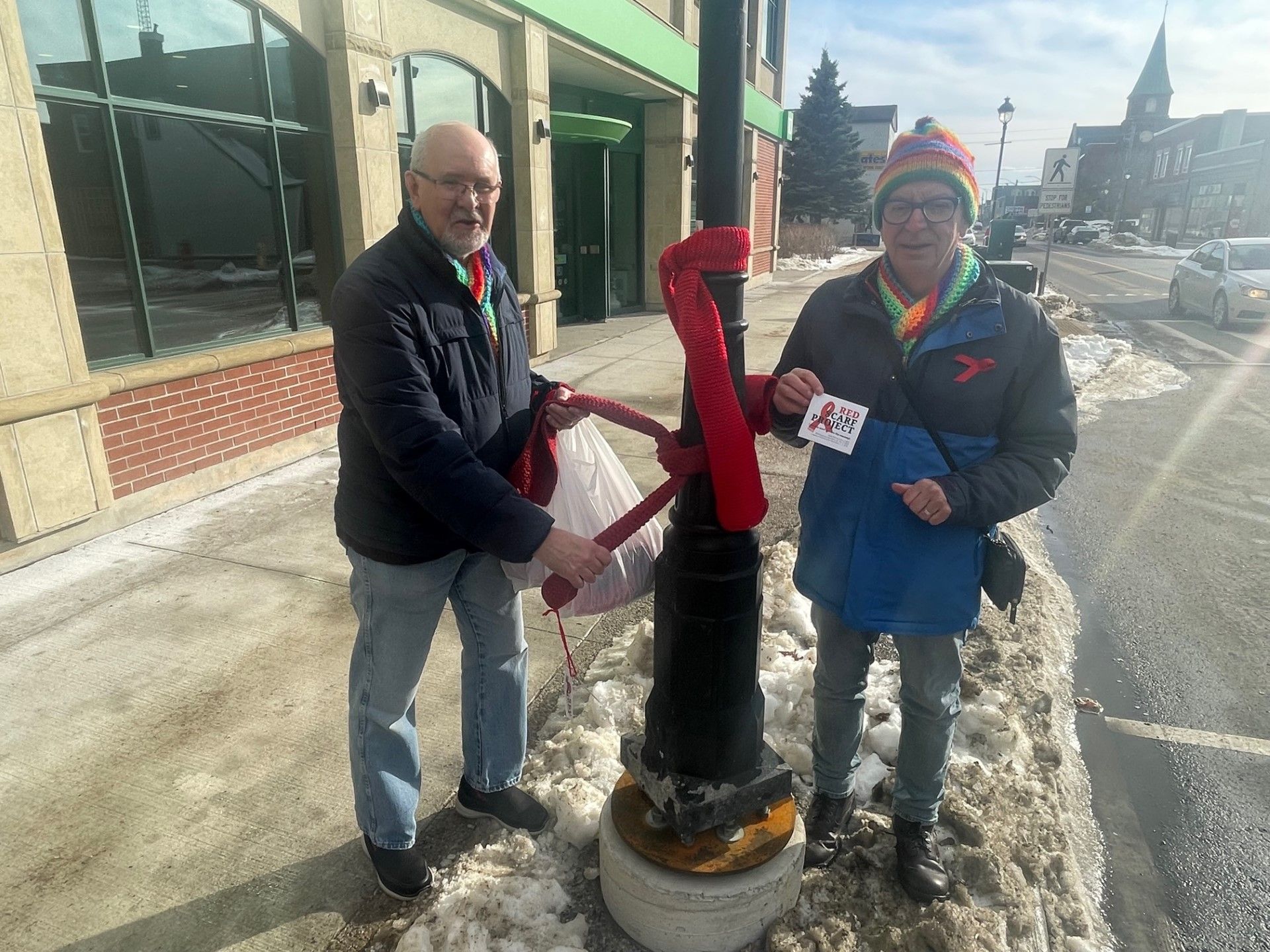
Haddow and Rod Desjardins were one of many people who were hanging red scarves in downtown North Bay as part of World AIDS Day 2023. The Red Scarf Program encourages people to get tested and know their status. “This is very important to me because we lost a lot of people in our age group growing up due to AIDS,” says Haddow. “I do this in memory of them.” Health measures have helped those with AIDS live long after their diagnosis. 35 years ago, testing positive for AIDS usually meant the worst possible news.
“With all the different (drug) cocktails they have now people can survive (for years),” says Haddow.
While the news is better on the medical front, Haddow believes there are still some societal attitudes that need to change.
Article content
“We still have to get rid of the stigma,” says Haddow. “Some people still believe when you get AIDS it is a death sentence. Some people believe that when you get AIDS you are contagious, which is not true,” says Haddow. Haddow reflects on those he knew and lost due to AIDS.
“It is hard (to deal with) because we had so many people in our age group, so many friends dying all the time,” says Haddow. “These were people that could have led very productive lives. These were everyday people who died alone,” remarked Haddow.
Haddow was born in Northern Ontario and responds to a question dealing with the stigma issue and living in a less populated area.
“Yes, it is more difficult and until we get the knowledge that is out there, and people look at what AIDS is all about it (the stigma) is not going to change,” says Haddow.
During the ‘80s the AIDS crisis was front page news and often the top story on newscasts. 40 years later, AIDS is still here, there is no cure or any preventative vaccine.
However, the illness is not a top news story anymore. Haddow responded to that issue this way.
“Definitely COVID buried a lot of things,” says Haddow. “COVID also brought out a lot of things, especially regarding people who were diagnosed with AIDS. Not only did people have to deal with the isolation from AIDS, but you also had to deal with isolation from COVID,” remarked Haddow.
Hanging out the scarves is something cherished by the volunteer.
“It’s wonderful,” says Haddow. “Every time I hang a scarf up I remember somebody, or I know somebody (with AIDS).