


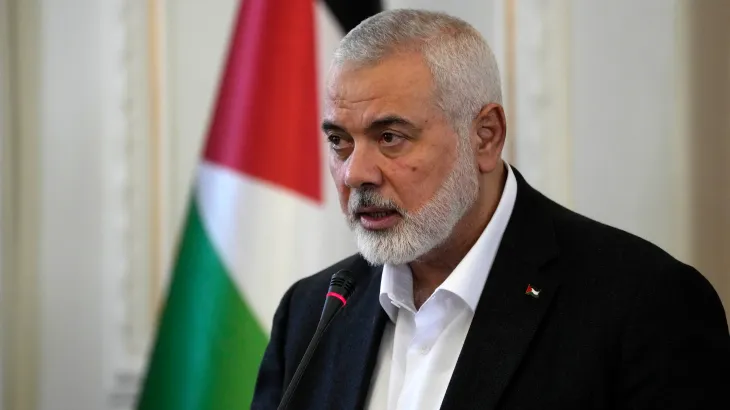
On July 31, Ismail Haniyeh, the political leader of Hamas and its chief negotiator on war and peace, was assassinated during a visit to Tehran for the inauguration of President Masoud Pezeshkian. Haniyeh’s assassination, widely believed to be orchestrated by Israel, has triggered a wave of anger across Iran and its allies in the Axis of Resistance. The armed wing of Hamas declared that this act would “take the battle to new dimensions and have major repercussions,” while Iran’s Supreme Leader Ayatollah Ali Khamenei vowed to avenge Haniyeh’s death and warned Israel of “harsh punishment.”
The assassination reflects the escalating hostilities in the Middle East. Just a day prior, on July 30, an Israeli airstrike in southern Beirut killed Fuad Sukr, a senior Hezbollah commander. This strike was linked to an attack on the Druze village of Majdal Shams in the Israeli-occupied Golan Heights, which resulted in the deaths of 12 children or teenagers on July 27. The tension between Israel and Iran’s network of allies is further compounded by a US airstrike on an Iranian-backed militia in Iraq on July 30. The Pentagon justified the strike, claiming it was a preemptive move to thwart planned attacks on US forces stationed in Iraq and Syria.
Ismail Haniyeh was no stranger to danger, having survived an assassination attempt in 2003 and suffering the loss of three of his sons in an Israeli airstrike on Gaza in April 2024. His deputy, Saleh al Arouri, was also killed by Israel in January, and his sister and her family perished in a June airstrike. Haniyeh was a significant figure in Hamas and a key player in negotiations aimed at ending the Gaza war and securing the release of Israeli hostages captured during the Hamas invasion of Israel on October 7, 2023.
Haniyeh’s assassination has disrupted ongoing negotiations involving Israel, the United States, Egypt, and Qatar. Qatari Prime Minister Sheikh Mohammed bin Abdulrahman al Thani, a central figure in the mediation efforts, criticized Israel’s actions, questioning the feasibility of successful mediation when a key negotiator is assassinated. The negotiations were aimed at finding a resolution to the Gaza conflict and securing the release of hostages, but Haniyeh’s death has cast a shadow over these efforts.
The assassination has elicited strong reactions from various quarters. Iran has accused the United States of sharing responsibility for the killing due to its military support for Israel. However, Secretary of State Antony Blinken, speaking from Singapore, denied any foreknowledge or involvement in the attack.
Ismail Haniyeh has been a pivotal figure in Hamas, serving as a prominent aide to Sheikh Yassin, the founder of Hamas. He delivered a eulogy at the funeral of General Qassem Soleimani, the commander of the Iranian Revolutionary Guards’ external operations arm, highlighting Soleimani’s contributions to strengthening Palestinian resistance. Haniyeh’s connections with Iranian leadership, including Supreme Leader Khamenei and Soleimani’s successor Brigadier General Esmail Ghaani, underscore his influential role in regional geopolitics.
The assassination of Ismail Haniyeh marks a significant escalation in the already volatile Middle East. As both sides brace for potential retaliation and further conflict, the prospects for peace and stability in the region remain uncertain. The international community will be watching closely to see how this latest development influences the broader dynamics of the Arab-Israeli conflict and the ongoing struggle for power and influence in the region.