


The history of slavery in Canada is often overshadowed by the country’s image as a haven for freedom, particularly in contrast to the United States. However, slavery was indeed practiced in Canada, though its prevalence and impact varied significantly across different regions. This contrast is particularly evident when comparing the St. Lawrence Valley with Louisiana, two regions that, despite their geographic proximity, developed vastly different systems of slavery.
In the St. Lawrence Valley, encompassing the areas of Québec and Montréal, slavery was primarily a status symbol for the elite. Governors, clergy, religious communities, military officers, and prominent merchants were among the few who owned slaves. However, the scope of slavery in this region was relatively limited. In two-thirds of cases, slaveholders owned only a single slave. This indicates that, for many, the ownership of slaves was less about economic necessity and more about displaying wealth and social standing.
The slaves in this region, both of African and Indigenous descent, were often employed as domestic servants or in other non-intensive labour roles. The lack of a plantation economy in the St. Lawrence Valley meant that large-scale slaveholding was unnecessary, and the economic reliance on slavery was minimal. The fur trade, a major economic driver in the region, was controlled by a small professional group and relied primarily on the labour of Indigenous trappers rather than slaves.
In stark contrast, the institution of slavery in Louisiana, particularly in the southern regions along the Mississippi River, was far more entrenched and economically significant. In Upper Louisiana, also known as Illinois, nearly half of all households owned slaves, with most owning no more than five. This widespread ownership highlights the integration of slavery into the region’s economy, though on a smaller scale compared to the massive plantations further south.
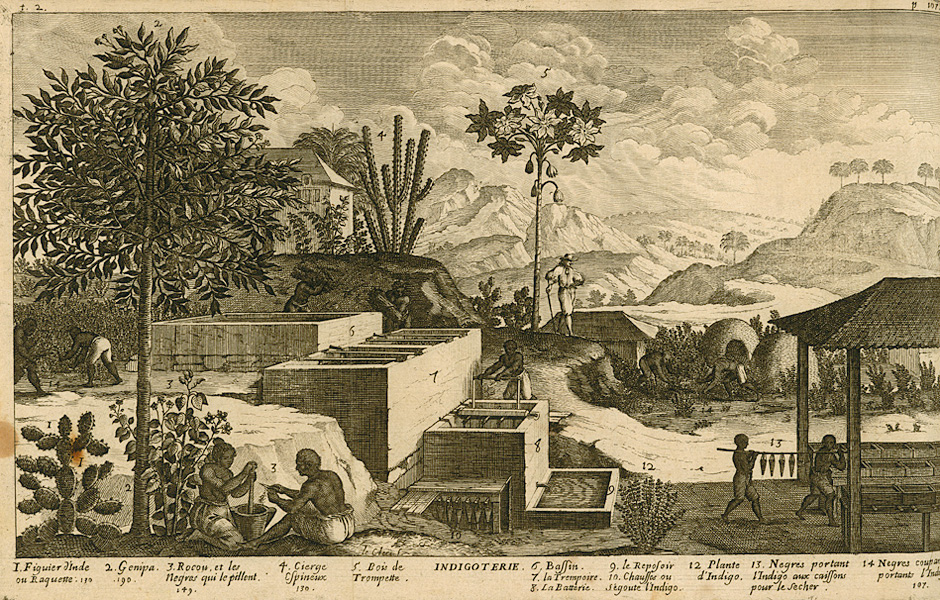
It was in the lower Mississippi Valley, particularly in and around New Orleans, where slavery reached its most intense and widespread form. By 1731, the number of Black slaves in the region outnumbered white inhabitants by a ratio of four to one. Even as the ratio decreased to two to one by the 1760s, the reliance on slave labour remained crucial. These slaves worked under the supervision of White foremen on large plantations that produced lucrative crops like indigo, tobacco, and sugar.
The differences between the St. Lawrence Valley and Louisiana in terms of slavery reflect the varied roles that the institution played across Canada and its neighbouring regions. In Québec and Montréal, slavery was more of a social status marker for the elite, with a minimal economic role. Conversely, in Louisiana, particularly in the plantation economy of the lower Mississippi Valley, slavery was deeply embedded in the region’s economic and social structures.
This complex legacy of slavery in Canada challenges the often oversimplified narrative of Canada as merely a land of freedom. It highlights the need to recognize and understand the diverse and sometimes troubling aspects of Canada’s history, including the regional variations in how slavery was practiced and its long-lasting impacts on society.
Follow Canada News Media
Get the day's top Canadian stories and our two daily 60-second news videos wherever you scroll.