


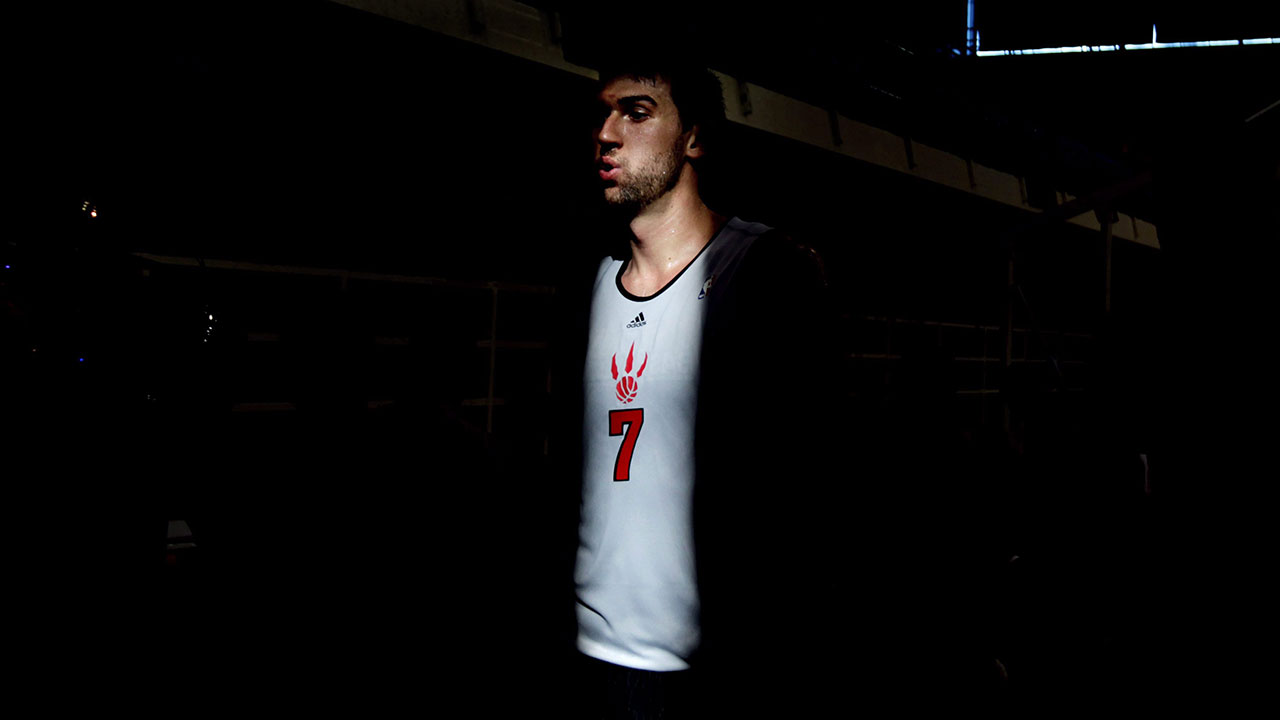
Ten years ago, the Toronto Raptors‘ franchise player was Andrea Bargnani.
Is there a single sentence that sums up how unpredictable the future is better than that? It’s worth remembering as we look back and look ahead, too.
The enigmatic Italian – enigmatic being a kinder way of saying ‘indifferent’ or ‘passionless’ or ‘unresponsive’ – was in the midst of what turned out to be a career year as the former No.1-overall pick pumped in 21.4 points a night.
That the seven-footer did it while shooting just 44.8 per cent from the floor, grabbing just 5.2 rebounds a game and playing his trademarked stiff-legged defence explains why his best could only lift the Raptors to a 22-60 season.
There have been a fair number of low points in a quarter century of Raptors basketball, but there’s a sound argument that 2010-11 was the lowest of the low.
It was because the decade started from those depths that everything that followed seemed so super-charged. The Raptors didn’t only rise from the dead, they were resurrected by accident and went on to climb Everest.
New Year’s Eve is a traditional time to reflect and take stock, to measure where we are and where we want to be — even more so when the turn of the calendar also marks the turn of the decade.
It was no different than Tuesday night when the Raptors were hosting the Cleveland Cavaliers before the clock struck midnight.
Ten years ago it was Toronto playing out the string on a season that meant nothing before it was half over. As the 2020s begin they are the defending champions and even short-handed are more than capable of swatting aside faux NBA competition like the Cavs, as the 117-97 win showed.
With the victory the Raptors improved to 23-11 on the year, maintained their grasp on a home playoff seed despite having eight of their top nine rotation players having already missed a minimum of five games to injury.
The Raptors closed out the 2010s delivering more of the same: a solid, professional, winning effort.
What will the 2020s bring?
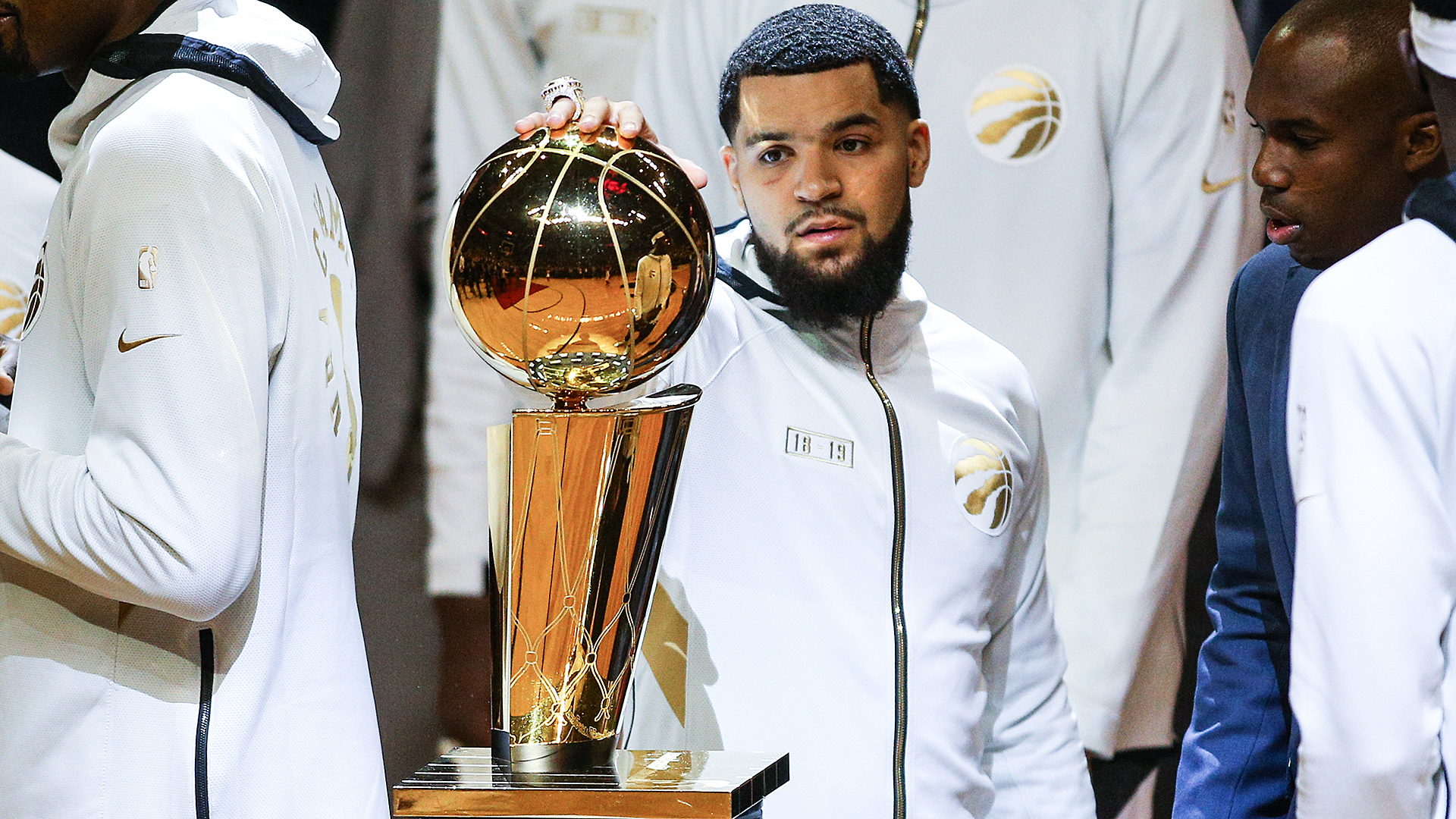
In the short-term another playoff spot seems like a safe bet, which would make it seven-straight post-season appearances for the Raptors, which would have seemed like a miracle in the early part of the decade.
In the bigger picture, it’s hard to suggest that there’s another championship in the offing or even seven more years of playoff competition. Nothing last forever. The NBA doesn’t work like that. Unless you have an era-defining player on your roster and under contract, the future can be fleeting.
But the beauty of way the bulk of the 2010s unfolded in Toronto is that an entire fanbase knows what winning looks like, understands what commitment looks like and can appreciate what a championship mentality is capable of delivering.
In the future there will be no fooling them.
Character is a big part of it. With three key rotations players – Pascal Siakam (groin), Norman Powell (shoulder) and Marc Gasol (hamstring) – out indefinitely the Raptors have refused to buckle.
The Cavaliers came to Toronto having won five of their past six games were able to roll out line ups loaded with recent lottery picks.
The Raptors responded with lineups featuring undrafted free agents and second-round picks and other teams’ castoffs and improved to 17-0 against teams with sub-500 records. Toronto got 11 points from Lowry in the second quarter as they opened up a 59-43 lead over the Cavs at the half and never looked back. Undrafted rookie Terence Davis II had 19 off the bench as Toronto had six players score in double figures while holding Cleveland to 41.9 per cent shooting from the floor.
It was a feat of the mind as much as anything else.
The Raptors decided that, if they had to work New Year’s Eve, then they might as well win — and they did, with the lottery-bound Cavaliers all too happy to oblige.
If only you could bottle this stuff.
It’s always worth remembering that even Raptors president Masai Ujiri wasn’t sold on his club’s long-term potential in the early part of the decade. In the fall of 2013 he was planning to trade Lowry – acquired by the Raptors in the summer of 2012 – to speed up what seemed like an unavoidable rebuild.
The deal fell through and — led by Kyle Lowry and DeMar DeRozan — the Raptors caught fire for the remainder of the 2013-14 season.
To the surprise of anyone who had watched them stumble out to a 6-12 start they made the playoffs. A franchise that had never won a best-of-seven playoff series went on to win eight of them over the next six years, including four straight in 2019, which is how they won the NBA title.
The greater point, though, is that the best part of what will surely go down as one of the greatest decades a Toronto-based sports franchise has or will ever have was how completely unpredictable it all was.
There was no foreshadowing any of this.
As bright as everything is now, it’s hard to imagine how dark it was this time 10 years ago.
Prior to the 2010-11 season, a lot of the early fault lines were typical of an expansion team suffering growing pains.
The debacle of their 16-66 second season, an example which marked the first time in NBA history a part-owner – then general manager Isiah Thomas was given an equity stake to entice him to join the franchise out of his playing retirement – quit in the middle of a year. Vince Carter quitting in the middle of the 04-05 season was tough to swallow as well.
But 2010-11 felt different. The Post Y2K Raptors had already enjoyed the sugar high of the Carter-era and the rapid returns provided by former Raptors general manager Bryan Colangelo, who helped the franchise turn the post-Carter corner and usher in three ultimately unsatisfying first-round playoff exits.
That year felt like a dead end. Growing pains were no longer an excuse.
Chris Bosh had flown the coop for Miami and Bargnani was being fully revealed as a franchise player in theory only, lacking the drive or the heart and likely the talent to shoulder the load.
DeRozan, in his second year, was beginning to show signs that he could harness his athletic talent into something resembling a polished NBA player – hey, it was on New Year’s Eve in 2010 that DeRozan popped off for 37 points in a loss on the road to the Houston Rockets who started Lowry at point guard.
But it would be years before DeRozan would become the kind of player that could help a good team win.
Slowly, and in ways that seemed inconsequential at the time – hands up everyone who thought signing Fred VanVleet as a rookie free agent in the summer of 2016 would help win a title, or picking up the second-round pick that ended being used on Powell in 2015 – the Raptors’ fortunes began to turn.
That in itself isn’t unusual. The NBA is a league set up so that bad teams don’t stay bad forever except in cases of New York Knicks-level dysfunction.
But the kind of run the Raptors have been on for most of decade takes more than draft-day luck.
It takes a special collection of talent and people and belief – and then a little more luck.
That’s the story of a team that went from hoping that former No.1 overall Andrea Bargnani could lead them to the Promised Land to becoming the first team to win an NBA Championship without having a single lottery pick on the roster.
It seems irresponsible — if not delusional — to hope that the best is yet to come for a franchise that closed out the decade on the highest of highs.
But it’s safe to say as a new decade begins that the worst is over, quite possibly forever.