

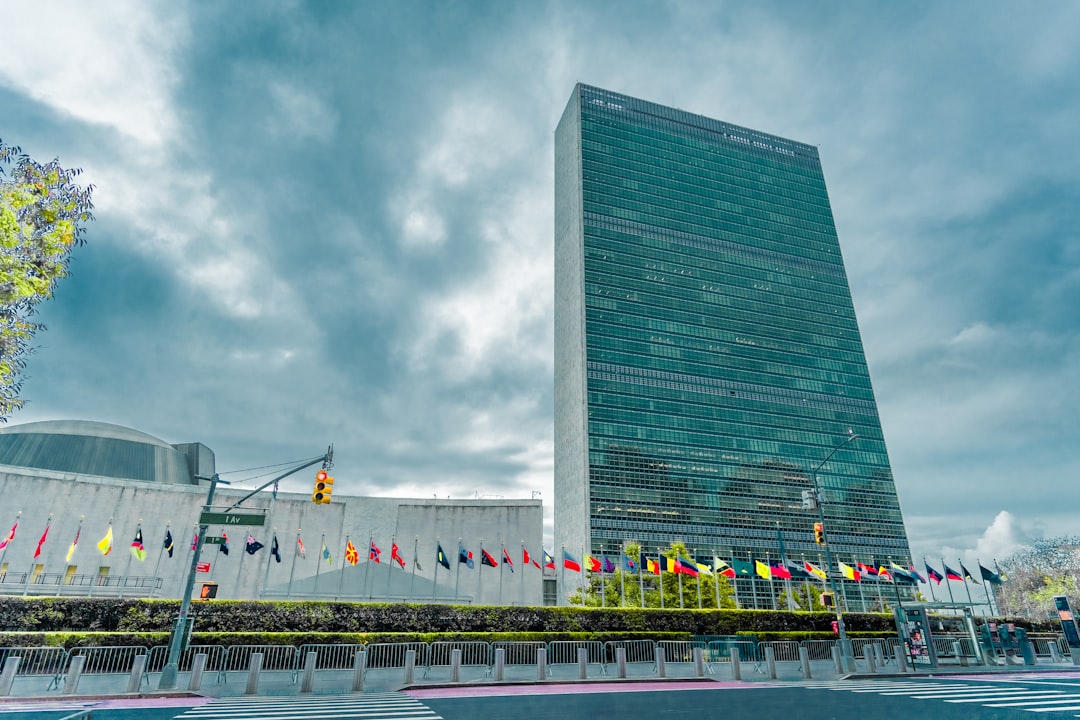
Canada is facing fresh scrutiny at the United Nations after video from an April 8 meeting appeared to show the Canadian representative raising no objection when Iran was appointed to a UN oversight body focused on civil society organizations. The footage has sparked criticism because Iran’s government has long been accused by human rights groups of repressing dissent, restricting women’s rights and punishing activists. Questions are now being raised about how Canada, which often presents itself as a strong defender of human rights on the world stage, handled the decision behind closed doors. The issue is quickly becoming a political and diplomatic headache as opposition voices and advocacy groups demand a clearer explanation from Ottawa.
For Canadian readers, the controversy matters because it touches directly on the credibility of Canada’s foreign policy and its repeated promises to stand up for democracy and human rights abroad. It may also affect public confidence among Iranian Canadians, human rights advocates and communities that look to Ottawa to take a firm line against authoritarian governments. At a practical level, the episode could influence how Canada votes and negotiates in future UN appointments, especially in cases involving countries with serious human rights records. It also puts pressure on federal officials to be more transparent about how Canadian diplomats act in international meetings that usually receive little public attention.
What comes next will depend largely on whether the federal government offers a detailed account of what happened during the meeting and whether it believes the video reflects Canada’s official position. Opposition parties and civil society groups are likely to keep pressing for answers, especially if the appointment of Iran becomes a broader international controversy. The story may also trigger calls for Canada to push for reforms in how UN oversight bodies are chosen, including stronger screening of member states with documented rights abuses.
The broader context is important. Canada has repeatedly condemned Iran over the years for crackdowns on protesters, arbitrary detentions and violence against women, particularly after the death of Mahsa Amini in 2022 and the protests that followed. Ottawa has also taken measures against senior Iranian officials and has publicly aligned itself with efforts to hold the Iranian regime accountable for abuses. That is why any suggestion that Canada passively accepted Iran’s appointment to a UN committee is attracting such attention: it appears to conflict with the values Canada has said it wants to defend. The episode also highlights a recurring problem at the UN, where countries accused of violating rights are sometimes still able to win seats on bodies meant to oversee international standards.
The controversy centres on a UN meeting held on April 8 in which member states considered appointments to an oversight committee tied to non-governmental organizations. Video from that session has circulated online and prompted questions about Canada’s role during the proceedings. Critics argue that even silence can carry weight in diplomatic settings, particularly when a country with Iran’s record is being considered for a position linked to civil society oversight. In international forums, the absence of an objection is often interpreted as acceptance, or at least a willingness to let the decision proceed without challenge.
That nuance matters for Canada because its diplomats are expected to balance procedural realities with the political and moral messages their actions send. In some multilateral settings, governments may choose not to block a consensus for tactical reasons, even if they have reservations. But when the country in question is Iran, a state that has been sharply criticized for jailing dissidents and limiting basic freedoms, the political costs of staying quiet can be high. For many Canadians, particularly those with personal or family ties to Iran, this is not an abstract diplomatic debate but a question of whether Canada is living up to its own principles.
The issue also arrives at a time when Ottawa is already under pressure to demonstrate consistency in foreign affairs. Canada has taken strong rhetorical positions on authoritarianism, women’s rights and support for grassroots activists. It has also worked to present itself as a reliable voice for rule-based international institutions. If Canada is seen as failing to challenge a controversial appointment at the UN, critics may argue that its approach is selective or overly cautious when decisions happen out of public view.
There is also a domestic political dimension. Opposition MPs may use the episode to question the government’s judgment and to demand more accountability from Global Affairs Canada. Human rights organizations are likely to ask whether Canadian diplomats were given clear instructions and whether those instructions matched the government’s stated policy on Iran. If the federal government does not move quickly to explain the circumstances, the debate could widen beyond this single meeting and into a broader assessment of how Canada conducts itself at the UN.
For readers trying to make sense of the story, it helps to understand that UN committees and commissions are often shaped by regional bargaining, procedural rules and quiet diplomacy rather than public debate. That can create situations where countries with troubling records still secure positions that seem at odds with the purpose of the body they are joining. Canada, like other member states, must often choose between making a symbolic stand and preserving room to negotiate on other files. Even so, those calculations can become politically costly when they involve a government as controversial as Iran’s.
Another reason this story resonates in Canada is the size and visibility of the Iranian Canadian community, which has closely followed Ottawa’s policies toward Tehran. Many Iranian Canadians have pushed for tougher Canadian action in response to repression in Iran and have urged the government to align its words with meaningful international pressure. Any perceived softening, even in a procedural UN setting, is likely to be met with frustration and concern. That reaction could shape how the government responds publicly in the coming days.
If more details emerge, the focus will likely turn to whether Canada had an opportunity to object formally, whether other countries spoke up and whether Ottawa intends to revisit its position. The federal government may try to argue that the meeting followed standard UN procedure, but that explanation alone may not satisfy critics who see the issue as one of principle rather than process. For now, the main challenge for Canada is to explain how its conduct at the UN fits with its longstanding public criticism of Iran.
Follow Canada News Media
Get the day's top Canadian stories and our two daily 60-second news videos wherever you scroll.
X Threads Facebook Instagram LinkedIn TikTok YouTube Pinterest Reddit Substack Flipboard Newsletter RSS